




Disclaimer: This content is for informational purposes only and should not be considered legal, medical, or professional advice. Medspa laws and physician oversight requirements vary by state, so clinic owners should consult qualified legal and healthcare professionals to ensure full compliance with applicable regulations.
Medspas have grown into one of the fastest-moving segments in outpatient healthcare. Services like body contouring, injectable treatments, laser therapy, and IV wellness have moved from specialty clinics into mainstream consumer demand. That growth has also pulled more nurses, nurse practitioners, and other advanced practice providers into the owner’s seat.
But owning a medspa comes with a layer of legal requirements that many first-time operators miss. Most states require a licensed physician to provide clinical oversight before a medspa can operate legally. Clinics that use medspa medical director services early in the setup process tend to avoid the compliance issues that slow other practices down.
What the Law Requires From Medspa Operators
State medical boards regulate which procedures count as medical acts. Injectables, certain laser treatments, and prescription-based therapies fall into that category in most states. A nurse or nurse practitioner cannot authorize these services independently in most of the country.
A medical director fills that gap. The physician takes clinical responsibility for the services the clinic provides. They review protocols, authorize standing orders, and remain available to the clinical team for consultations. This structure is not advisory. It is a legal requirement in the majority of states.
The Federation of State Medical Boards tracks how individual states regulate physician oversight in clinical settings. Medspa owners can use that resource to check the specific rules in their state before committing to a service menu.
Operating without proper oversight puts the clinic at real risk. State boards can issue fines, suspend licenses, or force a clinic to close while violations are reviewed. These outcomes are not rare. They happen regularly to practices that launched without getting this step right.
How Collaborative Agreements Work in Practice
A collaborative agreement is the formal document that records the relationship between a physician and a clinic operator. It outlines what the physician is authorizing and what responsibilities each party holds. Most state boards require a copy of this agreement before granting a clinic its operating approval.
A strong agreement covers several things:
- The list of services the physician is overseeing
- How often does the physician review patient records or visit the clinic
- Protocols for handling complications or adverse reactions
- Documentation standards for each treatment type
- The process for ending or updating the agreement
Agreements that are too vague create problems during audits. If the document does not specify what the physician is authorizing, regulators may treat it as inadequate. That can trigger a review even if the physician has been active and involved.
Medspa owners should have a healthcare attorney review the agreement before signing. A one-size-fits-all template may not reflect what a specific state requires. Getting this right the first time is far easier than correcting it after an audit.
Picking the Right Medical Director
Not all physicians are familiar with aesthetic and wellness clinic operations. A physician who has never reviewed a medspa protocol may not understand what standing orders are needed or what documentation the clinic should keep. Experience with the services a clinic offers is a real asset.
Availability is another factor that carries weight. A physician who is difficult to reach creates problems for the clinical team. Nurses and NPs running busy schedules need a medical director who responds in a reasonable time frame. Slow responses to clinical questions are not just inconvenient. They can affect patient care.
Also Read: The Role of Nurse Practitioners: Raising the Standard of Patient Care Facility-Wide
Contract terms matter too. Many medspa owners are surprised to find that some physicians ask for long-term commitments or high monthly fees. The market has shifted in recent years. Matching services that focus on aesthetic clinics have made it more practical to find physicians with flexible arrangements. Placement timelines have also shortened considerably for clinics that use these services.
Documentation That Keeps a Clinic Protected
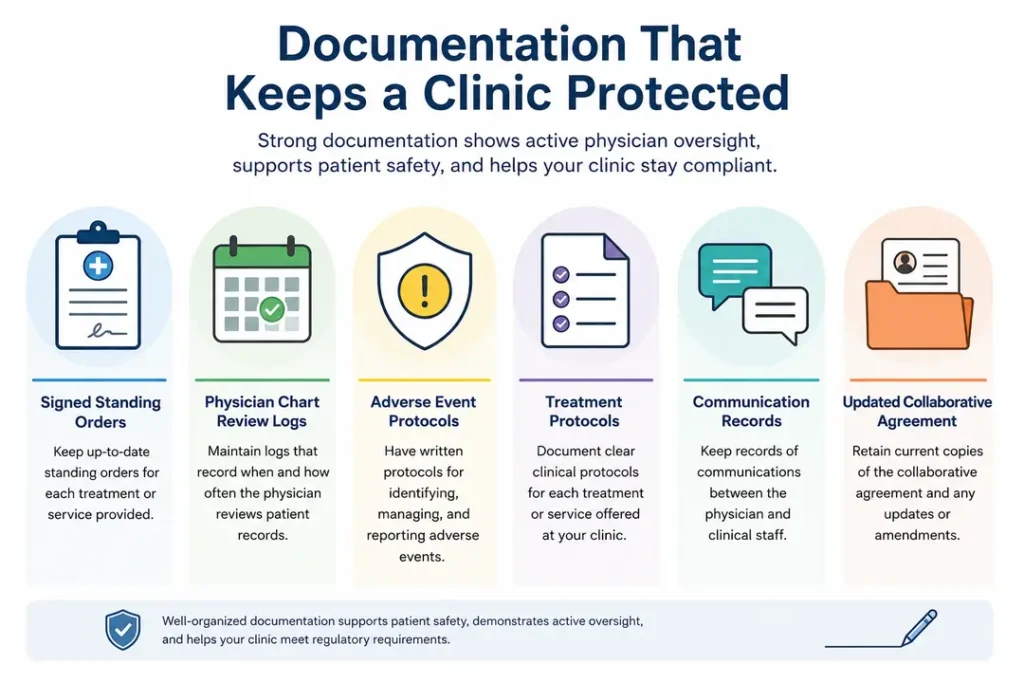
Compliance is not just about having a medical director on paper. State boards want to see that the oversight relationship is active. That means keeping records of physician involvement over time.
The U.S. Department of Health and Human Services outlines general standards for clinical documentation in healthcare settings. While medspa-specific rules vary by state, these federal guidelines provide a useful baseline for what regulators expect to see.
Records worth keeping regularly include:
- Signed standing orders for each treatment type
- Logs of physician chart reviews with dates
- Written protocols for managing adverse events
- Communication records between the physician and clinical staff
- Updated copies of the collaborative agreement after any changes
Clinics that keep organized records move through audits much faster. Regulators can verify active oversight without extended back-and-forth. That protects the clinic owner, the physician, and the patients being treated.
Getting Set Up Before the First Patient Arrives
The best time to get physician oversight in place is before the clinic opens. Retroactive compliance is harder, more expensive, and sometimes not possible if a complaint has already been filed. Building this foundation early protects everything that comes after.
Medspa owners who plan their compliance structure before launch avoid most of the pitfalls that cause problems later. That includes confirming state requirements, securing a qualified physician, and getting the collaborative agreement drafted and reviewed properly. Updating that agreement when services expand is part of the same ongoing process.
Running a medspa well means running it within the rules that govern it. Physician oversight is not a formality. It shapes what the clinic can offer, how it handles clinical decisions, and how it holds up if a regulator takes a closer look. Getting this piece right from the start gives the rest of the operation a solid base to build on.