

Oil prices are surging, and you are not sure who to blame for this. Many people do not know who controls the oil. The price on the sign at the stations wasn’t set by the guy who owns the station business. It was not even set by the government or some free-floating “market.”
But influential ministers in Riyadh, war rooms in Moscow, shale drillers in Midland, taxes, and a 50-year-old financial arrangement between the USA and Saudi Arabia are the main factors. To be honest, nobody has complete power over oil. However, a bunch of incredibly powerful bodies in the world are responsible for oil prices.
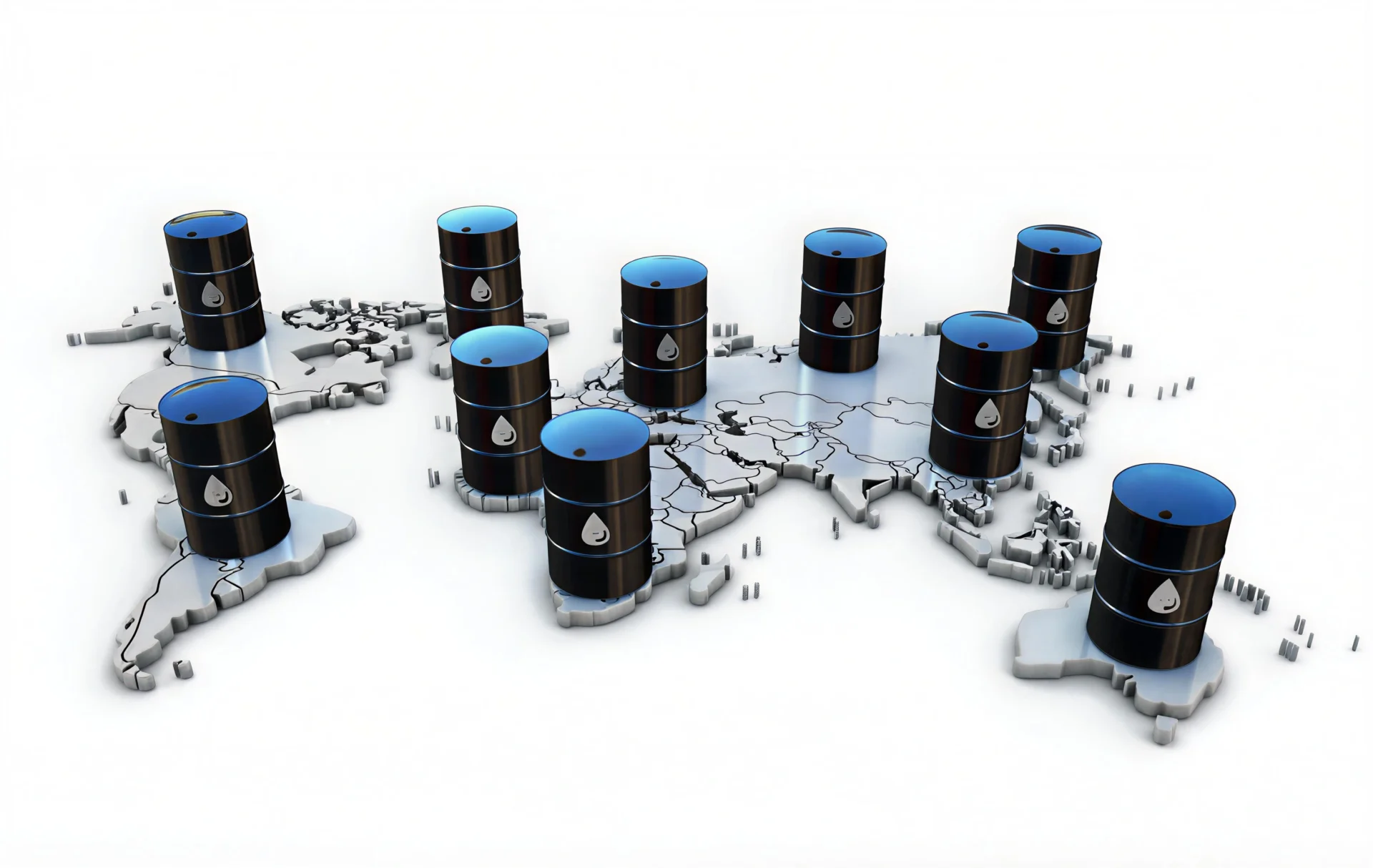
Oil is not something we use to run cars and trucks. It impacts the prices of daily-use goods. From toothpaste to crockery prices and energy bills, everything is linked to oil. So who actually controls the world’s oil supply? Not everybody, but some players have a considerable impact. Let’s get into it.
Who Controls the World’s Oil Supply?
Recently, there has been a major surge in the prices of oil. Some argue that it is the government that is driving prices. Others blame the Middle Eastern regions. It raises a concern about who is actually controlling the world’s oil.
The interesting fact is that not a single body controls oil.
| Player | Role in the Oil System | Influence |
| OPEC+ Countries | Coordinate production levels | High |
| United States | Largest producer of shale oil | High |
| National Oil Companies | Control most global reserves | Very High |
| Big Oil companies | Technology, refining, trading | Medium |
| Commodity markets | Set the daily price | High |
The major oil reserves holding countries are Venezuela, Saudi Arabia, and Iran. But holding large reserves does not mean controlling them. They are controlled by different factors, including:
Geopolitical Factors
“Geopolitical factors” basically mean how countries deal with each other; like, conflicts between two countries can shake oil prices quickly. Alliances between countries can influence the supply of oil. The countries that are allied supply more oil than other countries that are not in alliances.
Market Access
It’s about how easily countries can sell and transport oil globally. A country’s geographic location is very important for market access. Relations with other countries also matter for oil supply because if a country does not allow trade from its waters, then oil supply may be affected.
Technology Impacts
A country having big oil reserves does not matter until it has good technology to drill. Using modern technology is very important in this era. It helps to extract and refine oil quickly at low cost.
International Sanctions
Sanctions are basically penalties that countries put on each other, like banning trade or blocking exports. When oil-exporting countries face these sanctions, they cannot sell their oil easily. This shrinks the global oil supply and increases the prices.
What is OPEC?
OPEC is the abbreviation of the Organization of Petroleum Exporting Countries. Its founding members were the following:
- Saudi Arabia
- Iran
- Iraq
- Kuwait
- Venezuela
Their goal in creating OPEC was simple: control production and influence prices. They want to stop Western oil companies from dictating prices to the countries whose land contains the oil.
Interesting Information:
OPEC owns most of the world’s oil. About 79.5% of proven reserves are theirs. Most of this oil is in the Middle East.
But OPEC produces less than half of the global oil. They have more oil than they produce.
How Does OPEC Control Oil Production?
OPEC’s strategy is pretty straightforward. If they want to increase the prices, they cut the production of oil. This reduces the supply of oil, but the demand remains the same. Therefore, the prices go up due to the low supply of oil.
Similarly, if they want to decrease the price of oil, they increase the production of oil. Since the demand remains the same, excess oil production lowers the prices. OPEC controls approximately 38% of global crude oil production as of 2022. Now, Russia has also become a partner of OPEC and expanded it as OPEC+ holds the real market accounting for around 46% of global supply in 2026.
| Strategy | Effect |
| Production cuts | Raises global oil prices |
| Production increases | Lowers prices |
| Export quotas | Stabilizes markets |
| Political coordination | Prevents price wars |
The US Shale Revolution
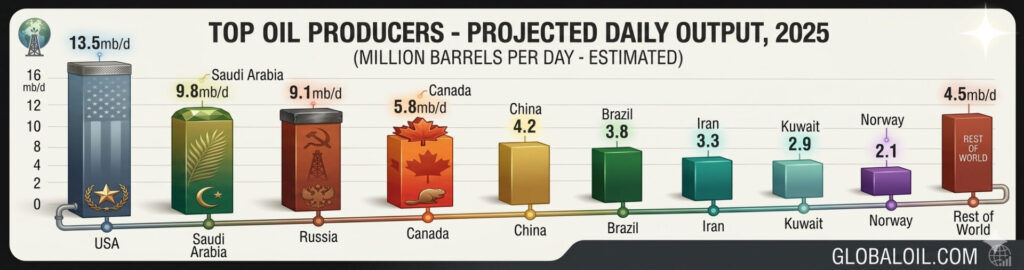
US oil production’s shale dominance is where it gets genuinely interesting. The United States has been the world’s largest oil producer for the last six consecutive years. Production hit 13.6 million barrels per day in 2026. This production is comparatively more than that of Saudi Arabia and Russia. This rise in American shale has totally changed global politics.
Someone Asked On Reddit
If America is one of the highest oil producers, why are they getting hit by price rises?
Global oil price spikes still hit American consumers because oil is a globally priced commodity. American refiners do not buy “American” oil at some special domestic discount. They buy on global market prices, where the price is set by worldwide supply and demand.
When OPEC cuts production of oil and the global price rises, it rises even for US consumers, irrespective of the fact that they are pumping oil at record levels. The oil companies actually benefit from the higher prices.
China: The Demand Superpower
China’s oil demand plays a major role in shaping global market trends. China has no significant oil reserves. But oil power does not come from just producing it. Sometimes it comes from buying a massive amount of oil. China is the world’s largest oil consumer.
Oil-exporting countries depend on China’s demand. When China buys more oil, it earns more. When China buys less, they feel the impact. If China slows down its economy, oil prices drop.
Which Countries Have the Largest Proven Oil Reserves?
This is one of those facts that surprises almost everyone. Venezuela has the world’s largest proven oil reserves, even more than Saudi Arabia. Venezuela sits on approximately 303 billion barrels of oil, while Saudi Arabia has around 267 billion barrels.
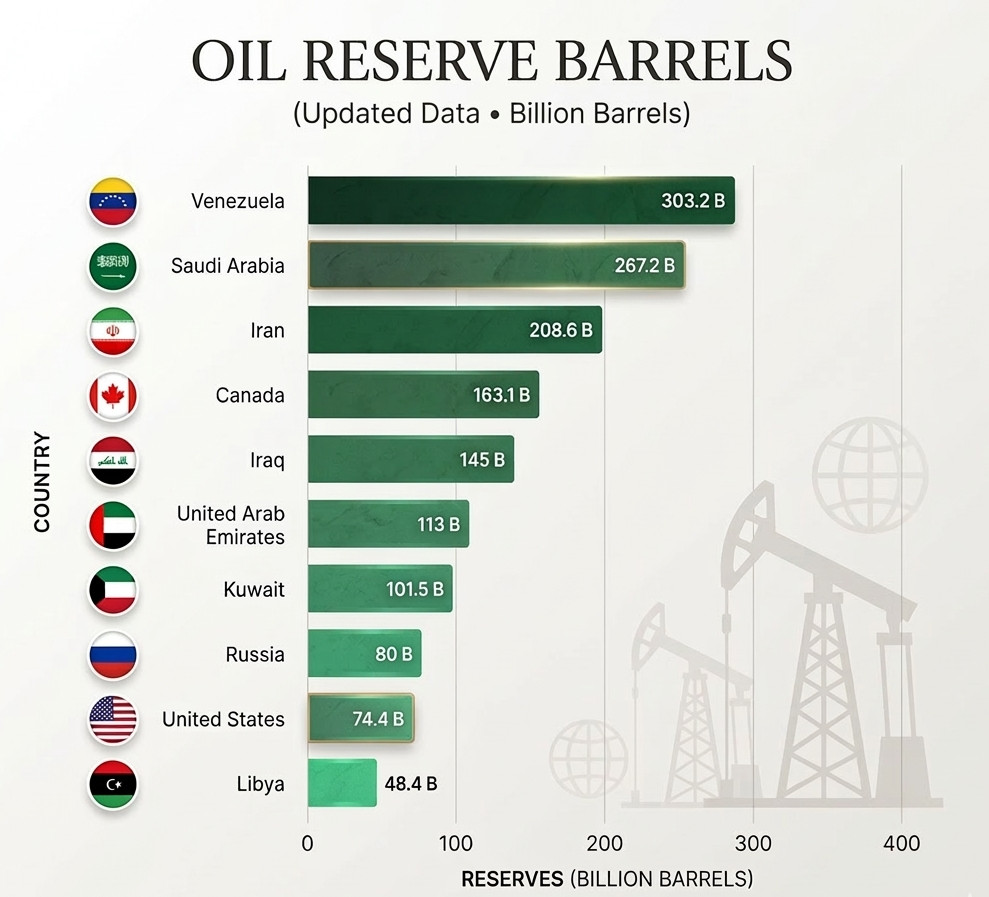
What makes it even more surprising is that the Venezuelan economy is not stable and has collapsed many times. This shows that having more reserves doesnot make a country rich. There is a gap between “having reserves ”and “being able to monetize them.”
Venezuelan oil is extra-heavy crude and requires blending with lighter oils. U.S. sanctions have limited Venezuela’s ability to export. The U.S. government says it captured Venezuelan leader Nicolás Maduro in January 2026 and talked about letting American companies help fix Venezuela’s oil industry. This adds a new twist to world politics.
How Is Crude Oil Actually Determined?
No government literally sets oil prices. The prices of oil are determined in global commodity markets. Two important benchmarks are Brent crude and WTI crude. Prices change based on the expectation about supply, demand, and geopolitics.
| Benchmark | Full Name | Origin | Used For | Typical Relationship | Current 2026 Status |
| Brent Crude | Brent Blend | North Sea (UK/Norway) | ~67% of global oil contracts; European, African, Middle Eastern pricing | Usually trades slightly higher than WTI | Currently trading at a higher premium over WTI due to geopolitical tensions around the Strait of Hormuz, which are increasing supply risk for seaborne crude |
| WTI | West Texas Intermediate | Cushing, Oklahoma, USA | US domestic pricing; NYMEX futures benchmark | Usually slightly lower than Brent | Trading at a discount relative to Brent, as it is less exposed to global shipping disruptions and remains tied to inland US supply dynamics |
Brent is the global benchmark. WTI is the American one. In April 2020, WTI briefly went negative. Traders were literally paying people to take oil off their hands because storage was full and COVID had destroyed demand.
Who Owns the World’s Oil Reserves?
A long time ago, a few big companies ran most of the world’s oil. Today, companies like ExxonMobil, Chevron, BP, Shell, and TotalEnergies control less oil than before. Most of the world’s oil is now owned by National Oil Companies (NOCs). These are owned by the state and controlled by governments, not private investors. The real power in oil has shifted from private companies to governments.
What is the petrodollar, and why does it matter?
If you remember one part of this article, make it this one. The Petrodollar system explains something very important, but many people do not understand this. It means oil is bought and sold using US dollars.
After 1971, the US dollar was no longer supported by gold. To keep the dollar strong ” a deal with Saudi Arabia in 1974. The deal was that oil would be bought and sold only in dollars. Saudi Arabia agreed to sell oil in US dollars.
Because of this, every country that wants to buy oil from Saudi Arabia must first get US dollars. This is why it matters:
- Oil is the most important resource in the world
- Every country needs it for energy and industry
- So, every country needs US dollars
Roughly 80% of global transactions are still in US dollars. This shows the petrodollar system is still strong. But things started to change.
2025 Shift
In November 2025, Saudi Arabia will not renew its petrodollar deal with the United States. At the same time, the US dollar’s share of global reserves fell. According to recent IMF data, the US dollar’s share of global foreign exchange reserves has declined to about 56.9% in 2025.
Countries are now trying to reduce their dependence on the dollar:
- Central banks are buying more gold
- Some countries are using other currencies for trade
- Global reserves are becoming more diversified
This system is not broken yet. The dollar is still dominant. But it is slowly weakening.
What Happens If Oil Hits $200 Per Barrel?
Due to Iran’s claim that prices can go up to $200 per barrel, many people are asking questions: What will you do if the price of global oil goes to $200 per barrel? Honestly, the world’s economy would feel it immediately.
Possible consequences:
- Global inflation spikes
- Airline industry chaos
- Recession risk
- Political unrest in energy-dependent countries
Why Do Oil-Rich Countries Sometimes Stay Poor?
This is one of my favorite paradoxes in development economics. This is called the “resource curse” or “paradox of plenty.” Venezuela is often cited as the most dramatic example. It has huge reserves yet is in an economic crisis.
Countries rich in oil sometimes struggle economically because of the following:
- Governments rely too heavily on oil revenue
- corruption increases
- Other industries never develop
Is the US Energy Independent of OPEC?
Technically, the US is a petroleum exporter. It produces more than it consumes. So, in a strict accounting sense, yes, the US does not need OPEC oil. But oil is sold in a global market, not a local one. Even if a country produces a lot of oil, it still sells and buys oil at global prices.
There is another issue that all oils are not the same. The US mostly produces light oil. But its refiners are built for heavy oil. So it still imports oil from countries like Canada and Venezuela. This means even a top oil producer still depends on global trade.
FAQs
What role does oil play in modern warfare and conflict?
Oil is a power. Oil can cause wars and can be used as a weapon in wars.
Which countries have the largest proven oil reserves?
Venezuela, with 303 billion barrels, is at the top of the list. Followed by Saudi Arabia (267 Bn), Iran (209 Bn), Canada (163 Bn), and Iraq (147 Bn).
How much oil does Saudi Arabia produce per day?
Saudi Arabia produces about 10.1 million barrels per day. It is one of the top producers in the world.
Why does the oil price affect food and consumer goods prices?
Oil is used in transport. The higher the transport, the higher the shipping costs. So, prices of goods go up.
Can the world replace oil with renewable energy by 2050?
It is possible in optimistic scenarios but not in realistic ones. Oil’s share of global energy can shrink significantly by 2050, but not be fully replaced with renewable energy resources.