

Nobody really prepares you for Alaska. You can see photos, watch documentaries, and read guides online, but none of it compares to standing there and realizing how alive everything is. The first time something like a moose steps out of the trees right in front of you, it doesn’t feel like “wildlife spotting” anymore; it feels like you have accidentally walked into its world.
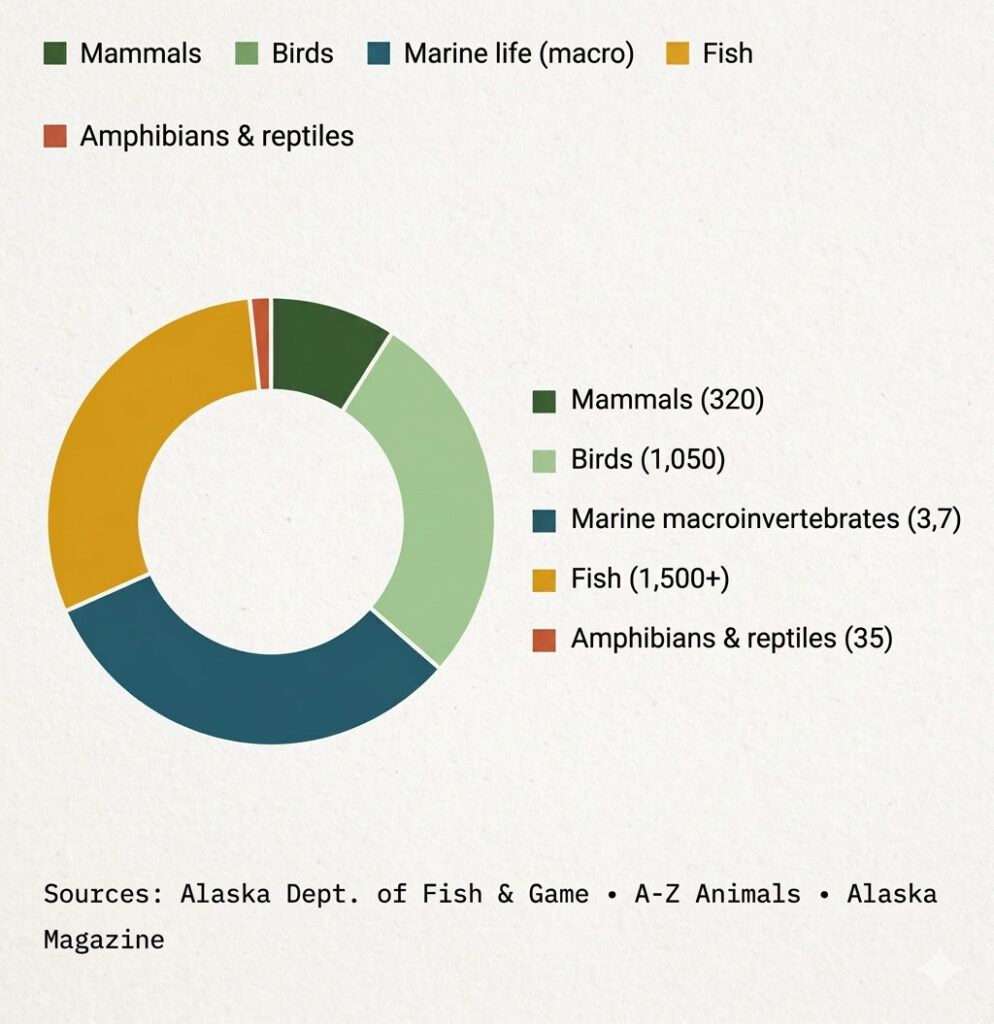
Around 1,100 vertebrate species live here: over 100 mammals, 500+ birds, 14 types of whales and porpoises, plus thousands of marine species. And honestly, that’s the wild part. This is not just a random list of animals living in one place; it’s a full-on ecosystem where everything is just built for survival. Like, every species here is dealing with conditions that most places on Earth do not even come close to.
What are Alaska’s Big 5 wildlife?
The Alaskan Big 5 are the five most famous animals that people hope to see when they visit. These animals are strongly connected with Alaska’s wild nature and attract visitors from all over the world.
- Brown Bear
- Moose
- Caribou
- Gray Wolf
- Dall Sheep
What type of bears live in Alaska?
Alaska has three species of bears:
- Black bears
- Brown bears
- Polar bears
These animals are some of the largest and most powerful predators in North America.
What makes Alaska special is how many bears live there. Around 98% of all known bears in the United States are found in Alaska. And about 70% of the North American bear population lives here. This shows how important Alaska is for wildlife and why it is considered one of the best places to see bears in the wild.
How Many Brown Bears Are in Alaska?
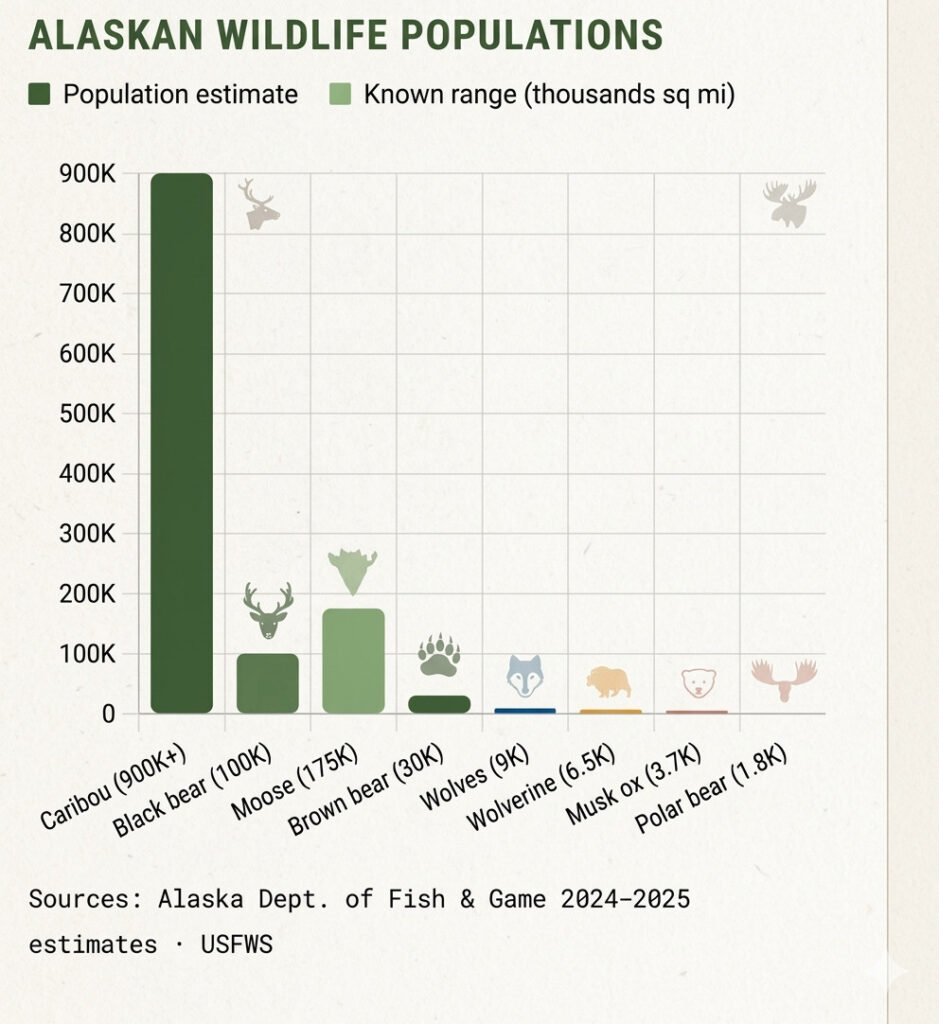
Alaska has around 30,000 brown bears, which include both coastal brown bears and grizzly bears. Their life style depends on their habitat. Coastal bears live near rivers and eat a lot of salmon, which helps them grow much bigger. Some large males weigh up to 1,500 pounds.
Grizzly bears live inland and usually eat plants, small animals, and whatever food they find. So they’re smaller and usually weigh 400 to 700 pounds. While technically they are the same species, there is a clear difference between food and habitat. This creates a significant difference in their size and lifestyle.
What Do Moose Eat in Alaska?
The moose is the official state animal of Alaska. They mostly eats plants and shrubs. In summer, it prefers willow, birch, aspen, and even plants that grow in water. In winter, when everything is covered with snow, it eats woody branches and shrubs.
Moose can go into lakes and ponds to eat underwater plants. An adult moose needs a lot of food, around 40 to 60 pounds of food per day. This is the reason they are often seen near towns, because gardens and plants there look like an easy food source to them.
Reddit Asks
Is it true that moose are more dangerous than bears in Alaska? That seems backwards.
Surprisingly, yes. Moose actually injure more people than bears in Alaska. This is mainly because there are significantly more moose (between 175,000 to 200,000), and people do not see them as dangerous as bears are. Moose can be very aggressive, especially cow moose protecting their babies.
They are large animals and can seriously hurt someone by kicking or stomping. There are also many moose-related car accidents every year, about 800 to 1000. While bears are still dangerous, moose are more commonly a risk for people living in Alaska.
How Many Caribou Live in Alaska & Where Do They Migrate?
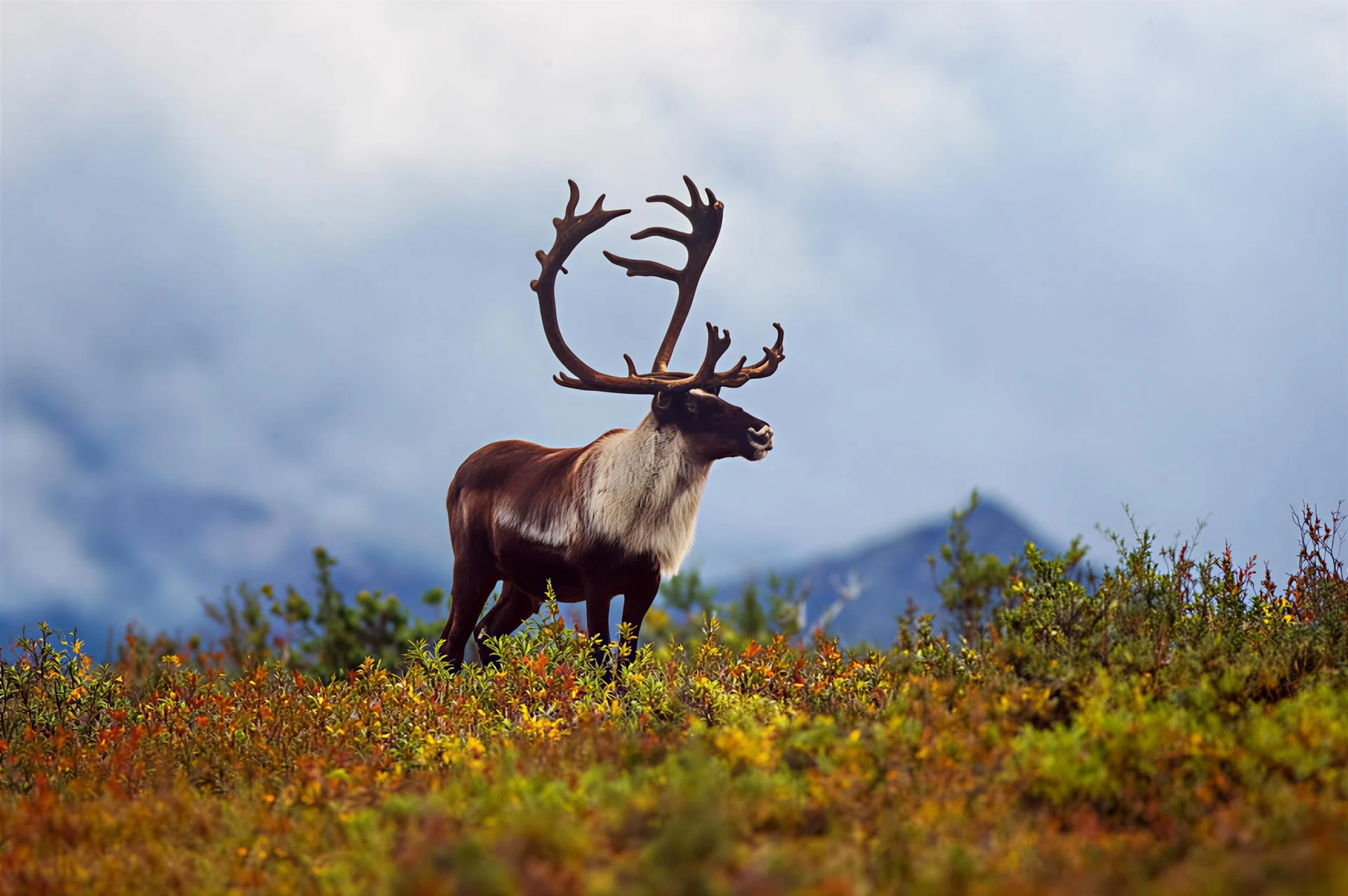
Caribou is the most common large animal in Alaska. Over 900,000 caribou live across 32 herds. The largest and most famous herd is the Western Arctic herd, comprising approximately 300,000 animals.
Caribou are famous for their long migrations. Some herds travel thousands of miles every year. For example, the porcupine herd, around 218,000 animals, travels up to 3,000 miles between Canada and Alaska. This is considered the longest land migration of any animal on earth, making it one of the most amazing wildlife movements in the world.
How Many Wolves Live in Alaska?
Alaska’s wolf population was estimated at 7,000 to 11,000 in 2017, living in about 800 to 1,000 packs. It is the largest wild wolf population in the United States. Wolves are usually found across the mainland in places like Denali, the interior, and the Southeast.
Do wolves actually live near populated areas in Alaska?
You might think wolves live in deep wilderness or far from people, but it’s not always true in Alaska. They have actually been spotted in nearby cities like Anchorage and Fairbanks. They are seen more in winter when they find it hard to find food in the forests.
Where Do Dall Sheep Live in Alaska and How Many Are There?
You might not notice them, but there are a large number of Dall sheep living in the high mountains of Alaska. They are often seen standing on the cliffs of mountains where most of the animals cannot go. They have white fur, which helps them to blend into the snow, and this makes it hard to spot them.
Alaska is home to about 70,000 to 75,000 Dall sheep. They are often found in the mountain ranges of Alaska and areas around Denali. One thing people often ask is, how do they not fall? The answer is their incredible balance and special hooves, which grip rocks and work like natural climbing shoes.
What Types of Whales Are Found In Alaska?
Alaska is home to 16 species of whales, but the most commonly seen is the Humpback whale. Around 21,000 humpbacks come here every year to feed, then migrate back to warmer waters like Hawaii in winter. They are known for their huge size and the way they jump out of the water. This makes them one of the most exciting animals to watch.
Do Sea Otters Live in Alaska?
Yes. Alaska is the home of one of the largest populations of sea otters in the world. There are around 75,000 sea otters here, which is about 90% of the total sea otters in the United States. These animals were about to become extinct because of heavy hunting. But the species has recovered dramatically thanks to protection.
Interesting Information
Sea otters play a very important role in the ecosystem. They eat sea urchins, which, without otters, would overgraze kelp forests. More otters mean healthier oceans. Their recovery has made a big difference in the Alaskan coastline areas.
| Species | Alaska Population | Season / Location | Conservation Status |
| Humpback whale | 21,000 (feeding range) | Summer · SE, Gulf, Aleutians | Least concern |
| Orca / Killer whale | Thousands | Year-round · Continental shelf | Least concern |
| Beluga whale | 280 (Cook Inlet) | Year-round Cook Inlet | Endangered |
| Steller sea lion | 40,000 Western stocks | Year-round Coastal Alaska | Near threatened |
| Sea otter | 75,000 | Year-round Coastline | Least concern |
| Harbor seal | 180,000 | Year-round · All coasts | Least concern |
| Walrus | 200,000 (Pacific stock) | Seasonal Bering/Chukchi | Vulnerable |
| Polar bear | 1,500 to 2,000 | Seasonal Arctic coast | Threatened |
Do Orcas Live in Alaska?
Yes, orcas are commonly found in Alaska’s coastal waters. They are also known as killer whales. They are often found in Southeast Alaska and the Aleutian Islands. They live in groups, which are called pods. They are famous for their black and white color and strong social behavior. Orcas eat fish, seals, and sometimes even whales. They are not dangerous to humans in the wild.
How Many Bald Eagles Live in Alaska?
Alaska is home to approximately 30,000 bald eagles. They are common in coastal areas of Alaska; locals view them the way most Americans view pigeons. One of the best places to see them is near Haines, where up to 4,000 eagles gather in winter to eat salmon. Seeing so many of these powerful birds in one place is a unique Alaskan experience.
Do Snowy Owls Live in Alaska Year-Round?
Snowy owls live in the Alaskan Arctic region and stay there most of the year. They breed during the summers on the tundra, but in winter, they move slightly south when food becomes harder to find. Unlike most owls, they are active in daylight, which makes sense because Arctic summers are 24 hours of daylight.
Do Arctic Foxes Live in Alaska?
Yes, the Arctic fox is native to the Alaskan tundra and coastal areas. They are well adapted to the hardest environments on Earth. They are considered one of the most resilient Arctic mammals.
One of the most fascinating traits in them is to change their coat color with the seasons. They have a pure white coat color in winters to camouflage in snow and brownish-gray in summers to blend with the tundra.
Where Do Polar Bears Live in Alaska?
Polar bears are technically classified as marine mammals because they spend most of their time on sea ice. They live on the far northern coast of Alaska. They are mainly in two groups: the southern Beaufort Sea and the Chukchi Sea populations. They move between sea ice and coral areas depending on the seasons.
Reddit Asks
Can you really see polar bears in Alaska, or is that just Canada and Churchill? I’ve only ever seen them marketed as a Canadian thing.
You can, but you have to work for it. They are mostly seen in very remote Arctic places like Utqiaġvik and the North Slope coast.
What Are the Best Places to See Wildlife in Alaska?
| Denali National Park | Katmai National Park |
| Grizzly bears, wolves, moose, caribou, Dall sheep | Famous for Brooks Falls bear platform |
| Wildlife visible directly from the park road | Dozens of brown bears catch salmon mid-air |
| 40% chance of seeing a bear on any given day | Best in July (peak run) or September (pre-winter feeding) |
| 90%+ chance of seeing caribou | Fly-in required from Anchorage or King Salmon |
| Often called the “living safari of North America,” wildlife here feels constant, not occasional. | Less like a park, more like a wildlife documentary happening live in front of you. |
FAQs
How many animal species live in Alaska?
Alaska has hundreds of animal species, including 100+ mammals, 400+ birds, and thousands of marine and insect species.
What is the most dangerous animal in Alaska?
The most dangerous animals are the moose and bears. Moose actually injure more people than bears because they are large, unpredictable, and often found near towns. Both grizzly bears and polar bears can also be dangerous in the wild.
What animals are unique to Alaska?
Alaska is known for Arctic and sub-Arctic wildlife like Caribou, Dall Sheep, Arctic foxes, and large populations of sea mammals like sea otters and whales that are rare elsewhere in the U.S.
Are there any venomous animals in Alaska?
Alaska has very few venomous animals. Some marine creatures, like certain jellyfish and insects, can sting, but there are no major venom threats compared to warmer regions.