





Disclaimer: This article is for informational purposes only and does not constitute financial, investment, or professional sustainability advice.
Tackling Scope 3 emissions remains the most complex aspect of corporate climate action, as these indirect emissions typically account for the majority of a company’s carbon footprint. In manufacturing and retail sectors, Scope 3 emissions frequently represent up to 90% of total corporate emissions, underscoring the importance of supply chain decarbonisation strategies. Leading UK and global companies are increasingly extending decarbonisation efforts beyond their direct operations to influence upstream supply chains.
This shift is driven by investor pressure, regulatory requirements, and growing expectations for transparent climate disclosures. As a result, organisations are moving away from estimation-based approaches toward more structured, data-driven, and enforceable interventions.
Moving from Generic Estimates to Primary Supplier Data
Historically, many companies relied on spend-based emission factors and industry averages to estimate Scope 3 emissions. While practical, this approach produced limited accuracy and often obscured major emission sources.
A growing number of organisations are now requiring primary emissions data directly from tier-one suppliers. This includes verified information on energy consumption, production processes, and resource use at the facility level.
The adoption of digital traceability platforms has supported this transition by replacing fragmented spreadsheet-based reporting with structured data systems. Improved data quality enables more precise identification of emissions hotspots and more targeted reduction strategies.
Embedding Science-Based Targets into Supplier Requirements
Many organisations are moving beyond internal net zero commitments by integrating supplier requirements into procurement contracts. Suppliers are increasingly required to align with recognised frameworks such as the Science Based Targets initiative (SBTi).
Contract renewal and vendor selection are being linked to demonstrable emissions reduction commitments. This approach extends decarbonisation responsibility across supply chains and accelerates sector-wide alignment with climate targets.
Redesigning Products and Supply Chains
Companies are actively redesigning products to reduce lifecycle emissions. This includes the use of recycled and lower-carbon materials, as well as optimisation of packaging to reduce transport weight and associated emissions.
Supply chain regionalisation is also increasing. By shifting production closer to end markets, organisations reduce transportation-related emissions and improve supply chain resilience. However, this transition often requires restructuring supplier networks and adjusting cost structures.
Integrating Carbon Performance into Procurement Decisions
Sustainability criteria are increasingly embedded within procurement frameworks alongside traditional factors such as cost, quality, and speed. Carbon intensity and renewable energy usage are becoming standard evaluation metrics in supplier selection processes.
In many cases, minimum sustainability thresholds are being introduced, including requirements for renewable electricity sourcing or verified emissions reduction pathways. This shift is transforming procurement functions into key enforcement mechanisms for corporate climate strategy.
Financing Supplier Decarbonisation
One of the primary barriers to Scope 3 reductions is the financial constraint faced by suppliers, particularly small and medium-sized manufacturers. To address this, some large organisations are introducing co-financing models, including low-interest loans and joint investment schemes.
These mechanisms support upgrades to energy-efficient machinery, process improvements, and emissions reduction technologies. In some cases, revolving financing structures are used, where cost savings from efficiency improvements contribute to repayment.
This approach aligns supplier capability with corporate decarbonisation requirements.
Scaling Renewable Energy Across Supply Chains
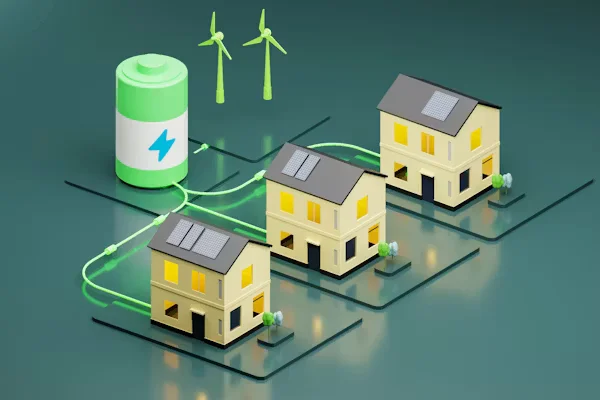
Electricity consumption in manufacturing and production represents a significant share of indirect emissions. To address this, companies are increasingly facilitating supplier access to renewable energy.
In regions with limited clean energy infrastructure, organisations are aggregating demand across multiple suppliers to enable large-scale renewable procurement agreements. This can include investment in dedicated solar or wind projects supplying multiple facilities.
Such models improve access to clean energy in markets where individual suppliers would be unable to secure viable renewable contracts independently.
Also Read: Google Nuclear Reactors To Power AI Data Centers by 2035 for Clean Energy Expansion
Industry-Wide Collaboration and Standardisation
Due to the complexity of Scope 3 emissions, individual organisations often lack sufficient leverage to transform entire sectors independently. As a result, cross-industry collaborations are becoming more common.
Companies are forming alliances to standardise emissions measurement methodologies, improve traceability systems, and advocate for supportive public policy. These collaborative frameworks are particularly prevalent in sectors such as textiles, agriculture, and logistics.
By pooling demand for low-carbon materials and technologies, organisations are helping to accelerate market development and scale decarbonisation solutions.
Investing in Permanent Carbon Removal
Even with significant reductions across value chains, residual emissions are expected to remain. As a result, companies are increasingly investing in verified carbon removal solutions to address unavoidable emissions.
This is where high-integrity projects become vital. Integrating these methods is becoming a cornerstone of modern supply chain decarbonisation, turning organic waste into measurable climate action through methods like biochar.
These investments are intended to complement emissions reduction efforts and support credible net-zero claims based on residual emissions neutrality.
Conclusion
Scope 3 emissions reduction is becoming a defining challenge for corporate sustainability strategies. Progress requires a combination of improved data systems, supplier engagement, financial support mechanisms, and cross-industry collaboration.
Organisations that successfully integrate these approaches are likely to strengthen long-term competitiveness as regulatory expectations tighten and supply chain transparency becomes a core requirement of global markets.