




If you want the short answer on what you can safely fix on your garage door yourself, stick to lubricating hinges and clearing debris out of the tracks. The moment your door suddenly feels incredibly heavy or gets stuck half open, you need to call a professional right away. Attempting DIY garage door spring repair is extremely dangerous due to the massive tension involved. It is never worth the risk of serious injury just to save a few dollars.
Weekend projects you can actually do
Many homeowners get that itch on a Saturday morning to fix something around the house. It feels rewarding to complete simple maintenance tasks. There are plenty of low-risk tasks you can tackle with your Door system to keep it running smoothly. You can grab a proper garage door lubricant and spray the hinges. Just a light coating of white lithium grease does wonders for noisy metal parts.
You should also take a damp cloth and gently clear cobwebs or dirt from the tracks. Just wipe them down. Do not try to bend the tracks back into place if they look crooked.
Testing the photo eye safety sensors is another great little project. You just wave a broom in front of the beam while the door is closing. If it reverses, you are in good shape. Keeping those small sensor lenses clean is also a smart move. These small things extend the lifespan of your system. They are perfectly safe for anyone to handle without needing special training.
Knowing limits with heavy lifting
Most people do not realize how much weight hangs over their heads every time they pull into the driveway. A standard residential door easily weighs anywhere from 130 to 400 pounds. That is basically a large appliance suspended directly above your car. Gravity is relentless.
It feels light when you lift it manually because the springs counterbalance all that mass. They do the heavy lifting so your opener motor does not have to. Many homeowners assume the door is relatively lightweight until a spring breaks. When that happens, attempting to lift the door manually can feel almost impossible because the counterbalance system is no longer working.
Without the springs, the door may barely move, and trying to lift it manually can easily result in injury. When the counterbalance system fails, that 300-pound door becomes a ‘freefall’ hazard. It can slam shut in about half a second.
Just a massive crush risk to people, pets & property.
The mechanics of high-tension parts
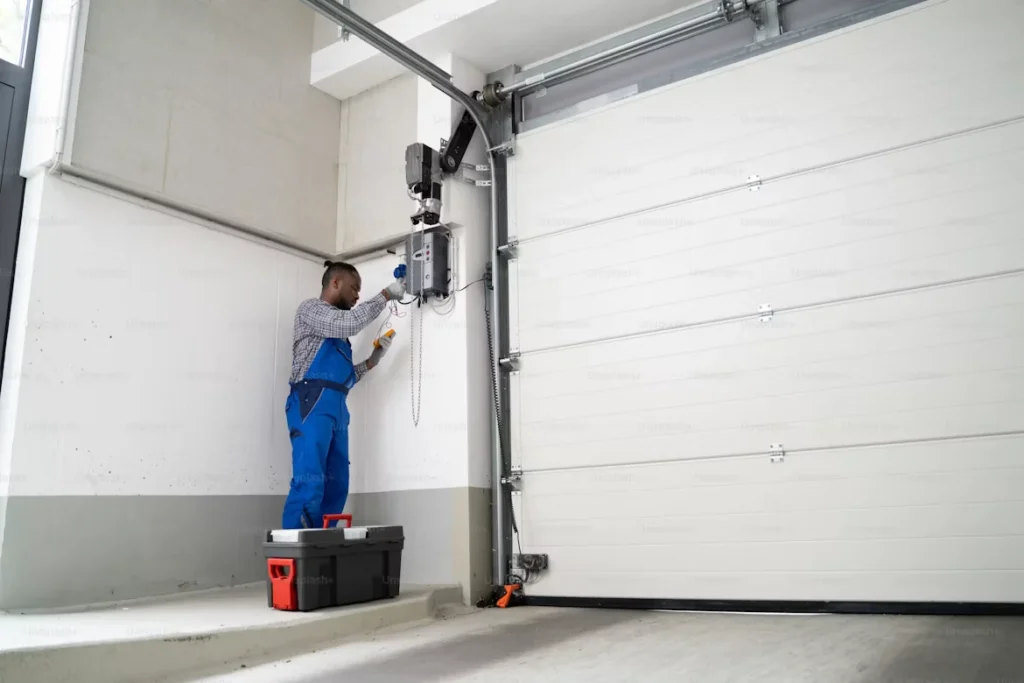
This brings us to the danger zone. Garage doors use either torsion springs mounted above the door or extension springs along the tracks. Both types store an insane amount of energy. A standard torsion spring is wound with 30 to 40 full turns during installation.
That stored energy holds up to 200 pounds of force. It is waiting to be released. If you make a single mistake while messing with it, that tension releases in a fraction of a second.
There is ZERO margin for error here. This is exactly why attempting door spring repair is a terrible idea for a homeowner. You might think you can just swap out a broken coil. But the extreme torque involved means a sudden release can cause severe injury. Tools can go flying across the room. The winding bar can snap back and break your jaw.
Professional garage door service is mandatory for this kind of work. The consequences of improper spring repairs can be severe and may result in serious injuries.
Also Read: A Comprehensive Guide to Garage Door Options for Industrial Warehouses
Warning signs of major failures
So how do you know when you have crossed the line from a simple weekend fix into a hazardous mechanical issue? Usually the door tells you very loudly. A broken spring often sounds like a gunshot echoing through the garage. You know the feeling when something just sounds expensive.
If you hear a loud bang and suddenly the door won’t open at all, you definitely have a major component failure. Sometimes the door will open just a few inches, and then the opener will groan and stop. The motor is struggling because it cannot lift the dead weight on its own. It is just a bunch of metal parts grinding together. You should unplug the opener so nobody tries to force it.
You might also notice the door sagging on one side or looking completely crooked. If you look up at the torsion bar, you might see a visible gap in the spring coils. Do not touch it.
The reality of cost versus risk
Most homeowners want to save money whenever possible. You can easily find replacement springs and hardware on various online marketplaces. The upfront price tag looks appealing compared to hiring a professional technician.
But let us look at the hidden costs. Buying parts online might save a small amount upfront, but the risk of physical injury is huge. One slip and you are looking at an emergency room bill that dwarfs whatever you saved on the parts. You also need specialized winding tools to do the job safely. Most homeowners do not have a set of proper winding bars sitting in their toolbox. Using screwdrivers instead is a classic rookie mistake that often ends in disaster.
There is also the issue of buying the wrong parts. Springs are calibrated for the specific weight and height of your door. If you install a spring that is too strong, the door might shoot up aggressively. If it is too weak, the opener motor will burn out prematurely. You have to separate the perceived savings from the actual long-term value of getting it done right.
Sure, go ahead and wrestle a metal coil that wants to take your fingers off. Or just call a guy who does it every day.
Why online tutorials miss the mark
DIY videos are a popular resource for homeowners. They are great for fixing a leaky faucet or changing the oil in your car. Many repairs appear simple after watching a five-minute YouTube tutorial. But back to garage doors. The problem with online tutorials for high-tension systems is that they oversimplify the process.
The guy in the video makes it look completely effortless. He has probably done it a thousand times. What the video does not show is the sheer physical force required to hold that tension steady.
They also edit out the mistakes. A professional knows how to safely clamp the torsion tube, and they know exactly how many quarter turns are needed to balance the door. A video cannot evaluate the unique wear and tear on your specific cable drums or rollers. It just gives you a false sense of confidence.
Knowing what to look for visually
Performing a visual inspection is something you can do safely from the ground. You just stand inside the garage with the door closed and look at the hardware. Check the cables that run along the sides of the door for any fraying. If they look like a worn-out shoelace, they are ready to snap. It is a clear warning sign.
You can also inspect the rollers and hinges for obvious wear. Sometimes the metal gets fatigued and starts to crack. It is also recommended to look at the brackets at the bottom of the door as well. Those bottom brackets are attached directly to the cables. They are under extreme tension, so you should never unscrew them. Just look at them and leave the wrench in the toolbox.
Spotting these issues early saves you a massive headache. It gives you time to schedule a repair before the whole system collapses.
The Bottom Line
Knowing your limits is the smartest tool you can own when it comes to home maintenance. It is perfectly fine to take pride in maintaining your home. Grab your silicone spray and lubricate those rollers. Sweep out the tracks. But when it comes to high-tension mechanical parts, you have to step back.
If you live in Eastern Iowa, you do not have to tackle this alone. The weather here is tough on exterior hardware. Freeze-thaw cycles & summer humidity take a toll on metal springs over the years. Homeowners in Cedar Rapids, Iowa City, North Liberty, and surrounding communities have a local safety net.
Expert help is just a phone call away. You can easily book a professional inspection or schedule a safe garage door spring repair by visiting Adams Door. Let the professionals handle the heavy lifting so you can enjoy your weekend without a trip to the hospital.