



Choosing the right gearcase is not just a horsepower decision. It has a direct impact on how your boat feels on the water, how it handles at speed, and how efficiently power gets transferred to the prop. When comparing Yamaha lower units, the first real question is rotation. Do you need standard rotation, or does your setup require a counter-rotation lower unit? Getting this wrong is not a minor detail. It can lead to steering pull, uneven tracking, or a configuration that simply does not match your engine.
This guide breaks down how to choose the correct Yamaha outboard lower unit by looking at rotation, shaft length, engine displacement, and how you actually use the boat. Whether you are running a 2.6L mid-range motor or a 4.2L V6 offshore setup, the goal is simple: proper fit, balanced performance, and no surprises once the boat is back in the water
Have questions about this story?Ask Tundra for more details, context, or updates.
How to Identify the Correct Lower Unit (Standard vs Counter-Rotation)
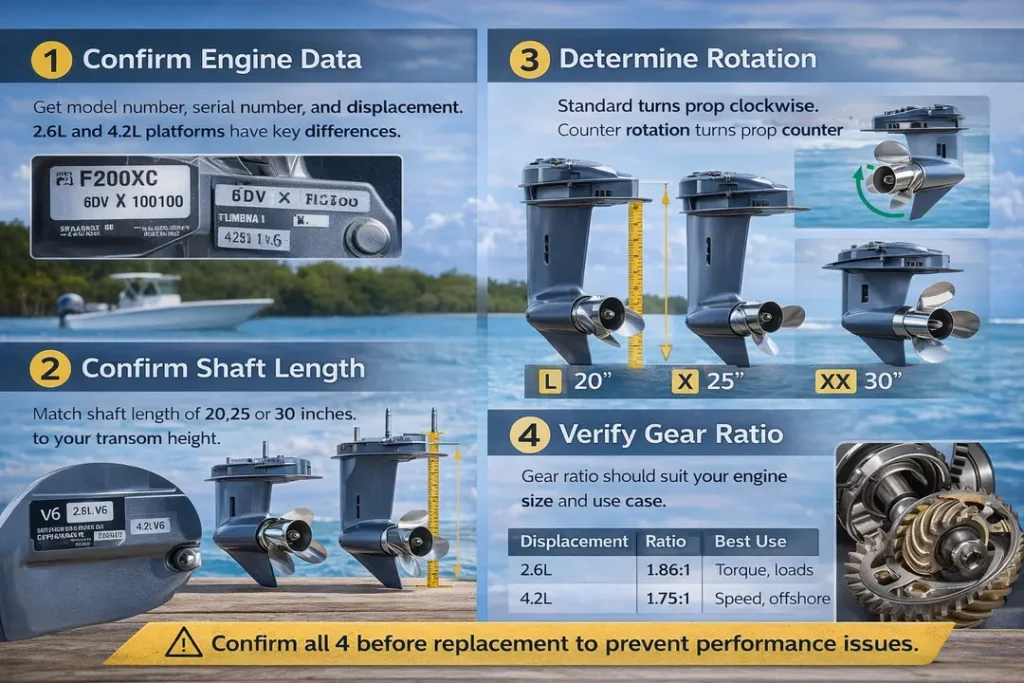
Start with confirmed engine data. You need the model number, serial number, production year, and displacement. Yamaha commonly differentiates between 2.6L and 4.2L platforms, especially in V6 configurations. A 2.6L Yamaha lower unit is not interchangeable with a 4.2L unit without verifying compatibility.
Next, confirm the shaft length. The most common shaft lengths are 20, 25, and 30 inches. Shaft length must match your transom height. A mismatch affects the water pickup position and can lead to overheating or ventilation issues.
Then determine rotation. A standard Yamaha gearcase rotates clockwise in forward gear. A counter-rotation lower unit turns the propeller in the opposite direction and is typically used in twin or multi-engine setups to balance steering torque.
Finally, verify the gear ratio. Gear ratio affects hole-shot, load carrying, and top-end speed. Different V6 Yamaha gearcase options are tuned for different applications, including performance and offshore durability.
Only after confirming all four variables should you proceed with a Yamaha lower unit replacement.
Rotation, Length, Ratio: The 3 Decisions That Prevent “Almost Fits”
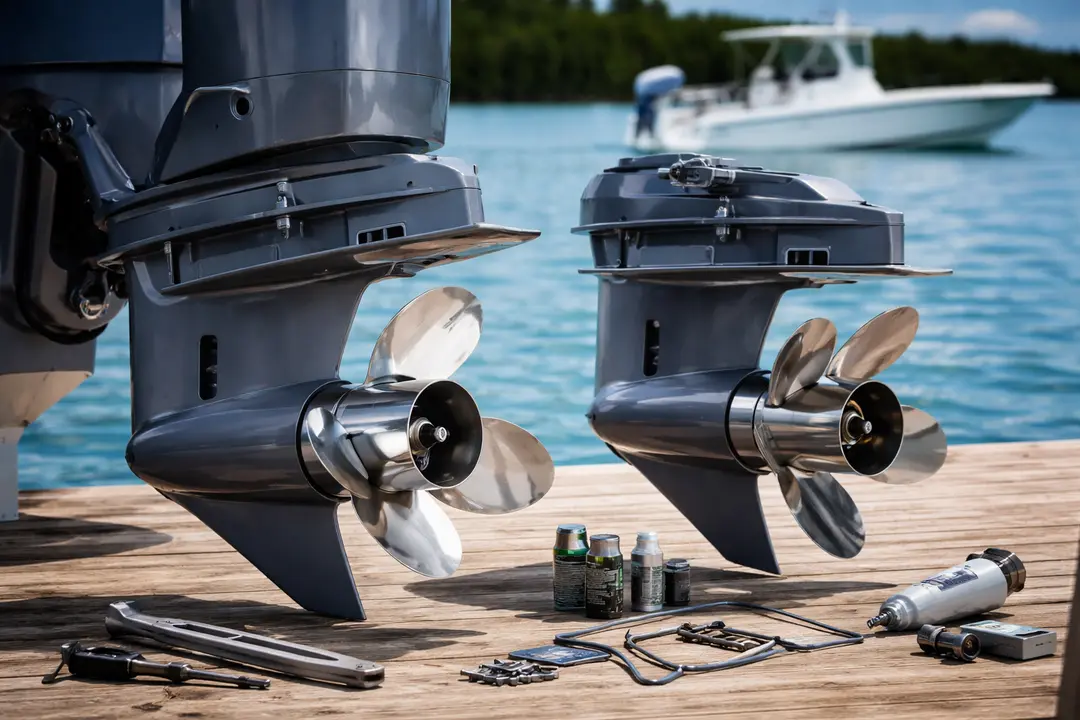
The Yamaha gearcase houses the drive shaft, gears, and water pump. It transfers engine power to the propeller while supplying cooling water. Because it performs both mechanical and cooling functions, even small spec mismatches create performance problems.
Shaft Length: Shaft lengths of 20, 25, and 30 directly affect mounting height and water pickup alignment. A 20-inch shaft fits standard transoms. A 25-inch is common on offshore center consoles. A 30-inch is typically found on larger offshore rigs. If the water intake sits too high, you risk cavitation and overheating.
Rotation: Standard rotation is common on single-engine boats. Counter-rotation lower unit configurations are essential for twin setups. Using opposite rotations reduces steering pull and improves tracking at speed.
Gear Ratio: Gear ratio determines how engine RPM translates to prop RPM. Lower ratios favor torque and heavy loads. Higher ratios emphasize top-end speed. This is particularly relevant when comparing a 2.6L 4.2L Yamaha lower unit or selecting among V6 Yamaha gearcase options.
A mismatch in any of these three areas often results in what boaters call an “almost fit.” It bolts on, but performance suffers.
Quick Matchups: Best for Use Case
Offshore V6 4.2L: Most offshore setups use 25-inch or 30-inch shafts. Counter-rotation lower-unit options are common on twin-engine aircraft. Durability and corrosion resistance are priorities.
Bass and Performance Boats: These applications often focus on gear ratio tuning for hole-shot and top-end balance. A pro series lower unit may be selected for improved water flow and higher mounting heights.
Work and Utility Boats: Standard rotation is typical. Durability, simple rigging, and reliability matter more than peak speed.
Why Buy the Correct Yamaha Outboard Lower Unit the First Time
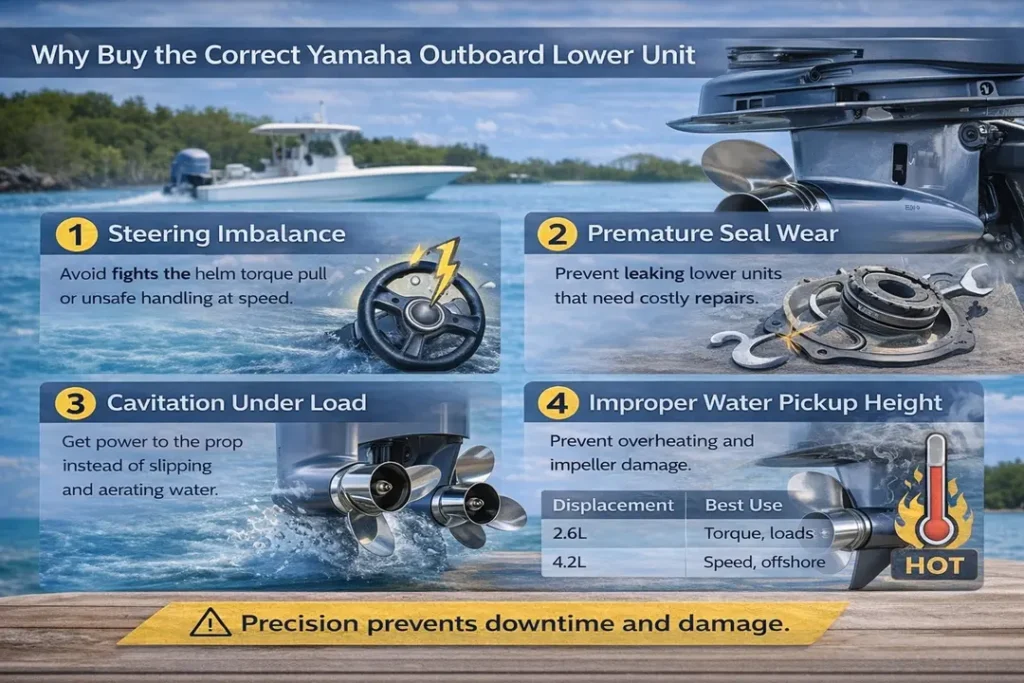
When evaluating Yamaha lower unit replacement options, precision matters more than price. Matching the correct Yamaha outboard lower unit to engine family, shaft length, and rotation prevents:
- Steering imbalance
- Cavitation under load
- Premature seal wear
- Overheating from improper water pickup height
Clear specifications by engine family, including distinctions between 2.6L and 4.2L Yamaha lower units, help ensure compatibility. Having support for prop selection and sealing kits further reduces the risk of downtime.
Also Read: Outboard Yamaha Parts
What You Pay For and What It Prevents
Pricing varies depending on displacement, shaft length, rotation type, and performance configuration. A counter-rotation lower unit generally costs more due to lower production volume and specialized gearing. A pro-series lower unit may also carry a premium due to enhanced hydrodynamics or heavy-duty internals.
However, selecting the correct Yamaha gearcase prevents costly issues such as:
- Re-rigging labor
- Restocking fees
- Lost boating time
- Damage from incorrect water intake height
When planning a Yamaha lower unit replacement, budget for fresh seals, break-in gear lube, and appropriate prop or hub hardware. These are not optional details; they protect your investment.
Installation, Break-In, and Prop Matching
Proper installation is critical for any Yamaha outboard lower unit.
During install:
- Align the drive shaft splines carefully.
- Use new seals and gaskets.
- Torque mounting bolts to specification.
After installation, follow break-in recommendations and check gear lube early to confirm there is no water intrusion.
Prop selection must match your gear ratio and target RPM at wide-open throttle. Test under load, not just on the trailer. The correct prop and gearcase combination ensures the engine operates within its designed RPM band.
Frequently Asked Questions
How do I know if I need a counter-rotation lower unit?
If you run twin engines, one typically uses standard rotation and the other uses counterrotation to balance steering torque.
Can I switch shaft length without changing the transom setup?
No. Shaft length 20, 25, 30 must match your boat’s transom height. Changing length without structural adjustment can cause overheating or performance loss.
Are the 2.6L and 4.2L V6 gearcases interchangeable?
Not automatically. A 2.6L 4.2L Yamaha lower unit differs in gearing, mounting, and compatibility. Always verify by model and serial.
Is a pro series lower unit necessary for performance boats?
It depends on the setup and intended speed. Performance-oriented boats benefit from optimized water flow and ratio tuning, but proper prop selection is equally important.
What is the biggest mistake during Yamaha lower unit replacement?
Ordering based only on horsepower without confirming displacement, shaft length, and rotation.
The Bottom Line
Selecting between standard and counter-rotation Yamaha lower units comes down to configuration and application. Confirm displacement, verify shaft length, match the correct rotation, and select the proper gear ratio for your load and performance goals. When those elements align, your Yamaha outboard lower unit will deliver the balance, cooling efficiency, and durability your setup was designed for.