



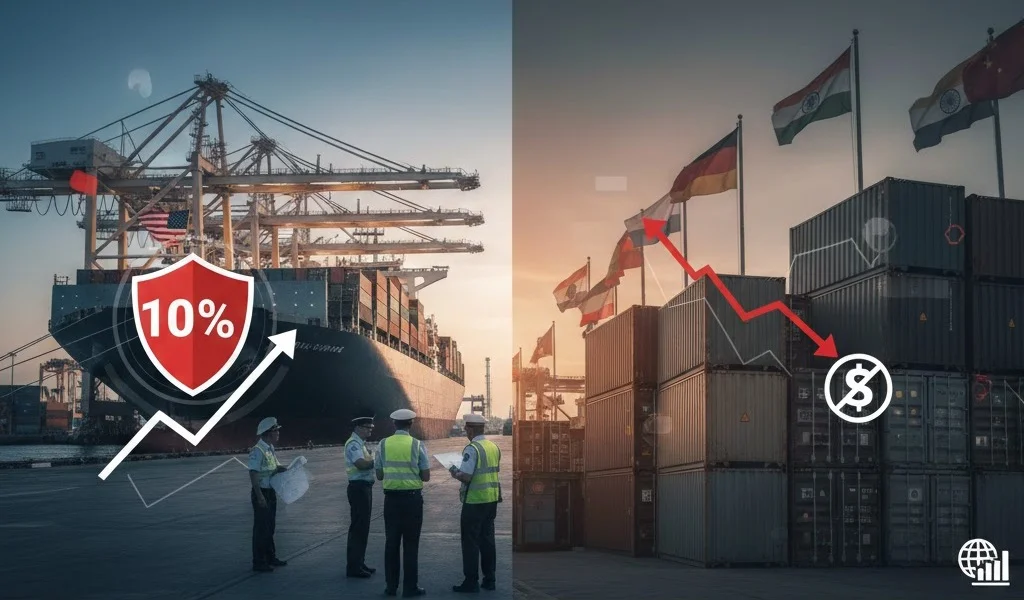
The United States has implemented new global tariffs on imports, with a 10 percent rate now in effect, the White House confirmed as markets reacted to the policy change. The move comes after earlier statements by the administration suggesting higher tariff levels might be imposed.
Officials said the tariffs, which are part of a trade policy aimed at addressing longstanding trade imbalances and protecting U.S. industries, were formally enacted on Tuesday through executive authority. The initial announcement had outlined potential increases of up to 15 percent, but the final effective rate is set at 10 percent across a range of imported goods.
The policy shift has drawn attention from global markets and trading partners, with analysts monitoring potential impacts on supply chains, consumer prices, and international relations. The administration has stated that the tariff approach is designed to strengthen domestic manufacturing and discourage unfair trade practices, while also leaving room for negotiation with key countries.
Details on specific product categories covered by the tariffs and exemptions have not yet been fully disclosed, and the White House has been contacted for further comment. Business groups have expressed concern about increased costs for importers and potential retaliation by affected nations.
Also Read: Canada’s Tariffs Shift As Ottawa Eases Duties On US Products
Economists say the decision could have mixed effects on the U.S. economy, with some arguing tariffs may protect certain industries in the short term, while others warn of inflationary pressure and disruptions to global trade flows.