
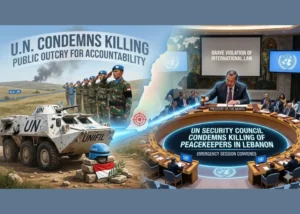


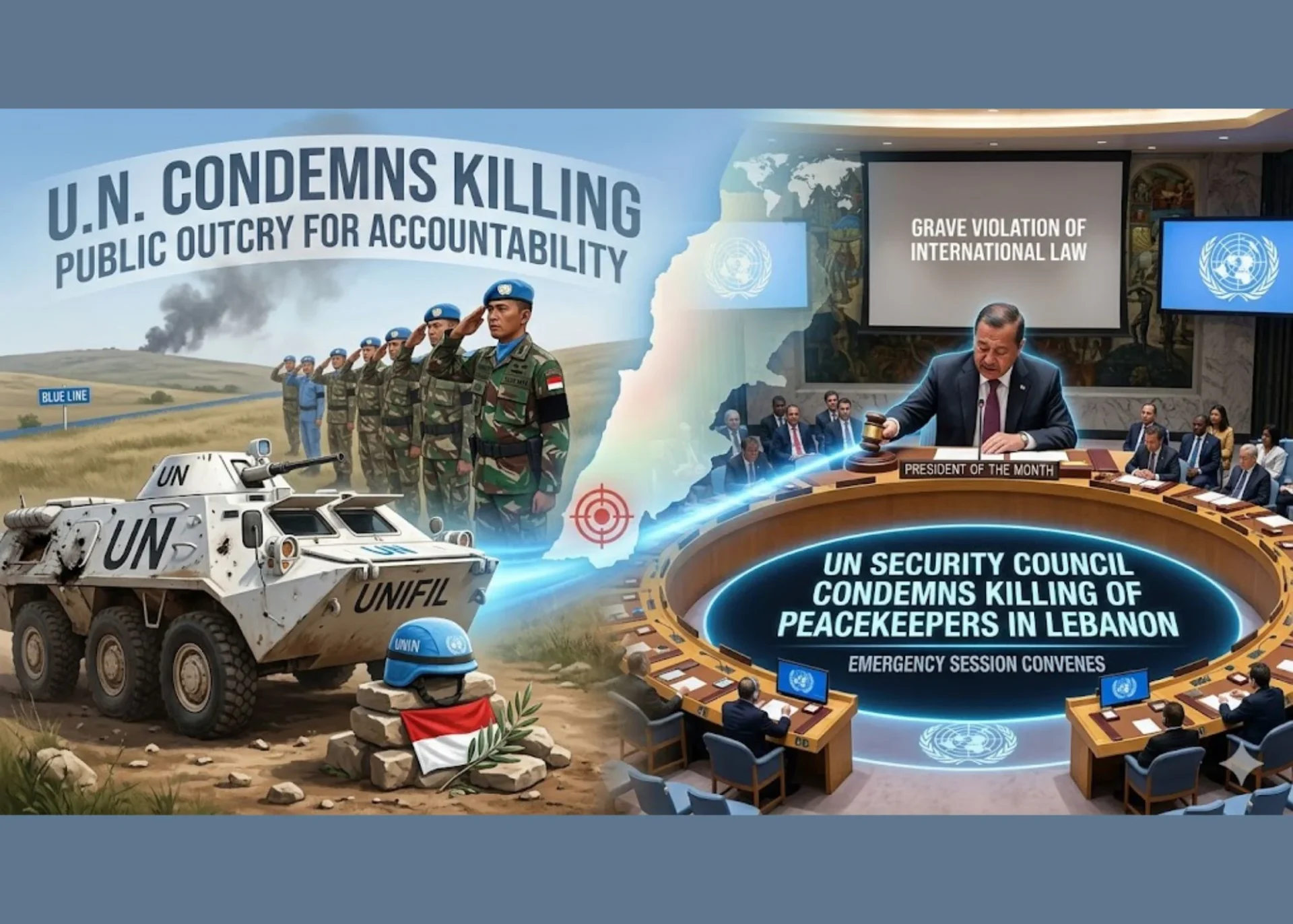
Three United Nations peacekeepers were killed in southern Lebanon, prompting strong condemnation from the U.N. and an emergency meeting of the Security Council amid escalating conflict in the region.
Have questions about this story?
Ask Tundra for more details, context, or updates.
What Happened Actually?
The peacekeepers, all part of the United Nations Interim Force in Lebanon (UNIFIL), were killed in two separate incidents in southern Lebanon within a 24-hour period.
According to initial findings, two peacekeepers died when a roadside explosion struck their convoy near Bani Hayyan, while a third was killed by a projectile explosion at a U.N. position. Investigations into the incidents are ongoing.
The deaths mark one of the deadliest episodes for U.N. peacekeepers in Lebanon in recent years.
Impact of Incident
The killing of peacekeepers is considered a serious violation of international law and raises concerns about the safety of international forces operating in active conflict zones.
U.N. Secretary-General António Guterres condemned the attacks, stressing that personnel serving in peacekeeping roles must be protected at all times.
The incident highlights the growing intensity of the conflict between Israel and Hezbollah, which has already caused widespread casualties and displacement across Lebanon.
Who Is Affected?
The incident directly affects:
- U.N. peacekeeping forces deployed in southern Lebanon
- Contributing countries, including Indonesia, which lost personnel
- Civilians in the region already impacted by ongoing conflict
More broadly, the safety of international peacekeeping missions is now under renewed scrutiny as tensions escalate.
What Happens Next
The United Nations Security Council has convened to assess the situation and discuss accountability for the attacks.
Both the United Nations and involved parties are conducting investigations to determine responsibility, with differing claims about who may be behind the explosions.
The situation remains volatile, with continued military operations in southern Lebanon raising concerns about further incidents.
Background Context
The UNIFIL mission has been operating in Lebanon since 1978 to monitor ceasefires and maintain stability along the Israel-Lebanon border.
However, ongoing conflict has increasingly placed peacekeepers at risk, with recent violence marking a significant escalation compared to previous years.
Analysis
This incident reflects a dangerous shift in the conflict environment, where even neutral peacekeeping forces are no longer insulated from violence.
When peacekeepers become casualties, it signals a deeper breakdown of control, raising serious concerns about how much further the conflict could intensify.