




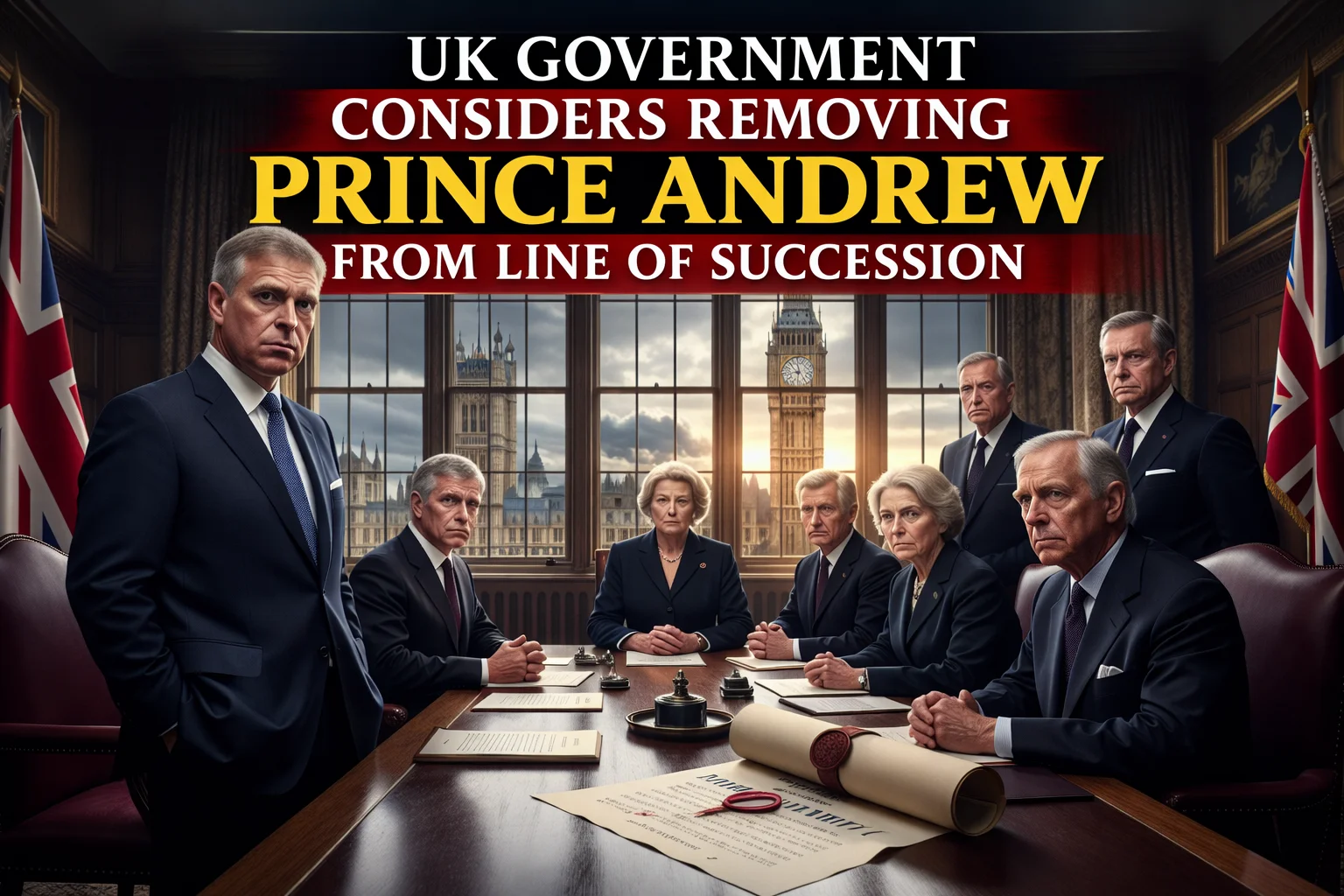
The United Kingdom government is considering legislative action to remove Andrew Mountbatten‑Windsor from the royal line of succession, officials told the BBC amid ongoing political and legal controversy surrounding the disgraced royal.
Despite stepping back from public duties and surrendering many royal titles in 2025, Andrew, formerly known as Prince Andrew, still occupies the eighth position in the succession to the British throne. Lawmakers and some political parties, including the Liberal Democrats and the Scottish National Party, have indicated support for legislation that would formally exclude him from the line of succession once current police investigations conclude.
The move would mark an unprecedented constitutional shift. Changing the succession requires not only approval from the UK Parliament but also consent from the 14 Commonwealth realms where the monarch is head of state.
Andrew’s position has been under intense scrutiny since his arrest last week on suspicion of misconduct in public office linked to his historical association with Jeffrey Epstein, a convicted sex offender, and allegations he shared confidential information while serving as a trade envoy — claims he denies. Thames Valley Police have also been searching his properties as part of the inquiry.
Supporters of the proposed legislation argue that formal removal from succession would safeguard the monarchy’s integrity and public trust, even though Andrew is highly unlikely to ever become sovereign due to his distant position in the line. Critics say such a change should only occur after legal processes conclude and warn of broader constitutional implications.
Also Read: Prince Andrew Scandal Raises Questions About Judgement
King Charles III and government leaders have emphasized the importance of legal due process, while public debate continues over the future role and relevance of the monarchy in modern Britain.