




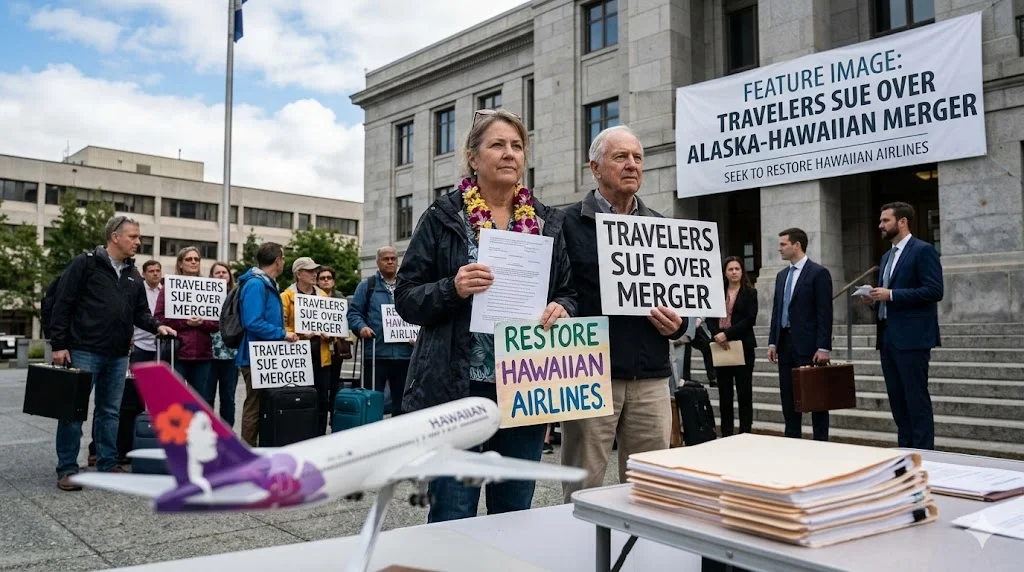
A group of travelers has returned to federal court seeking to reverse the airline industry changes that followed the merger of Hawaiian Airlines and Alaska Airlines, arguing that promises made during the acquisition have not been kept and that the outcome has harmed consumers.
The lawsuit, filed under the name Yoshimoto v. Alaska Airlines, Inc. asks a judge to intervene to preserve Hawaiian Airlines as a standalone carrier and halt further integration, which plaintiffs say would make reversal of the process nearly impossible once completed later this spring.
Passengers claim that when the $1.9 billion acquisition closed in September 2024, they were assured of enhanced route options, stronger loyalty benefits, and improved connectivity. Instead, they argue the merger has resulted in reduced nonstop service on key Hawaii routes, more overnight return flights that are less desirable for travelers, and changes to loyalty programs that have diminished redemption value and benefits for longtime Hawaiian flyers.
Among the concrete developments cited in the filing are the retirement of the Hawaiian call sign, cuts to routes such as Boston to Honolulu before competitors adjusted service, and changes in award pricing and seating availability through the unified rewards program Atmos. Plaintiffs argue that these changes amount to harm already occurring, rather than hypothetical future issues, and thus justify immediate judicial review.
Critics of the merger also point to market concentration concerns, noting that Alaska now controls a significant share of air service capacity between the U.S. mainland and Hawaii. While this does not automatically constitute a monopoly under antitrust law, plaintiffs argue it raises competitive issues in a region heavily reliant on air travel for economic activity and resident mobility.
Alaska Airlines has maintained that competition remains robust through service by other major carriers, including Delta, United, and Southwest, and that consumer protections were part of initial regulatory approvals. However, the plaintiffs contend those safeguards are insufficient or undermined by later integration developments.
At stake now is whether the court will grant emergency relief to preserve Hawaiian Airlines’ independent operations or allow the merger integration to proceed as planned. Key actions in the lawsuit center on airline routes, consumer choice, pricing, and loyalty program changes that plaintiffs say have already impacted travelers.
Also Read: Alaska Airlines, Delta, and Air Canada Cancel Mexico Flights Amid Civil Unrest
For now, flights continue as scheduled and the unified brand operates across routes, but the legal challenge adds a new dimension to ongoing debates over airline consolidation and its effects on competition and service quality for Hawaii travelers and beyond.