



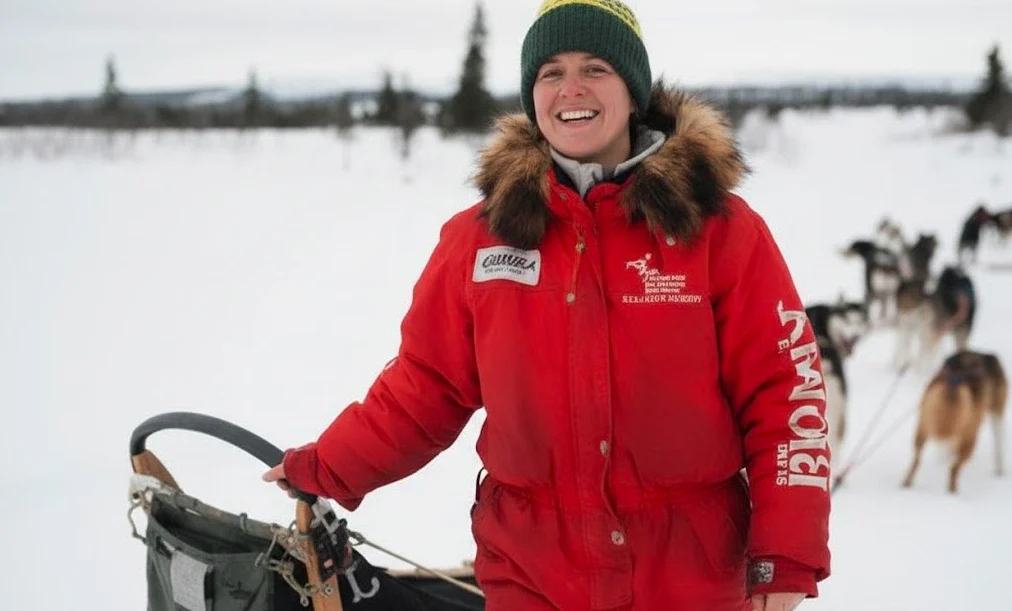
Susan Butcher was born in Cambridge, Massachusetts, on December 26, 1954. Her story begins not in the frozen tundra of Alaska but in a suburban city in the USA. Susan is not only known for conquering the world’s most brutal sports event four times but also for her struggle and grit that she had throughout her entire life to combat challenges.
This is the remarkable tale of a woman who travels to the remote wilderness of Alaska from the attractive and vibrant city life to become the girl of her dreams. She chose the companionship of dogs over fame and emerged as one of the most resilient women of all time.
Have questions about this story?Ask Tundra for more details, context, or updates.
Quick Glance: Susan Butcher Profile
| Attribute | Details |
| Full Name | Susan Howlett Butcher |
| Born | December 26, 1954 |
| Birthplace | Cambridge, Massachusetts, U.S. |
| Died | August 5, 2006 (age 51) |
| Place of Death | Seattle, Washington, U.S. |
| Cause of Death | Acute Myelogenous Leukemia (AML) |
| Parents | Charles Butcher and Agnes Young |
| Spouse | David Monson (married September 2, 1985) |
| Children | Tekla and Chisana |
| Occupation | Sled-dog racer, trainer, veterinary technician, kennel owner |
Early Life: Moments That Shaped Her
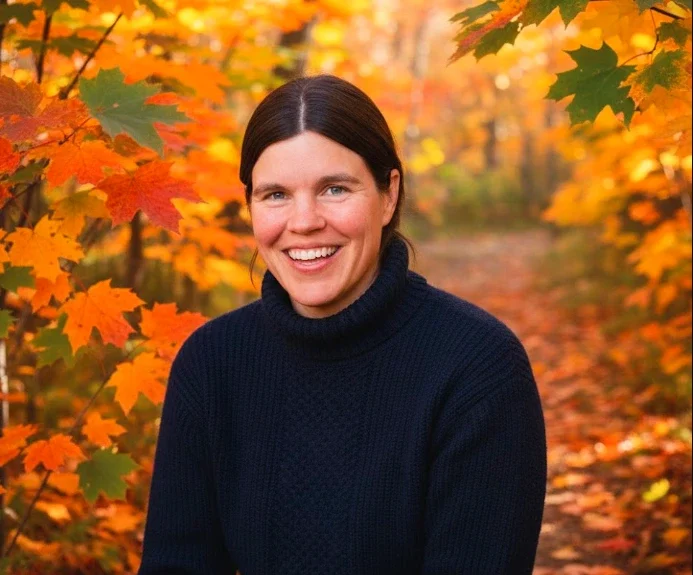
Susan Butcher grew up in the vibrant life of the city, far away from the rigidity of Alaska. From an early age, she started playing with dogs and used to train them. Her father was a progressive person who believed in treating his daughters without any discrimination.
At the age of eight, when kids like to play games with siblings and are unaware of the challenges of urban life, Susan wrote an essay, “I Hate the City.” This was not a teenage rebellion but a genuine expression of her feelings. Simply put, she had a passion to liberate herself from the vibrancy of city life and live in a completely natural setting.
A Leap Toward the Last Frontier
She applied to the boat-building school following her love for sailing, but due to the rejection, she could not pursue her educational career. The reason behind the rejection of learning carpentry skills was not a lack of skills but her gender; she could not secure admission just because she was a female. It is one of the most frustrating lessons for Susan Butcher in the 1970s; instead of being passive and hopeless, she found another path.
After graduating from high school, Susan enrolled at Colorado State University, but the traditional life could not hold her for long, and in 1972, she met a woman who owned 50 Siberian huskies. It was the time when Susan chose a completely different path by joining the veterinary technician team. She started spending her time with the dogs, and for the next three years, Susan learned everything about breeding, training techniques, and racing strategies.
At the age of 20, she made a decision to move to Alaska as she was hired by the University of Alaska to work on environmental projects. She got a cabin in a remote area, the Wrangell Mountains, where one cannot reach by road, and only planes can take you there. For a twenty-year-old girl, it is a nightmare, but for Susan Butcher, it was more than paradise.
Her Life in the Wilderness
One of the interesting parts of her success story is that her cabin in the remote area was not only a home but also a training place. She learned survival techniques there, understood the remote life intricacies, and spent a sufficient amount of time with huskies. She bought three Alaskan breed husky puppies and added to her pack whenever she had extra money.
Susan started acting like the Alaskans; she had to visit the market that was 50 miles away from her cabin. She used stars for navigation and learned to hunt moose. For her, this isolation was not loneliness; it was preparation.
Paths Carved by Mentors
Susan was not born a champion; she achieved a status in society by spending time in the company of trained people. In 1977, she met Joe Redington, who founded the race four years earlier. He is also known as the “father of the Iditarod.” When he met a young, determined woman who had survival skills, knowledge of veterinary science, and a team of huskies, Joe immediately recognized something special about Susan.
Rise to Iditarod Fame
The Iditarod is often known as “The Last Great Race On Earth” because of the challenges participants face. The brutal weather, -50 °F temperature, the isolation, and sleep deprivation can cause extremely unbearable physical and mental conditions for both musher and dogs.
In the beginning, it was hard for her to combat the uneven situations, but her grit and resilience always proved stronger than the challenges. When she joined the first race, there were two other women competing, and the rest of the mushers were men. A determined yet nervous, young Susan spent 16 days trailing and won 19th place. She was the first woman to place in the top twenty and win a modest cash reward.
She participated in the race 9 times before securing 1st place. In 1986, she won the race by crossing the finishing line earlier than anyone else. After that, she won that title 3 times more in 1987, 1988, and then 1990.
Also Read: CB Cotton Age and Biography | Fox News National Correspondent
| Race | Year(s) Won | Winning Time | Key Significance / Achievement |
| Iditarod Trail Sled Dog Race | 1986 | 11d 15h 6m | Second woman to win the Iditarod; set a new speed record. |
| Iditarod Trail Sled Dog Race | 1987 | 11d 2h 5m 13s | Broke her own speed record by more than 13 hours. |
| Iditarod Trail Sled Dog Race | 1988 | 11d 11h 41m 40s | First person to win three consecutive Iditarod races. |
| Iditarod Trail Sled Dog Race | 1990 | 11d 1h 53m 23s | Achieved her fourth Iditarod victory and set another speed record. |
| John Beargrease Sled Dog Marathon | 1990 | 87h 15m 38s (approx.) | Won one of the longest and toughest Lower-48 sled dog races. |
The World Beyond the Dogsled
In 1985, she was married to fellow musher David Monson. The story of her romance has an unusual beginning; she was charged with $6,000 worth of dog food at David’s store. Instead of being angry, David was impressed by her passion and grit, and it led to their marriage.
Susan had two daughters, and due to the family responsibilities, it was hard for her to engage in the racing activities. Tekla and Chisana, who were named after Alaskan locations, reflect that Susan Butcher had a deep connection with her adopted home. It was like Alaska gave her the meaning of life that she had been searching for years.
Being a mother, she had to focus on the healthy growth of her daughters, and another challenge was to have a considerable amount of time for mushing, which Susan lacked. In 1994, Susan Butcher retired from the Iditarod Championship after 17 total races.
The Fight Against Leukemia
It was 2005 when she started having unusual fatigue, which was attention-grabbing because she had spent her life facing extreme challenges. After visiting a physician, she was diagnosed with Leukemia. She had a bone marrow transplant, a treatment procedure that could add a few years to her life. But cancer does not follow rules; she died in Seattle after fighting with it for 8 months. It was not only shocking for Alaskans but also the rest of the mushing community in the world because Susan was only 51 years old when she died.
Also Read: Tommy Moe Biography: Olympic Gold Medal Skier & Alaska Legend (2025)
Lessons from the Life of a Champion
Follow Your Truth, Not Others’ Expectations: Susan’s life is a reflection of grit, hard work, and choosing unconventional paths. She left the urban bustle of the city and moved to Alaska following her passion, which led her to win 4 times.
Excellence Requires Consistency: She faced a list of issues and failures, but her consistency brought a moment for Susan when she was recognized as a champion of the most brutal sports.
Setbacks Don’t Define You: She might not emerge as the champion if left mushing in 1985, but the setback filled her with a different type of energy, and Susan chose a path of resilience.
FAQs
Who was the woman who won the Iditarod?
Susan Butcher was the one who won the Iditarod. She dominated her spot for more than a decade in the world of dog trailing.
What did Susan Butcher pass away from?
She passed away in 2006 due to Leukemia. She was only 51 years old when she died.
Did Susan Butcher write a book?
Yes, Susan Butcher wrote a book called “Granite.” It is about how a shy pup became a champion leader through teamwork and trust.