


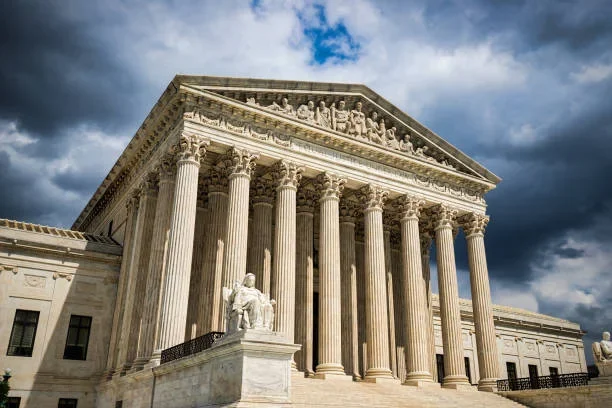
The U.S. Supreme Court’s conservative majority appears ready to support former President Trump’s controversial firing of an FTC commissioner, in a decision that could reshape presidential power over independent federal agencies.
On December 8, the Court heard arguments in the case, Trump v. Slaughter, challenging the legality of Trump’s March 2025 dismissal of Rebecca Kelly Slaughter, a Democratic-appointed FTC commissioner, before her term was scheduled to end. Lower courts had ruled the dismissal unlawful under longstanding law that limits removal of independent-agency commissioners.
The case centers on a 1935 precedent, Humphrey’s Executor v. United States, which bars the president from removing certain agency officials without cause. The Trump administration, represented by the U.S. Solicitor General, asked the Court to overturn that precedent, arguing the restrictions on removal undermine the president’s constitutional authority to lead the executive branch.
During oral arguments, conservative justices gave signals that they are receptive to the administration’s arguments. Chief Justice John Roberts, joined by a conservative majority, suggested Humphrey’s Executor may be outdated, saying it reflects a time when the FTC “had very little, if any, executive power.”
If the Court sides with Trump, the decision would represent a historic expansion of presidential power, potentially allowing the president to remove leaders of dozens of independent agencies at will, fundamentally altering how U.S. regulatory bodies operate.
Also Read: Trump Orders Pentagon to “Immediately” Resume Nuclear Weapons Testing Ahead
Opponents warn that overturning Humphrey’s would erode a key safeguard protecting independent regulators from political interference. Liberal justices at the hearing expressed concern the shift would compromise the independence and impartiality of agencies meant to operate free from partisan pressure.
The Court’s ruling, expected by June 2026, may mark one of the most significant shifts in executive-branch power in decades, affecting not just the FTC but many federal agencies whose mandates shape regulation, labor policy, consumer protection, and more.