



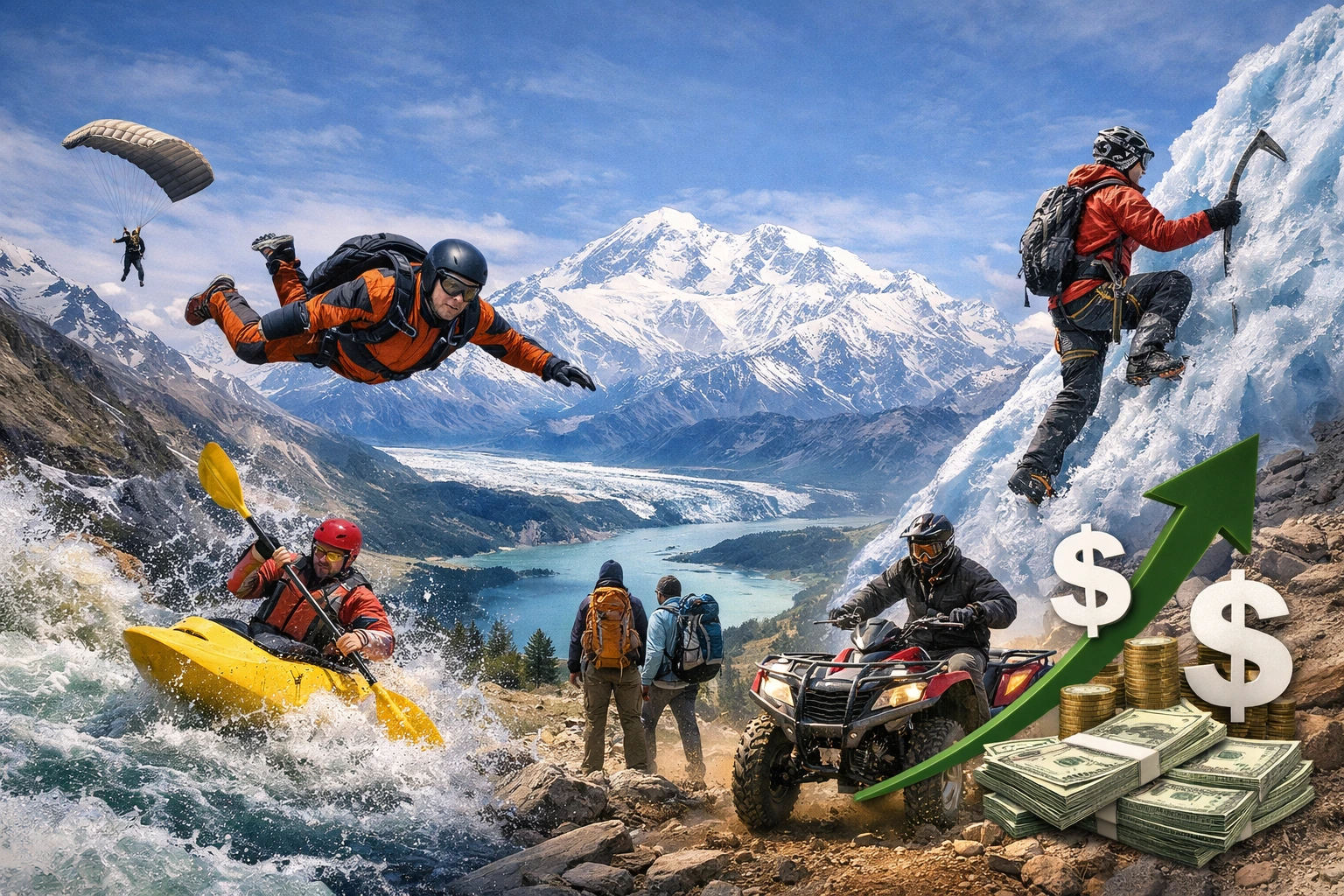
Recent data suggests that more than 3 million people visit Alaska annually. Many come to engage in extreme sports tourism. Outdoor adventure is the key reason Alaska attracts adrenaline junkies. 29% of travelers are adventure seekers. It has a positive impact on the economy of Alaska. We can see that outdoor activities grew nearly 30%, from 2.1 to 2.6 billion dollars.
Alaska is no longer a place people talk about visiting during holidays. It has become a place where people come to train themselves. Where they learn survival skills. The rise of the adventure economy is consistently shaping Alaska. Let’s break down why and how it is happening.
Have questions about this story?Ask Tundra for more details, context, or updates.
Alaska’s Adventure Economy: Then vs. Now
| Period | Visitors (Approx.) | Average Spend | Direct Spending | The “Adventure” Shift |
| Mid-2000s | 1.7 Million | $950 | $1.5 Billion | Guided extreme experiences were “niche.” |
| Mid-2010s | 1.9 Million | $1,050 | $2.0 Billion | “Soft adventure” (zip-lines) goes mainstream. |
| Early 2020s | 2.7 Million | $1,500 | $3.1 Billion | “Experience-focused” trips become the core driver. |
| 2024-2025 | 3.08 Million+ | $1,500 | $3.9 Billion | Adventure adds 4.6% to the Alaska GDP. |
What Does Adventure Economy Really Mean in the Alaskan Context?
It describes how outdoor recreation and extreme sports help generate measurable economic value. Alaska is a hub of extreme sports. People from all around the USA and Canada come here to participate in or view extreme sports. It not only amuses visitors but also helps Alaskans and Northwest residents make a living.
When adventure seekers come, they book hotel rooms, use local transportation, and are guided. So, it produces new jobs in different sectors. For example, 3.3 million people visited Alaska’s National Park in 2023. They spend approximately 1.3 billion dollars. Additionally, it helps create 21,274 new jobs.
The state, which once leaned heavily on pipelines and fuel, is now monetizing immersion.
Why Does the Adventure Economy Matter?
Adventure tours play a cornerstone role in the growth of Alaska’s economy. It helps not only the big tycoons but also small businesses in the region. For instance, cruise ships, RVs, floatplanes, or tour-adventure bikes go to Alaska.
No matter if you run a coffee shop, a boutique store, or a charter boat, your business will boost significantly due to the arrival of adventure tourists.
Furthermore, Alaska reduces dependence on extractive industries by expanding adventure tourism. It attracts people from all around the world to perform or watch extreme sports and adventure activities. Using extreme sports and adventure activities, it can become the top eco-adventure destination on the globe.
How Adventure Economy Works
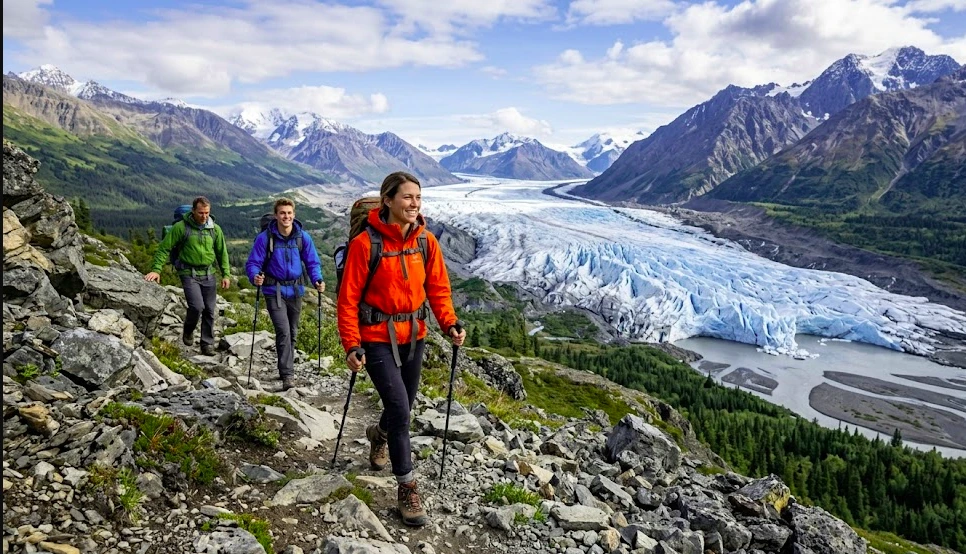
Many Alaskans are unable to understand how the adventure economy works and how it helps us to make more bucks. Basically, when someone books extreme sports tours or eco-adventure tours near national parks, the operators search for experts.
They hire certified extreme sports instructors. Additionally, operators secure permits and coordinate with transportation. When travelers come, they spend on accommodation, dining, and gear. As a result, money flows from top to bottom, and Alaskans earn a substantial amount of money.
Why is the Adventure Economy Growing in Alaska?
People know that Alaska is a center of attention for adventure seekers. But many are unfamiliar with the fact of why it is so. First, Alaska offers the scale that not many other places match. Second, the climate in the Northwest is nearly unbearable for people. Lastly, its infrastructure is built around adventure.
Suppose you are an adventure lover. You have two choices. There are more chances you will choose a place where survival is the first challenge. Alaska is such a place.
Huge, Wild, and Varied Terrain
Many athletes visit Alaska for training. The Inside Passage, the Alexander Archipelago, the Tongass National Forest, and the Fairweather Range are their top priorities. These sites have terrains that challenge even highly trained and elite athletes.
Harsh Climate that Amplifies Difficulty
Extreme sports require harsh climate sites. When it comes to subzero temperatures and deep snow, the only name that comes to mind is Alaska. Basically, uneven weather makes simple activities challenging. You need skills to combat such conditions in the Northwest corner of the USA.
What Are the Hidden Economic Risks of Alaska’s Growing Adventure Tourism?
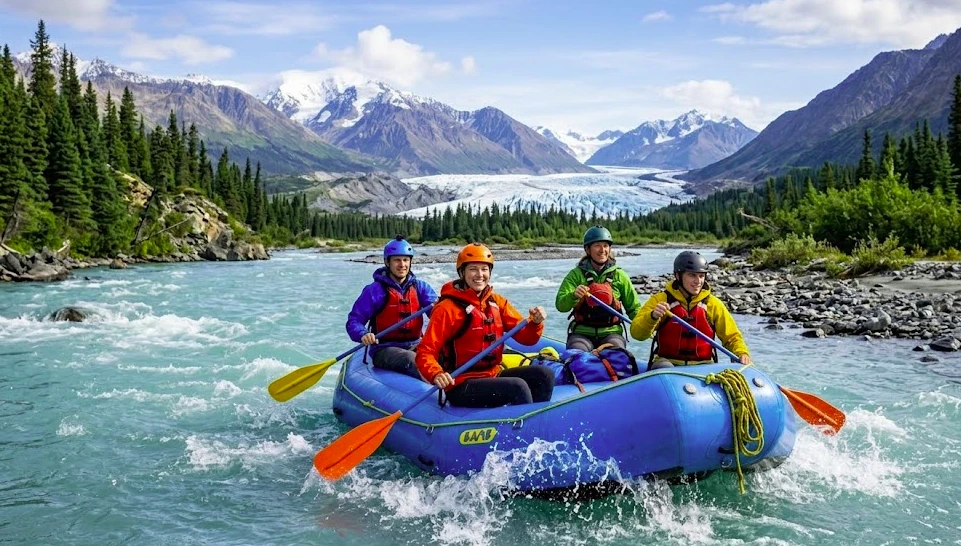
The positive impact of ecotourism and extreme sports is not hidden from anyone. But it has also created a few problems for Alaskans. Basically, the adventure economy looks powerful on the surface, but comes with many risks. There are several hidden costs of expanding business in Alaska.
Seasonality Creates Income Instability
Many extreme sports and eco-adventure tours operate between May and September. It forces businesses to earn most of the revenue within this short window. As a result, the weak season caused by the weather brings financial challenges for businesses in Alaska.
The Search and Rescue (SAR) Infrastructure Gap
The budget of Alaska is limited and does not expand at the same pace. However, extreme sports promote adventurous activities in remote areas of the state, like the Chugach Range and St. Matthew. Alaskan administration struggles to provide high-end rescue responses to extremely vulnerable remote areas.
Housing and Workforce Retention
Adventure tourists consider Alaska a hub of extremely dangerous sports. It is raising the number of outsiders coming to the main cities of Alaska, like Anchorage, Juneau, and Fairbanks.
The short-term rentals are growing while the local workers, such as backcountry guides, lodge staff, and glacier pilots, are unable to afford accommodation during peak season.
How Insurance Underwrites the Extreme Sports Economy?
No doubt, Alaska’s rescue budget is not keeping pace with the progress of extreme sports tours. Therefore, tourists rely on insurance programs. The business of insurance is expanding in Alaska, as most extreme sports tours require commercial general liability coverage.
The industry of risk management and insurance offers employment to 138,000 people, which includes rescue operators, ambulance drivers, and glacier pilots. It also opens the door for other national and internal safety insurance companies to come to Alaska in search of prospects.
How Do Ecotourism and the Adventure Economy Affect the Environment in Alaska?
The independent adventure economy has made Alaska the center of attention for extreme sports lovers. But experts claim that it also impacts the environment.
Positive Environmental Impacts
Conservation Funding Increases
The business growth doubled due to the adventure economy and the most dangerous extreme sports. For example, revenue from permits, park fees, and guided tours helps fund conservation work in places like Glacier Bay National Park and Tongass National Forest.
Local Communities Value Preservation
The behavior change of the Alaskans is also noticed. When wilderness becomes an economic asset, communities protect it for financial incentives. Simply put, an adventure economy helps to preserve natural assets and support healthy ecosystems.
Negative Environmental Impacts
Wildlife Disturbance
Ecotourism is the source of bread and butter for many locals, but it also poses threats to the wildlife. For instance, increased boat traffic in areas like the Inside Passage disrupts marine life substantially and impacts the behavior of land animals.
Glacier and Trail Degradation
Dangerous sports require extreme climate conditions, so people choose glaciers and trails. Heavy foot traffic during glacier trekking and other extreme sports adventure activities can accelerate surface damage.
Adventure Activities and Their Impact on the Economy
A practical list of extreme sports in the Alaskan wilderness includes:
- Dog sledding: Many people come here to run dogs with a sled, which requires deep snow. Many riders pay approximately $200 to $400 per tour.
- Snowmobiling: Individuals love to ride snowmobiles. It requires deep snow, which is available in Alaska. A ride across frozen marsh and mountains is $120 to $350 per ride.
- Heli-skiing and glacier treks: Alaska is an ideal destination for high-impact activities. It costs approximately from $200 to $1800 per day.
Infrastructure Built Around Adventure
The majority of travel nerds argue that Alaska is a naturally gifted place. They claim that it has all the components that an ideal tourist place should have. For instance, 8 million acres of national park roads and 17000 miles of trails. 200+ backcountry lodges and heliports for drop-offs.
How It Impacts the Alaskan Economy
Stanislaw Rzeznik is a researcher who claims that 68% of recreational revenue comes from lodging and transportation.
The outdoor recreations, such as lodging or heli-skiing, contributed 4.6% to the Alaskan economy in 2023.
The traditional travelers spend more days than the non-traditional ones, which is projected at $1.09 billion.
Almost 20% of visitors come to Alaska during winter due to the extreme sports that significantly help the overall economy of Alaska.
The technology and machinery sales are rising in Alaska due to the extreme sports tours from 47% to 48.5%.
What are the top destinations driving Alaska’s economy?
- Valdez: It is known as the world’s capital of heli skiing.
- Talkeetna: This town is a logistical hub that gives place to a fleet of glacier pilots.
- Girdwood & the Kenai Peninsula: This place is known as the hub of multiple extremely dangerous sports, from paragliding to bore tide surfing.
- Fairbanks & Willow: Promoting dog sledding not as a profession but as a sport, this area is the epicenter of mushing.
FAQs
How much does extreme sports tourism contribute to Alaska’s GDP in 2026?
Extreme sports tourism is getting popular in Alaska. It contributes approximately 4.6% to Alaska’s total GDP.
Is Alaska’s adventure tourism economy growing or shrinking?
The adventure tourism economy in Alaska is growing. According to research, there is a 20% annual increase in adventure tourism.
Which extreme sport is statistically the most dangerous?
The most dangerous extreme sport is base jumping, as the fatality rate is 1 out of 2,300 jumps.
Is skiing an extreme sport?
There are different types of skiing, so it depends on the context. For example, resort skiing is not an extreme sport, but freestyle skiing, heli-skiing, and backcountry touring are incredibly dangerous.
Where can I find guided adventure tours near national parks?
Mostly, guided tours near national parks operate out of gateway hubs. You can visit Talkeetna if you stay in Denali and Seward for camping in the Kenai Fjords.
Are extreme sports good for mental health?
Yes, because it builds resilience, willpower, and self-confidence. So extreme sports are good for your health.
Can extreme sports cause stress?
It causes acute physical and psychological stress but relieves long-term stress.