



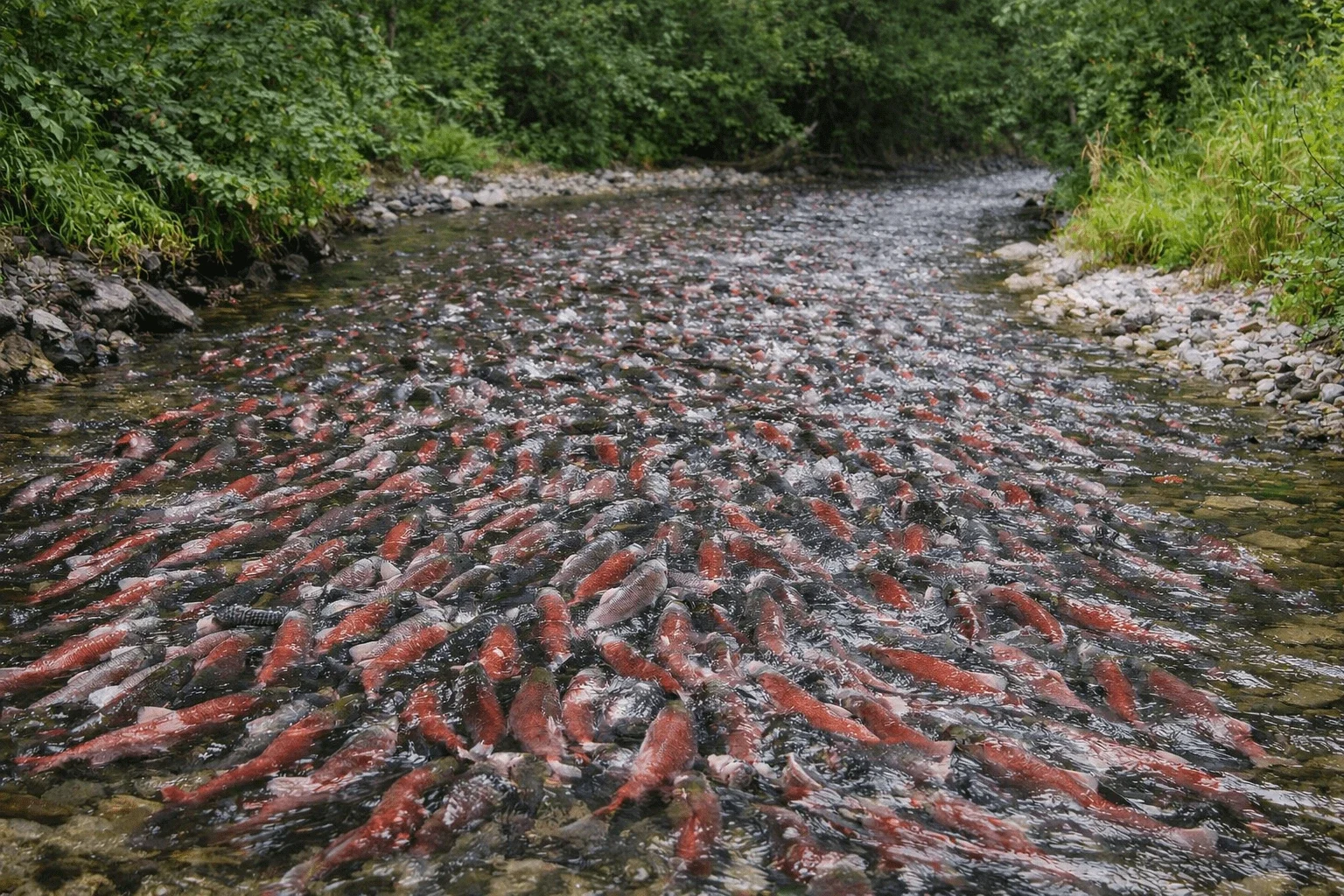
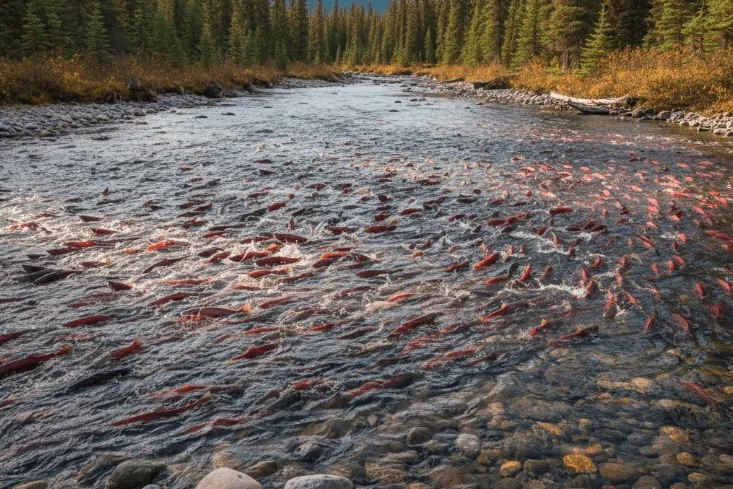
Each summer, parts of Alaska change in subtle but striking ways. In some shallow creeks, the water seems to thicken with movement as thousands of salmon press upstream together. Their backs break the surface, flashes of red and silver ripple through the current, and the creek appears almost filled edge to edge with fish.
The scene shown here comes from a shallow creek in Alaska, widely believed to be Fish Creek. While the exact location has not been officially confirmed, the behavior closely matches a well-documented natural event: Alaska’s annual salmon run.
What may look unusual at first is, in fact, one of the most predictable and important seasonal patterns in the region.
Have questions about this story?
Ask Tundra for more details, context, or updates.
Why Salmon Gather in Shallow Creeks
Salmon begin life in freshwater, migrate to the ocean, and return years later to spawn in the same river systems where they were born. This return journey, known as the salmon run, is guided by instinct and environmental cues such as water temperature, flow, and seasonal light.
Shallow creeks often mark the final stage of this migration. These streams typically offer cold, oxygen-rich water and gravel beds that protect eggs after spawning. As salmon reach these areas, movement slows. Fish cluster closely, conserving energy and positioning themselves for reproduction.
When water levels are low, these gatherings become highly visible. What appears to be overcrowding is simply a natural concentration of fish in a habitat that suits their needs.
When This Happens Each Year
In many parts of Southeast and Southcentral Alaska, salmon runs occur between July and August, though timing varies by species and local conditions. Pink and chum salmon often arrive first, followed by sockeye and coho in certain systems.
These runs are brief. For a few weeks, creeks fill with activity before gradually returning to quieter flows. The short duration is one reason scenes like this feel unexpected to those who encounter them for the first time.
Also Read: Whale Watching in Kodiak: Best Time, Tours, Pricing & Types of Whales to See
Where Scenes Like This Are Commonly Observed
Without focusing on sensitive access points, it helps to understand that scenes like this are not isolated. Similar salmon concentrations are regularly observed in several well-known Alaskan waterways that have been studied and monitored for decades.
Examples include:
- Indian Creek, where shallow channels support visible pink salmon runs during mid-summer
- Hansen Creek, a small stream known for dense sockeye migration
- Tributaries within the Yentna River system, where salmon move through narrow creeks connected to larger rivers
- The Naha River, where salmon move through dark, tannin-stained water during spawning season
These locations differ in geography, but they share the same essential characteristics that salmon depend on.
Why These Creeks Support So Many Fish
Several natural factors work together to create these dense gatherings.
Shallow depth and steady flow allow salmon to rest and spawn efficiently. Clean gravel beds protect eggs once they are laid. Seasonal timing brings large numbers of fish into the same system within a narrow window.
Together, these conditions turn ordinary creeks into temporary migration corridors filled with life.
Also Read: Does Eating Salmon Cause Gas? Separating Myth from Reality
The Wider Role of Salmon in Alaska
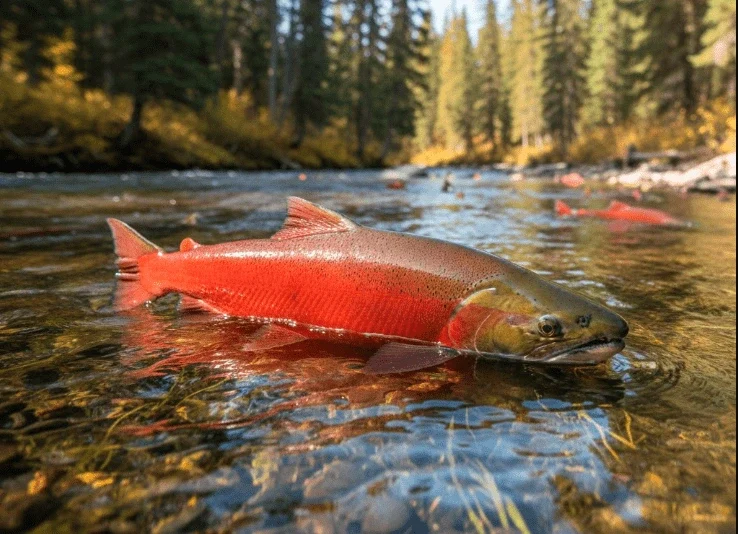
Salmon runs support far more than fish populations alone. Wildlife such as bears, birds, and small mammals rely on these migrations as a food source. Nutrients left behind after spawning enrich the water and surrounding land, supporting insects, plants, and forest growth along creek banks.
Because of this, salmon are often described as a foundation species. Their annual return helps sustain entire ecosystems.
Knowing When and Where to Observe Responsibly
Seasonal timing and species movement are tracked statewide by the Alaska Department of Fish and Game, which provides public information on salmon runs and habitat protection.
Many creeks are protected or subject to seasonal regulations. Viewing from a distance and avoiding disturbance helps ensure that spawning continues uninterrupted.
Also Read: Whale Watching in Kodiak: Best Time, Tours, Pricing & Types of Whales to See
A Familiar Cycle That Still Stands Out
A shallow creek filled with salmon may appear unreal, but it reflects a system functioning as it should. For a short time each year, these waterways carry the weight of an ancient migration before settling back into their usual calm.
What makes the scene memorable is not its rarity, but its scale. In Alaska, nature still operates on timelines and patterns that have remained largely unchanged for thousands of years. This brief surge of life is simply one chapter in that ongoing rhythm.
If you see a shallow creek in Alaska filled with salmon, you are witnessing something ancient, normal, and essential.
FAQs
Why are some creeks in Alaska full of salmon?
Salmon return from the ocean to freshwater creeks to spawn. Shallow creeks with clean gravel and cold, oxygen-rich water naturally attract large numbers of salmon during peak spawning season.
When does the salmon run usually happen in Alaska?
In most parts of Alaska, salmon runs occur between July and August, though timing varies by species and region. Pink and chum salmon often arrive earlier, followed by sockeye and coho.
Is it normal to see salmon packed tightly in shallow water?
Yes. When water levels drop and creeks narrow near spawning grounds, salmon gather closely together. This behavior is normal and indicates a suitable spawning habitat.
Why do salmon choose shallow creeks instead of deep rivers?
Shallow creeks often have gravel beds and slower currents, which help protect eggs and conserve energy during spawning. These conditions are critical for successful reproduction.
Are salmon runs in Alaska still healthy?
Many Alaskan salmon runs remain among the healthiest in the world due to protected habitats and long-standing fisheries management. Dense salmon gatherings are usually a sign of a functioning ecosystem.