


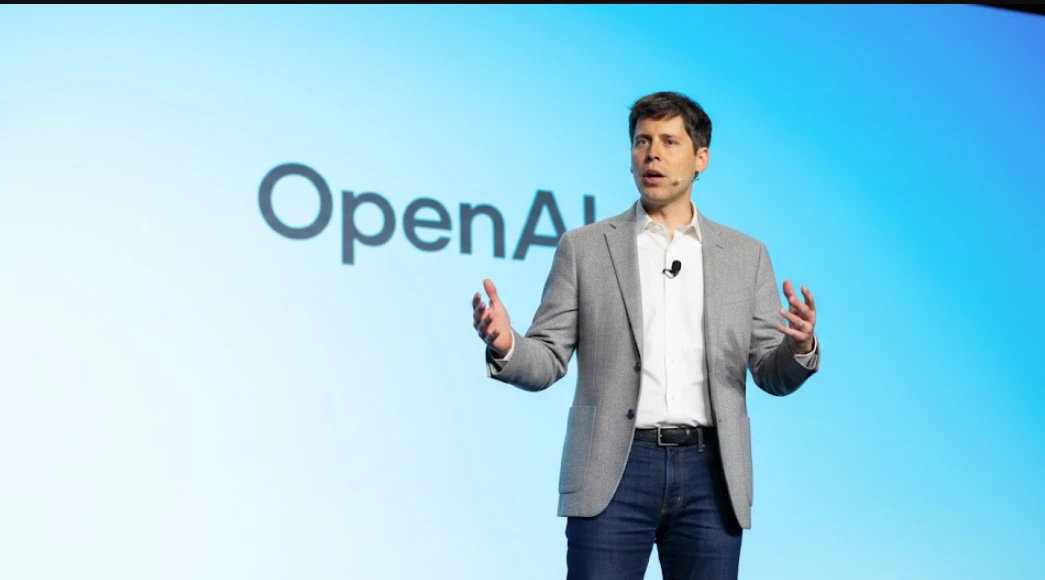
Sam Altman is an American technology executive and investor best known as the Chief Executive Officer of OpenAI. He became widely discussed globally after the launch of ChatGPT in November 2022, which accelerated mainstream adoption of generative artificial intelligence.
Altman’s influence extends beyond product launches. His leadership sits at the intersection of startup culture, venture capital, AI research commercialization, and global policy discussions on artificial intelligence governance.
To understand his impact properly, you need to examine his early entrepreneurial path, his tenure at Y Combinator, OpenAI’s structural transformation, and the ongoing debate over AI safety and commercialization.
This article provides a comprehensive, neutral, and evidence-based overview of Sam Altman’s career, leadership decisions, and broader influence on the AI industry.
Have questions about this story?Ask Tundra for more details, context, or updates.
Quick Facts About Sam Altman
| Detail | Information |
| Full Name | Samuel Harris Altman |
| Born | April 22, 1985 |
| Birthplace | Chicago, Illinois, USA |
| Education | Stanford University (Computer Science; did not graduate) |
| Current Role | CEO of OpenAI |
| Previous Major Role | President of Y Combinator |
| Industry Focus | Artificial Intelligence, Venture Investment |
| Known For | Scaling OpenAI and launching ChatGPT |
Early Career: Startup Foundations and Entrepreneurial Development
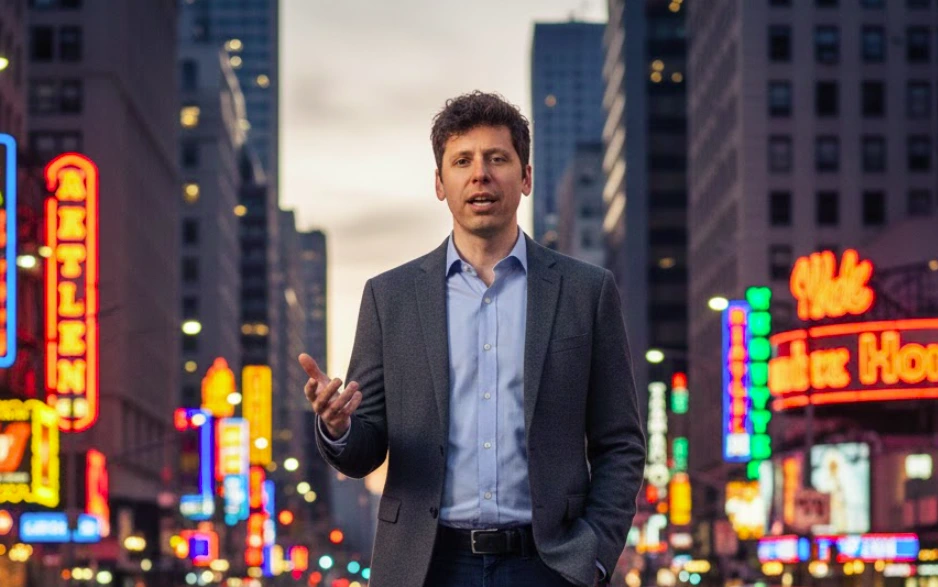
Loopt and Early Silicon Valley Experience
In 2005, while attending Stanford University, Altman co-founded Loopt, a location-based social networking application. The company raised venture funding during an early phase of smartphone adoption.
Loopt was ultimately acquired in 2012 for approximately $43 million. Although it did not become a dominant consumer platform, the experience provided Altman with:
- Venture capital fundraising experience
- Operational leadership exposure
- Investor network development
- Insight into scaling consumer technology products
This early phase established him within Silicon Valley’s startup ecosystem.
Also Read: Alexis Ohanian: Reddit Co-Founder, Tech Investor & Digital Community Builder (2025 Biography)
Leadership at Y Combinator (2014–2019)
Altman became President of Y Combinator in 2014. Y Combinator had already backed notable startups, but under Altman’s leadership, the organization expanded significantly.
Expansion and Strategic Focus
During his tenure:
- YC increased batch sizes and funding amounts.
- The combined valuation of YC-backed companies grew into the hundreds of billions of dollars.
- International outreach expanded.
- Research initiatives around long-term technologies increased.
Altman emphasized funding startups addressing large-scale challenges, including biotechnology, AI, and infrastructure technologies.
His time at YC strengthened his reputation as a long-term technology strategist rather than solely a founder.
Also Read: Brian Chesky Biography: How the Airbnb CEO Built a $100B Travel Empire.
The Founding and Evolution of OpenAI
Original Mission (2015)
OpenAI was founded in 2015 as a nonprofit AI research organization with the stated mission of ensuring that artificial general intelligence (AGI) benefits humanity broadly.
Altman joined early in OpenAI’s development and became CEO in 2019.
Transition to a Capped-Profit Model
One of the most important structural changes in OpenAI’s history occurred when it transitioned from a pure nonprofit to a “capped-profit” model.
This structure allowed:
- External investment
- Equity-based incentives
- Large-scale capital raising
Under this model:
- Investors could earn returns up to a capped multiple.
- The nonprofit entity retained overarching governance influence.
- Commercial arms could raise billions to support compute-intensive AI research.
This governance structure remains one of the most discussed aspects of OpenAI’s organization.
Major Milestones Under Sam Altman’s Leadership
1️⃣ GPT Model Scaling
OpenAI released successive versions of large language models, culminating in increasingly capable systems that powered generative AI applications.
2️⃣ Launch of ChatGPT (November 2022)
ChatGPT marked a significant public breakthrough:
- It became one of the fastest-growing consumer applications in history.
- It reached tens of millions of users within weeks.
- It triggered enterprise integration across industries.
3️⃣ Strategic Partnership with Microsoft
Microsoft committed multibillion-dollar investments to OpenAI and integrated OpenAI models into:
- Azure cloud services
- Microsoft Office tools
- Search platforms
This partnership significantly accelerated OpenAI’s computational scale and global distribution.
Also Read: Melanie Perkins Biography: Canva Founder & Self-Made Billionaire in 2025
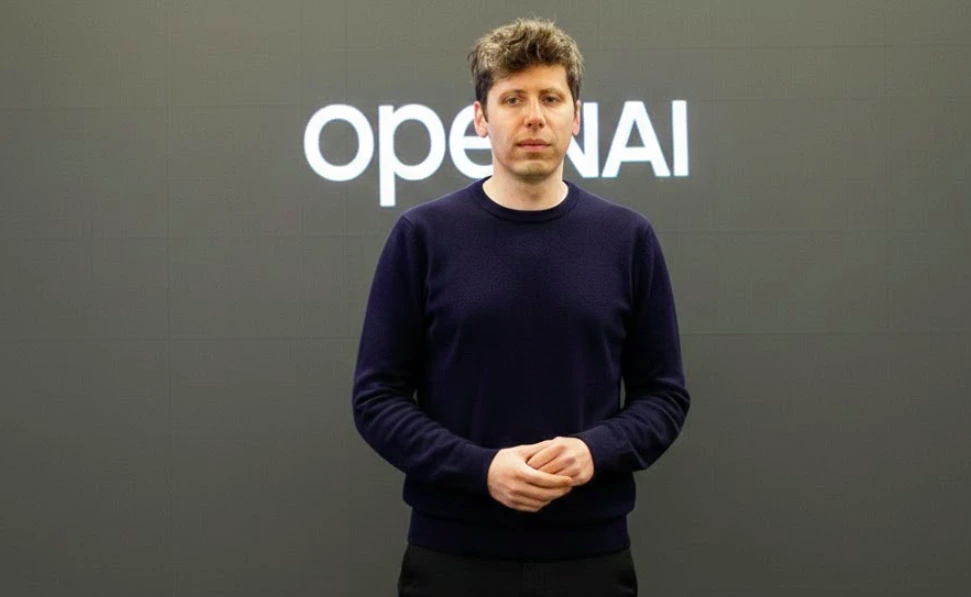
Leadership & Governance: The 2023 Board Crisis
In November 2023, OpenAI’s board removed Altman as CEO, citing governance concerns. The event triggered:
- Public debate about board authority
- Employee backlash
- Investor pressure
- Widespread media coverage
Within days, Altman was reinstated.
This episode highlighted:
- Tension between mission-driven oversight and commercialization
- Governance complexity in AI organizations
- Structural challenges in hybrid nonprofit–for-profit models
The situation became a case study in modern AI corporate governance.
Leadership Style and Public Positioning
Altman’s leadership approach is generally described as:
- Strategic and forward-looking
- Focused on long-term AI development
- Comfortable engaging with policymakers
- Structured in public messaging
Unlike some technology executives known for polarizing rhetoric, Altman tends to frame AI discussions around institutional responsibility and regulatory dialogue.
AI Safety vs Commercialization Debate
One of the central themes surrounding Altman’s leadership is the balance between:
- Rapid deployment of AI systems
- Responsible safety protocols
Commercial Expansion
Under his leadership, OpenAI pursued:
- Consumer deployment (ChatGPT)
- Enterprise API integration
- Large-scale infrastructure partnerships
Safety Concerns
Researchers and policymakers have raised questions about:
- Model misuse
- Job displacement risks
- Alignment challenges
- Long-term AGI implications
Altman has publicly supported AI regulation frameworks while continuing commercial expansion.
The debate continues as AI systems grow more capable.
Also Read: Andrew Carnegie Net Worth & Legacy: From Tycoon to Billion-Dollar Giver
Impact on the AI Industry
Generative AI Mainstream Adoption
ChatGPT catalyzed widespread awareness of generative AI. Industries including:
- Education
- Software development
- Marketing
- Customer service
Rapidly integrated AI tools into workflows.
Competitive AI Acceleration
Following OpenAI’s breakthroughs:
- Major tech firms accelerated AI development.
- Governments initiated AI strategy frameworks.
- Investment in AI startups increased globally.
Altman’s leadership coincided with a rapid shift in AI from the research domain to the economic infrastructure.
Global Policy and Regulatory Engagement
Altman has appeared before U.S. lawmakers and participated in international AI discussions. He has expressed support for:
- Licensing regimes for advanced AI models
- Government oversight mechanisms
- Global coordination on AI governance
His participation reflects recognition that AI leadership now intersects with geopolitics and economic security.
Comparison With Other AI Industry Leaders
| Leader | Organization | Focus |
| Sam Altman | OpenAI | Generative AI commercialization & governance |
| Elon Musk | xAI | AI safety framing & independent research |
| Sundar Pichai | AI integration into global infrastructure |
Altman’s distinguishing feature is leading the first mass-adopted generative AI platform while simultaneously engaging in governance debates.
Also Read: Scott Gomez – NHL Legend, Career Stats, Net Worth & Coaching Journey (2025 Edition)
Financial and Strategic Influence
While net worth estimates fluctuate due to private holdings, Altman’s strategic influence includes:
- Venture investments in emerging technologies
- Infrastructure investments (energy & computing capacity)
- Policy-level discussions
His role reflects a hybrid identity: startup founder, institutional executive, and public technology strategist.
Criticism and Ongoing Debate
Criticism of Altman’s leadership generally centers on:
- Pace of AI deployment
- Governance transparency
- Concentration of AI power in private companies
Supporters argue that:
- Deployment accelerates innovation
- Public access improves transparency
- Regulatory engagement demonstrates responsibility
The evaluation of his leadership remains ongoing.
Timeline of Sam Altman’s Career
| Year | Milestone |
| 2005 | Co-founded Loopt |
| 2012 | Loopt acquired |
| 2014 | Became President of Y Combinator |
| 2019 | Became CEO of OpenAI |
| 2022 | ChatGPT launched |
| 2023 | Board removal and reinstatement |
Conclusion: Achievements and Challenges
Sam Altman’s career reflects the rapid transformation of artificial intelligence from experimental research to global economic infrastructure.
His achievements include:
- Scaling OpenAI into a leading AI company
- Launching one of the most widely adopted AI tools
- Participating in global regulatory discussions
His challenges include:
- Handling corporate governance tensions
- Addressing AI safety concerns
- Managing commercialization pressure
Altman’s long-term legacy will likely depend on how artificial intelligence systems evolve, how governance structures mature, and how AI’s societal impact unfolds.
What is clear today is that he has played a central role in shaping the generative AI era.
FAQs
What is Sam Altman known for?
He is best known as the CEO of OpenAI and for leading the launch of ChatGPT.
Did Sam Altman found OpenAI?
He was not a sole founder but became CEO and played a central role in scaling the organization.
What happened in the OpenAI leadership crisis?
He was removed as CEO in 2023 by the board but reinstated days later after internal and external pressure.
What is Sam Altman’s role in AI regulation?
He has testified before governments and advocated for structured AI governance frameworks.
What is Sam Altman’s legacy?
His legacy centers on accelerating generative AI adoption and shaping the global conversation around artificial intelligence.