

Venturing off the beaten path offers an unmatched sense of freedom, but it also strips away the safety nets we rely on in everyday life. Whether you are navigating dense bushland or crossing vast arid landscapes, outback travel leaves no room for error. Before even thinking about gear, mastering your mental preparation is vital. As highlighted in a great guide on staying alert for safer roads, managing driver fatigue and avoiding distractions are essential to road safety. Once those core driving habits are locked in, you can properly equip your 4WD for the unforgiving conditions of remote off-road travel.
Have questions about this story?
Ask Tundra for more details, context, or updates.
The Foundation of Remote Travel Preparation
When you leave civilisation behind, you are effectively on your own. Mobile phone reception vanishes, service stations become non-existent, and passing traffic dwindles to zero. According to the National Park Service’s safety guidelines for off-pavement travel, self-reliance is essential in remote environments. Their experts warn that motorists must be equipped to self-rescue, noting that staying with your vehicle is the most important action you can take during a breakdown. To ensure you never end up stranded, packing the right gear is an absolute necessity. Understanding local weather patterns before you depart is equally crucial, as sudden changes can impact your progress.
Critical Fuel and Water Storage
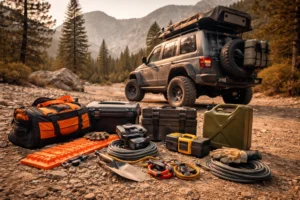
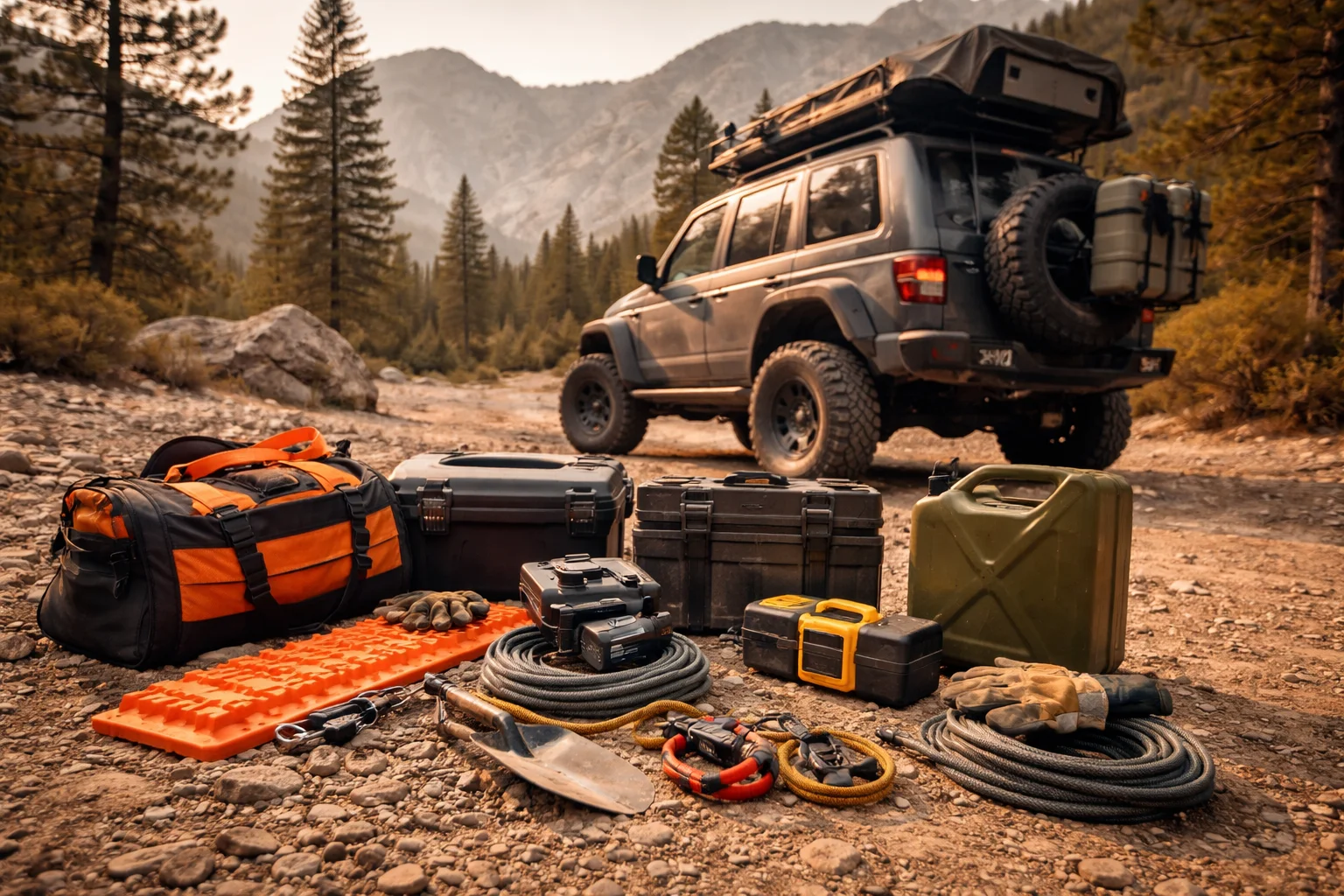
Running dry in the outback is highly dangerous. Remote routes often consume far more fuel than highway driving due to soft sand, steep inclines, and the need to run lower tyre pressures. Estimating your fuel needs generously is vital. It is standard practice to carry extra diesel or petrol, making a high-quality jerry can a mandatory addition to your packing list. Securely mounting these backup containers on the exterior of your 4WD prevents dangerous fumes from entering the cabin and significantly extends your travel range.
Fresh water is equally critical. You should account for at least five to ten litres per person per day when travelling in hot conditions. Storing this water in heavy-duty containers ensures you have enough for drinking and minor medical emergencies. Carrying water purification tablets adds security if sourcing from local creeks.
Essential Recovery Equipment
Even the most capable 4WD vehicles occasionally get bogged. Having the right tools on hand lets you get moving again without relying on a tow truck that may never arrive. Your recovery kit should be comprehensive, rated for your vehicle’s weight, and easily accessible. Proper training on how to use this equipment safely is just as important as carrying it.
Consider packing the following crucial recovery items:
- Recovery boards: These provide instant traction when your tyres are buried deep in soft sand or thick mud.
- Snatch strap and rated shackles: Essential for when another vehicle is available to pull you safely out of a sticky situation.
- Tyre deflator and air compressor: Dropping tyre pressure increases your footprint for better grip, while a portable compressor lets you inflate back up before hitting the tarmac.
- Long-handled shovel: Sometimes the only way to free a bogged vehicle is to dig it out.
Reliable Navigation and Communication
Digital mapping applications on smartphones are fantastic for city navigation, but they are entirely useless without a reliable mobile signal. For true remote exploration, you need dedicated GPS units loaded with offline topographic maps. Keeping physical paper maps as a backup in the glovebox is also a wise decision, as they never run out of battery. Knowing how to read these traditional maps can be the difference between getting lost and finding a safe route back to civilisation.
You must also have a way to call for help if a mechanical failure occurs. A satellite messenger or a mounted UHF two-way radio provides a reliable communication link to emergency services. Investing in a personal locator beacon is another smart move, ensuring rescue teams can pinpoint your exact location regardless of mobile coverage.
Heading out on an off-road expedition requires meticulous planning and a vehicle built to handle extreme adversity. By prioritising extra fuel, carrying essential recovery tools, and maintaining a strong driving focus, you can safely enjoy the spectacular landscapes that lie far beyond the paved roads.
Also Read: Staying Alert: The Key to Safer Roads