



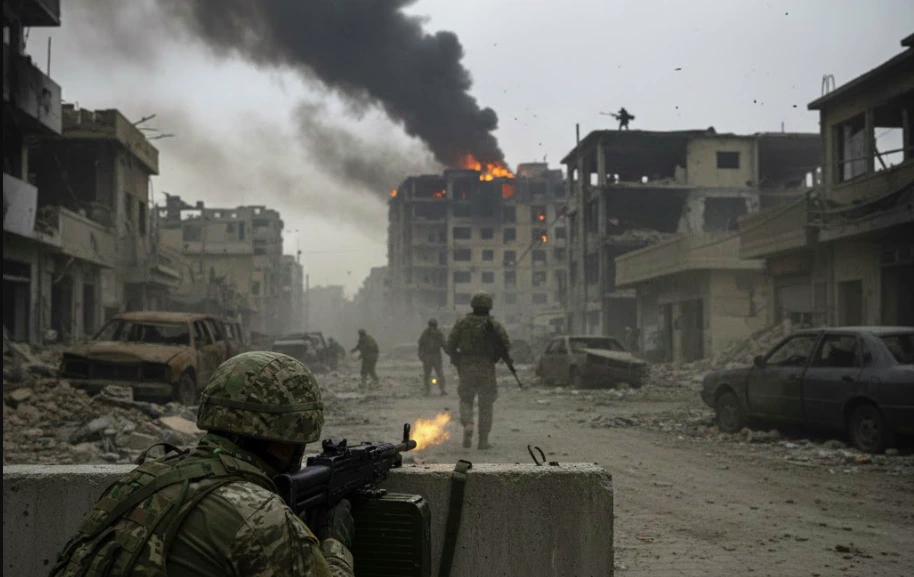
The most powerful countries in the world are at war right now, and most people don’t realize it. When people think of war, they imagine military helicopters flying, tanks rolling across borders, and consistent updates on the media channels about the conflict. But many wars in the new world do not look like that at all, as powerful countries often fight indirectly, which is known as a proxy war.
Proxy wars can be considered as the leftovers of the Cold War between the United States and the Soviet Union. From the Vietnam conflict to the war in Afghanistan, the Korean War, and the insurgency in Sudan, all these are reflections of proxy conflict strategies where powerful nations use other regions as pawns to fight each other.
| Aspect | Proxy War | Direct War |
| Who fights | Local forces | National militaries |
| External role | Funding, arms, intelligence | Open combat |
| Political risk | Lower for sponsors | High |
| Civilian impact | Severe, prolonged | Severe, often shorter |
| Accountability | Blurred | Clear |
Have questions about this story?
Ask Tundra for more details, context, or updates.
The War Where No One Admits They’re Fighting
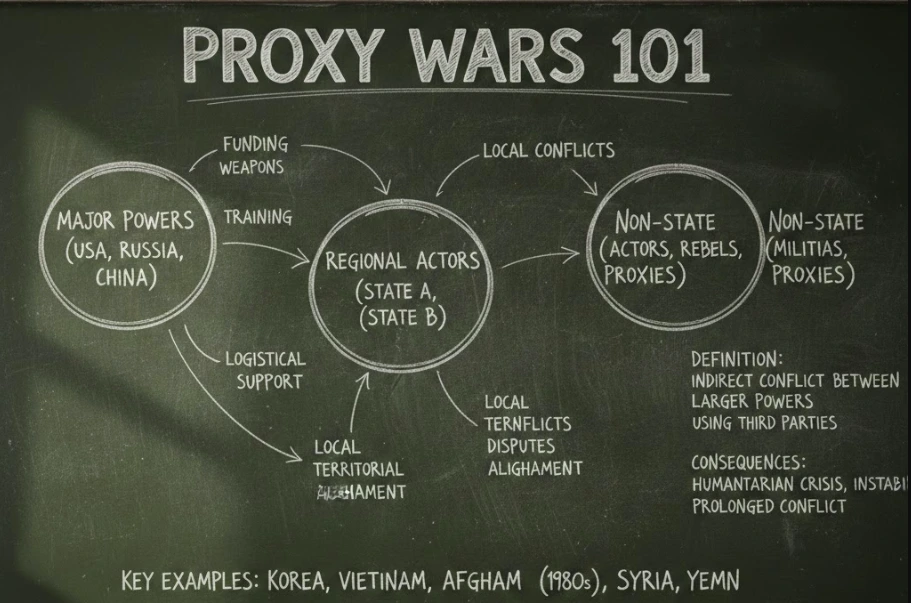
The proxy war strategy has been used by nations for centuries, as we can see several examples in history. It is a type of war in which two or more powerful third parties use other countries to fight. For instance, in the Korean War (from 1950 to 1953), the United Nations supported South Korea while the Soviet Union and China were assisting the North Korean regime.
The external party or the powerful nation is referred to as the sponsor or principal who delegates combat action to an agent or proxy and provides different forms of military, economic, or diplomatic assistance to help the latter fight.
The Gray Zone Where Wars Never End
The problem with proxy wars is that no sponsor admits that they are involved in the conflict. It makes the proxy wars unresolved and long-lasting. The strategy of secretly supporting small nations to fight on your behalf is considered a wise approach, as great powers do not need to directly engage in conflicts. Data from ESD show that, over the past four decades, most conflicts have had a proxy element.
How Proxy Wars Sneak Into Global Conflicts
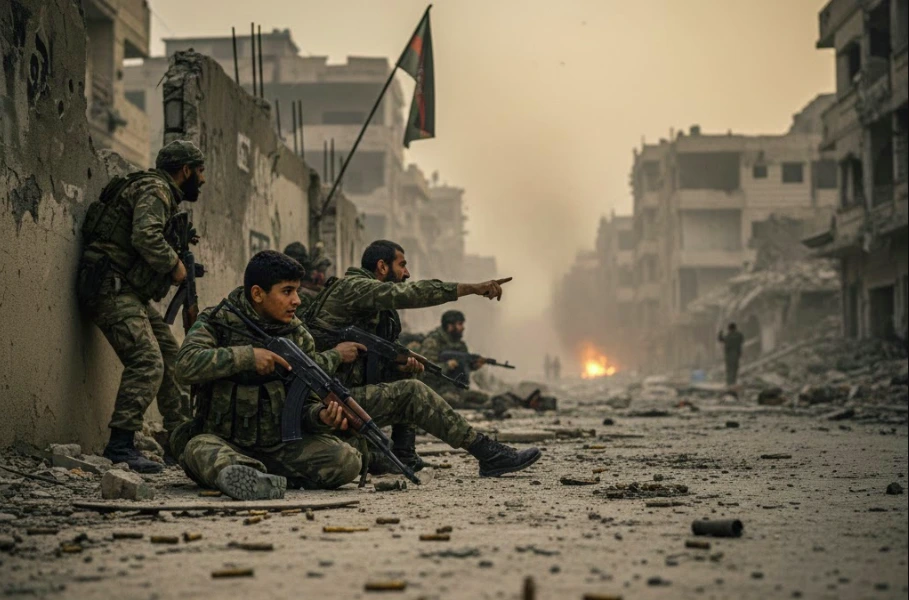
The majority of people consider that proxy wars are random, which are caused by the crises in a region. For example, some people think that the internal conflicts in Sudan and the involvement of superpowers today is because this African nation was deteriorating, and the humanitarian crises, plus the race to secure power among national leaders, caused chaos.
But reality lies behind the scenes you watch on the media channels, proxy wars are calculated and planned long before the internal conflicts originate in a country. Superpowers use politicians as anchors for aggravating the conflicts in the region. Proxy wars flare up when direct confrontation is too risky or expensive, especially in nuclear-armed powers.
1. Burning a Local Conflict: Sometimes, superpowers try to influence the regional politics and economy of the proxy and reignite internal conflicts, while it is also possible that an already burning local issue becomes the spark for powerful nations.
2. Outside Powers Picking Their Favorites: When the insurgency takes place, the powerful sides pick their actors. For example, after the Cuban revolution, the USSR supported Castro, but on the other hand, the USA backed Cuban exiles who tried to overthrow Castro, which led to the Cuban Missile Crisis in 1962.
3. Support Flows Quietly: Each superpower consistently supports its favorite in order to build pressure. Because the conflict is not direct for the sponsors, each of them hopes to invest more to win the influence game.
4. Plausible Deniability Rules: Each side claims that they are supporting with “defense” or for “humanitarian basis” as Pervez Musharraf, the President of Pakistan, allowed the US military to use air bases for “security and strategic necessity” in 2001 and participated in the Afghan War.
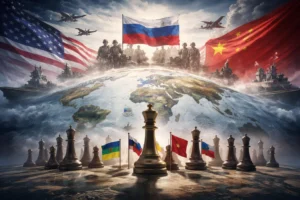
Results: A deadly conflict of powerful nations begins in a battleground where foreign actors fight, and the sponsors support this conflict for years and sometimes decades. Proxy war is like playing global chess while keeping hands clean, and the cost is paid by civilians.
Historical Proxy War Examples That Shaped the World
Beginning of Proxy War Strategy
The term “Proxy War” came into existence in the last century, but the strategy existed long before it. In ancient times, when empires had serious clashes over resources, they were involved in proxy conflict strategies. For instance, the death of Philip, the father of Alexander the Great, was backed by the Persian King Darius, who led a historical war and occupation of Persia by the Greeks.
The American Revolution of the 18th century had links with the French Revolution that occurred before the period. It is considered that the French played a significant role by supporting the American Founding Fathers to fight against the British due to the regional rivalry between English and French forces in Europe.
History reflects that proxy war strategy existed before its use in the modern conflicts, but it was considered a backup support rather than an intelligent assistance to a proxy.
Cold War and the Birth of Proxy Conflict Strategy
After the Second Great War, the world was bipolar; there was the U.S.A and the U.S.S.R., leading the globe to a new world order. But due to the power imbalance, both started defying the importance of each other, and a cold conflict began that immediately spread to the entire world.
US vs. Vietnam: A Deadly War
It was November 1st, 1955, when the US government intervened in Vietnam, a Southeast Asian country, to prevent it from leading to communism, which was backed by the USSR. Even though the US military tried substantially hard, due to the support of the USSR and China, the Vietnam War ended with the victory of communism.
USSR Boots on Afghanistan’s Ground
The US government started supporting the regional powers and liberation campaigns in the Soviet Union to defeat it without engaging in direct conflict. One of the most significant and widely overlooked examples is the support of Afghanistan when Russian Soldiers’ boots landed on the ground, which is known as “Graveyard of Empires.”
With full-fledged hidden support by the US government, including providing intelligence, weapons, training Afghan freedom fighters, and monetary support, Afghanistan defeated the USSR.
A Conflict That Split Korea
Sometimes, proxy war leads to intensely serious conflicts that break a country into pieces. The 1950s brought new challenges for the Koreans as it was a chessboard for powers; the US-backed Koreans came into conflict with the USSR-backed side, and it ended in a split of the country.
USSR and China supported North Korean leaders with artillery, intelligence, and money, which led to a fierce clash between the two sides of the same country, and as a result, the conflict ended in a military settlement.
Modern Proxy Wars Still Unfolding
US-Israel Hidden Alliance
The US has been supporting Israel for more than 5 decades to stay relevant in the Middle East. The reason behind that is to keep an influence on the Middle East. The US government provides weapons, intelligence, and strategic assistance to Israel in order to use it to threaten other Middle Eastern nations for diplomatic submission.
Syrian Fierce Civil War
The Syrian conflict is often called “proxy war within a proxy war” because it is highly complex to understand who supports whom in Syria. Apparently, Iran and Russia are assisting the Assad regime to control the government, while the Western nations and the US are supporting multiple regional, multiple agendas that overlap, and civilians are constantly struggling.
Former journalist Robert Fisk described Syria as “a country erased by foreign interests pretending to be local solutions.”
The Proxy Struggle in Yemen
Yemeni civilians are pushed to the edges due to the current proxy war. The Houthis are supported by Iran, while Saudi Arabia is providing hidden assistance to the recognized government. Famine, airstrikes, and blockades have killed millions of people in Yemen.
| Conflict | Local Actors | External Backers |
| Vietnam | North vs South Vietnam | USSR, China / United States |
| Afghanistan (1980s) | Mujahideen vs Soviet-backed government | United States, Pakistan / USSR |
| Syria | Government vs multiple rebel groups | Russia, Iran / U.S., Turkey |
| Yemen | Houthis vs Yemeni government | Iran / Saudi-led coalition |
Also Read: How Drones Are Changing Modern Warfare Forever?
The Human Impact Most Discussions Skip
- Infrastructure collapses slowly, then completely
- Displacement becomes permanent
- Armed groups fragment and radicalize
- Accountability disappears into layers of sponsorship
Hundreds of papers are published on the proxy wars, some experts consider that these conflicts are highly strategic to divert attention of their rival superpowers, while others consider these wars as “reward persistence over peace,” as political scientist Andrew Mumford notes in his paper.
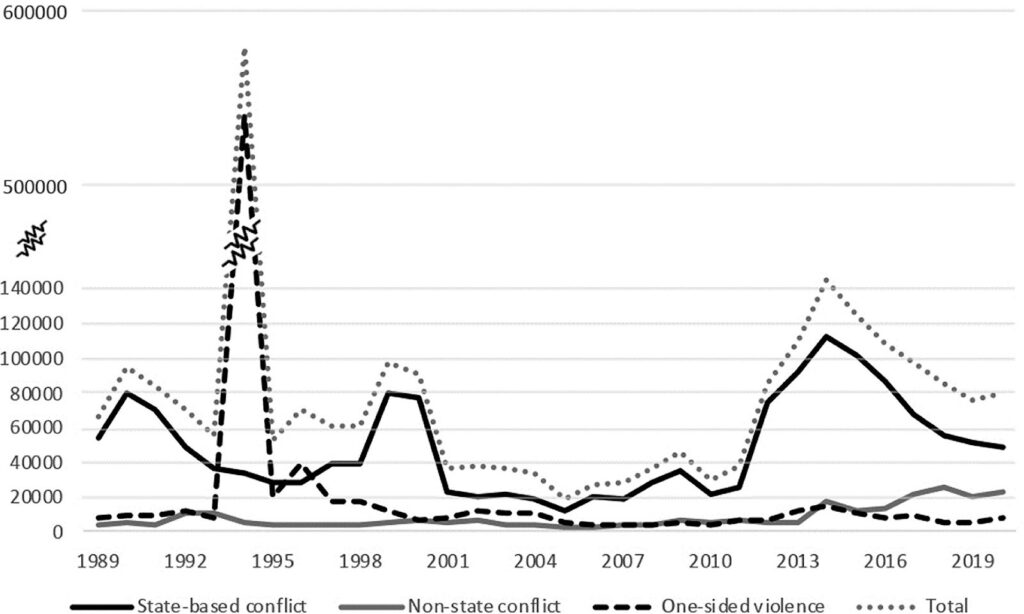
Economic Forum discussing the leftovers of proxy war states that at least 200,000 people were killed from 2022 to 2023, and more than 120 million people are displaced. The United Nations claims that 90% of the civilians are affected during the proxy wars, and 520 million children, nearly 1 out of 5 worldwide, are living in these conflict zones.
António Guterres, the UN Chief, says that, “We have entered an age of reckless disruption and relentless human suffering, pillars of peace and progress are buckling under the weight of impunity, inequality and indifference.”
FAQs
Is Israel a proxy war?
Many experts view the Israel-Iran conflict as a proxy war, as both are engaged in supporting anti-national segments in each other’s region. Iran supports Hamas while Israel supports the internal Iranian opposition.
What happens in a proxy war?
Proxy war is a shadow game in which two or more superpowers indirectly engage in conflicts using small and weakening proxies while providing full-fledged hidden assistance to their sides.
What are two examples of proxy wars?
The Vietnam War and the Soviet-Afghan War are two examples of 20th-century proxy wars. Currently, a crisis in Sudan, the Yemen conflict, and insurgencies in Iran reflect proxy war strategies.
Who are the typical actors in a proxy war?
There are two main types of actors: sponsors, which are superpowers such as the US, Russia, China, or Israel, and proxies, which are agents who fight on the frontline, such as Houthis, Hamas, or Taliban.