



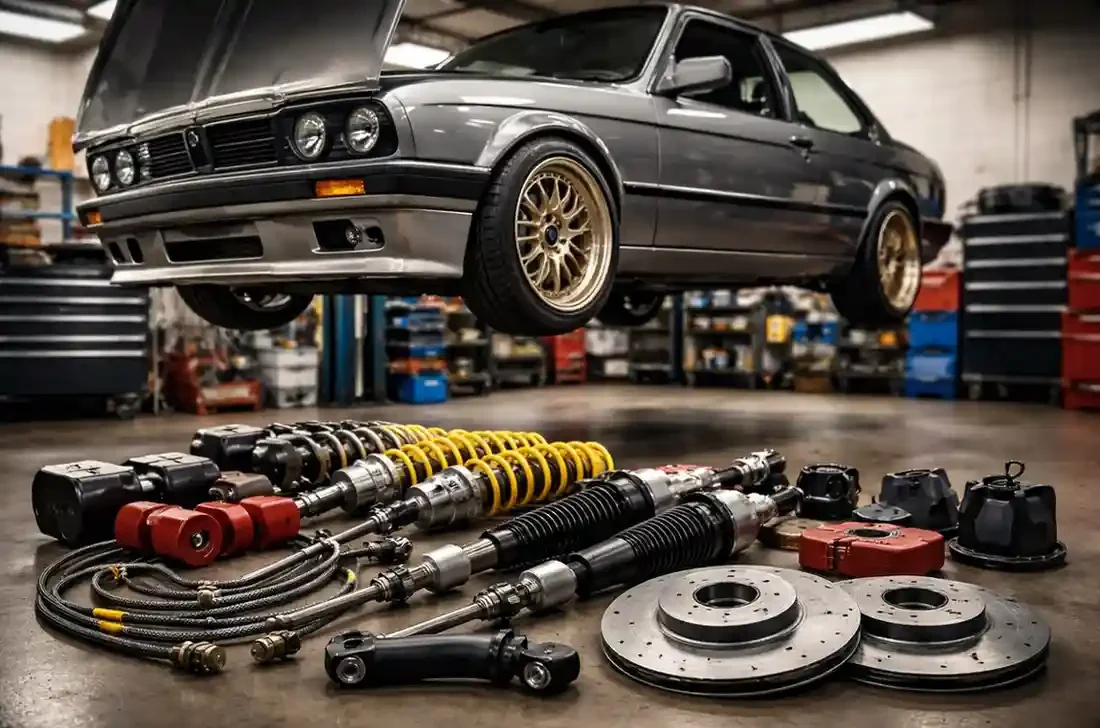
Older builds carry a certain honesty. The steering talks back, and the chassis feels direct. There is less between the driver and the road. Over time, wear creeps in. The rubber hardens, and tolerances loosen. What once felt tight now feels tired. Owners who keep these cars sharp understand that preservation is about choosing modern replacements that respect what made the platform special in the first place.
The smartest approach starts with observation. Ask yourself:
- What feels off today compared to a year ago?
- Is the steering vague at the center?
- Does the rear feel unsettled over mid-corner bumps?
- Does the car hesitate in ways it never used to?
These signals guide decisions better than any shopping list.
Have questions about this story?Ask Tundra for more details, context, or updates.
Begin With the Parts That Quietly Age Out
Time affects some components more than others. Bushings and seals degrade even with low mileage. Owners who restore sharpness start tinkering around these areas, including the mounts and hoses, because the gains here feel immediate and honest.
In fact, the automotive aftermarket parts and repair services for older builds are expected to grow into a multi‑trillion‑dollar industry by 2035, driven largely by the fact that vehicles stay in service longer and require more maintenance and replacement parts.
Fresh suspension bushings restore geometry. Engine mounts reduce vibration and sharpen throttle response. Cooling hoses prevent small failures that lead to big headaches. None of these changes chase performance. They bring the car back to baseline, which is where the character lives.
Modern materials outlast originals. Improved rubber compounds resist cracking. Updated plastics handle heat better. These replacements preserve feel while improving longevity.
Respect the Original Balance
Older platforms were engineered as cohesive systems. Changing one element without considering the rest can upset that balance. Owners who keep their builds enjoyable choose replacements that match factory intent rather than overwhelm it.
Springs and dampers offer a clear example. Stiffer is not always better. The goal is control, not harshness. Modern dampers with better valving can deliver improved stability while maintaining ride quality. The car feels composed instead of modified.
This mindset applies across the build. Parts are chosen for harmony, not dominance.
Also Read: Maintenance Costs of Luxury Cars: Essential Insights to Keep Your Vehicle Running Smoothly
Steering and Chassis Feel Matter Most
If a car feels dull, owners often look to power. Experienced drivers look to contact points instead. Steering components, alignment, and tire shape perception will matter more than horsepower ever will.
Replacing worn tie rods, control arms, and bushings brings back clarity. The wheel re-centers cleanly and feedback returns. From here, confidence grows. These changes remind owners why they fell in love with the car.
Quality BMW E46 parts in these areas preserve geometry and steering feel while benefiting from improved manufacturing standards. The result is a car that feels alert again without losing its voice.
Brakes Restore Confidence, Not Just Stopping Power
Braking systems age quietly. Lines soften. Fluid absorbs moisture. Pads glaze. Owners who refresh these components often rediscover trust they did not realize they had lost.
Modern brake lines improve pedal feel. Updated pad compounds offer better bite without noise. Fresh fluid keeps the response consistent. These changes do not turn the car into a track build. They make everyday driving calmer and more predictable.
Confidence under braking affects everything else. Corner entry improves. Traffic feels easier. The car responds as expected.
Cooling and Reliability Keep the Build Honest
Older cars often develop issues when maintenance falls behind. With the average age of cars on the road in the U.S. now around 12.5 years, more vehicles are accumulating wear on critical components like cooling systems, seals, and sensors, making proactive maintenance essential to avoid breakdowns. Owners who stay ahead of this cycle replace known weak points with updated alternatives.
Improved cooling components stabilize temperatures. Modern sensors deliver accurate data. Updated seals prevent leaks that turn into downtime. These choices do not add excitement, but they protect it. Reliability is not boring. It is what allows owners to enjoy the car without anxiety.
Software and Electronics Need a Light Touch
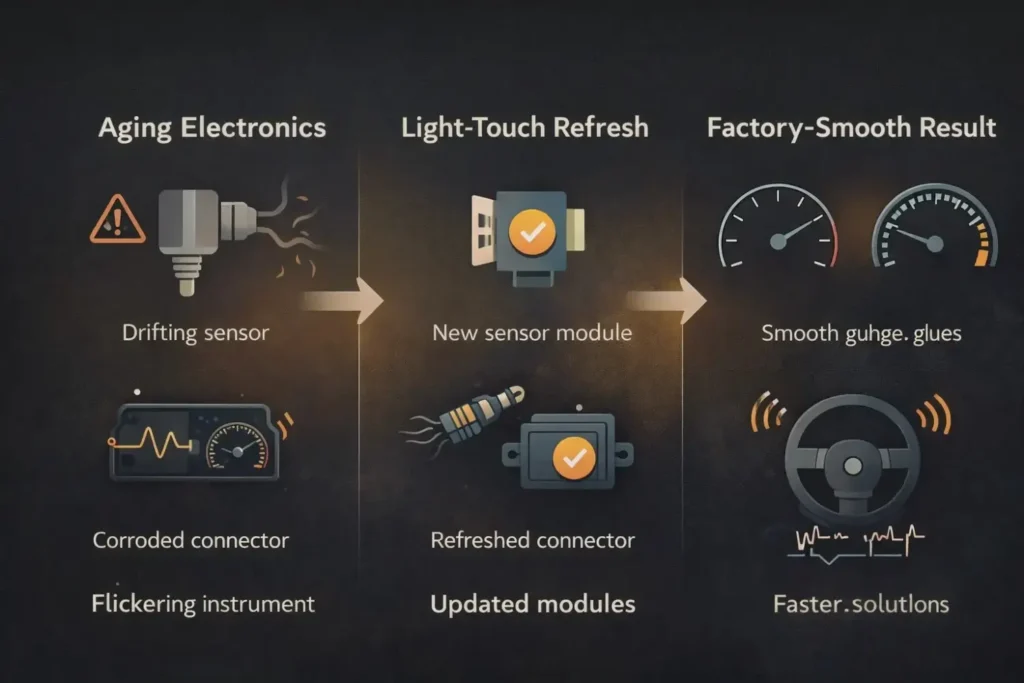
Older platforms often benefit from subtle software updates or refreshed electronics. Sensors drift over time. Connections corrode. Small inconsistencies add up.
Replacing tired sensors restores smoothness. Updated modules reduce glitches. Owners avoid heavy tuning and focus instead on consistency. The car runs the way it should, not the way a spreadsheet promises. This restraint keeps the build enjoyable in the long term.
Modern Options Do Not Mean Modernizing Everything
Keeping an older build sharp does not require chasing trends. Touchscreens and aggressive styling do not improve driving feel. Owners who value the platform focus on features that improve interaction, not on distractions.
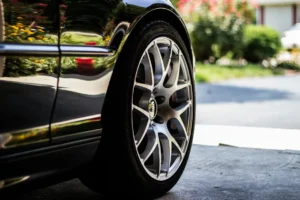
Lightweight wheels reduce unsprung mass. Improved bushings sharpen response. Updated dampers control movement. Each change supports the driving experience without rewriting it.
Here are principles owners often follow:
- Replace wear items before adding performance
- Choose parts that match the factory philosophy
- Improve feel before adding power
- Protect reliability to preserve enjoyment
These guidelines keep the builds grounded.
Sharpness Comes From Thoughtful Care
Older builds stay sharp when owners listen to them. Modern replacements work best when they support what the car already does well. The goal is not to chase new car sensations. It is to keep the original character alive with better materials and smarter choices.
When done right, the car feels familiar and renewed at the same time. Steering talks. The chassis responds. Confidence returns. That balance is what keeps older builds relevant and rewarding, mile after mile.