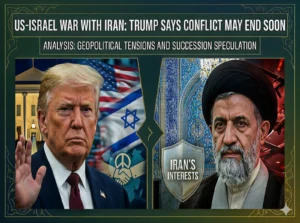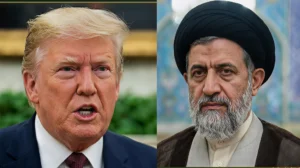



Iran’s powerful clerical body selected Mojtaba Khamenei as the country’s new supreme leader on March 8, replacing his father, Ayatollah Ali Khamenei, after his death during a period of escalating regional conflict.
Iran’s Assembly of Experts, the 88-member body responsible for appointing the nation’s supreme leader, confirmed Mojtaba Khamenei as the third supreme leader of the Islamic Republic. The decision came days after the death of Ayatollah Ali Khamenei, who had ruled Iran since 1989.
Mojtaba Khamenei, a Shiite cleric born in Mashhad in 1969, had long been viewed as a powerful figure within Iran’s political and religious establishment. Although he rarely held formal public positions, analysts say he exercised significant influence behind the scenes and maintained close ties with the Islamic Revolutionary Guard Corps.
His appointment marks the first time the leadership of Iran’s Islamic Republic has passed from father to son, raising debate among political observers about dynastic succession in a system originally established to reject hereditary rule.
Iran’s state media reported that the Assembly of Experts chose Mojtaba Khamenei as the next leader to maintain stability within the country’s political and religious system during a period of heightened regional tensions.
The supreme leader is the highest authority in Iran, overseeing the armed forces, the judiciary, and key national policies. The position was first held by Ayatollah Ruhollah Khomeini after the 1979 Islamic Revolution and later by Ali Khamenei beginning in 1989.
Mojtaba Khamenei previously served in roles connected to his father’s office and was believed to influence political and security decisions, including access to senior leadership and military figures.
The leadership transition comes at a volatile time in the Middle East, with tensions rising following military strikes and ongoing conflict involving Iran, Israel, and the United States. Analysts say the appointment signals continuity in Iran’s hardline political direction.
With Mojtaba Khamenei now serving as supreme leader, Iran’s political leadership will focus on stabilizing the government and managing regional tensions while navigating international pressure and internal political challenges.