




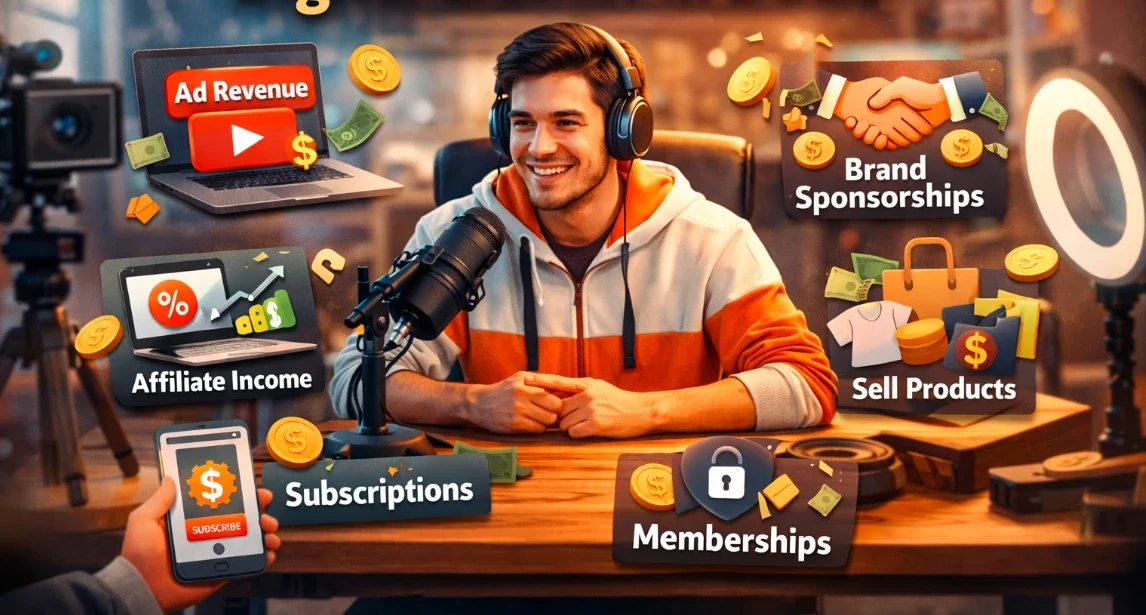
Digital creators make money in 2026 by earning from ads on platforms, brand sponsorships, affiliate links, selling their own products or services, and recurring subscriptions or memberships.
Most creators do not rely on just one method. Instead, income usually comes from combining two or more of these streams, depending on the platform they use, the size of their audience, and how well they convert attention into sales.
How much you earn varies widely. Some creators make a few hundred dollars a month, while others earn six or seven figures annually.
The difference is not popularity alone. It depends on niche selection, monetization strategy, and whether the creator controls their own products or relies only on platform payouts.
Have questions about this story?
Ask Tundra for more details, context, or updates.
How do digital creators make money in 2026?
In 2026, creator income usually falls into five buckets:
- Platform payouts (ads, revenue share, platform programs)
- Brand partnerships (sponsorships, paid collaborations)
- Performance income (affiliate commissions, referrals)
- Owned products/services (courses, digital products, consulting, merch)
- Recurring revenue (subscriptions, memberships, community access)
Some creators only use one bucket. Most creators who earn consistently use two to four.
The main ways digital creators earn money

1) Advertising revenue and platform payouts (the “built-in” money)
This is what people imagine first: you post content, the platform pays you.
In reality, platform payouts are not equally generous across platforms or formats. For example, short-form video can deliver huge reach but sometimes lower payouts per view, while long-form video often monetizes more predictably through ad inventory and watch time.
A few useful context points about scale:
- Facebook alone reported 3.07B monthly active users and 2.11B daily active users (Dec 2023).
- Meta’s Reels (Facebook + Instagram) reached 200B+ plays per day in reporting around 2023 and has continued to be referenced as a major consumption format.
- TikTok is often cited as having 1B+ monthly users globally in reputable reporting.
Those numbers explain why platforms push creators hard: attention fuels ad revenue. But your payout depends on program rules, eligibility, location, and content type.
What to take from this in 2026: Platform payouts can help, but they’re rarely the most stable foundation by themselves.
2) Sponsorships and brand deals (where many creators earn “real money”)
Brand deals usually become meaningful when you can offer a brand something measurable: a niche audience, trust, and consistent performance.
Creators often assume brands pay for follower counts. In practice, many brands care more about:
- Audience match (niche + demographics)
- Proof of conversion (clicks, sales, sign-ups)
- Reliability (you publish consistently and deliver on time)
This is also why creators in “boring” niches (software, finance, B2B) can earn more per post than creators in saturated lifestyle niches. Brands pay for outcomes, not just views.
3) Affiliate marketing (commission-based income)
Affiliate income is performance-based. You recommend a product or service and earn a percentage (or a fixed bounty) when people buy or sign up through your link.
Affiliate works especially well when:
- Your audience is already researching purchases,
- You publish comparison guides, tutorials, or “best tools” lists,
- You can show real usage experience.
If you’re trying to build a more predictable income, affiliates can be stronger than volatile platform payouts, because they tie revenue to intent-driven content.
4) Selling your own products and services (the highest-control income)
Owned income is where you control pricing, positioning, and customer relationships.
Common creator-owned income streams in 2026:
- Digital products (templates, guides, ebooks)
- Courses/workshops
- Consulting/coaching
- Paid communities
- Merch (works best when you have a strong brand identity)
This is often the difference between a creator who earns “sometimes” and a creator who earns “reliably.” When you own the offer, you’re not fully dependent on algorithm changes.
5) Subscriptions, memberships, and recurring revenue
Subscriptions can stabilize your finances because recurring revenue reduces the pressure to “go viral.”
Recurring models include:
- Paid newsletters
- Exclusive content communities
- membership tiers with perks (AMAs, downloads, private discussions)
Many creators blend subscriptions with affiliates or products, which spreads risk.
How much money do digital creators make in 2026?

Most people want numbers quickly, so here are realistic ranges framed in a way that helps you interpret them.
Digital creator income table (realistic ranges)
These are broad ranges (because niche, geography, and monetization mix change everything). Use them as directional benchmarks, not guarantees.
| Creator Stage | Typical Audience Size | Common Monetization Mix | Realistic Annual Income Range |
| Starter | 0–5,000 | affiliates, small services | $0–$5,000 |
| Emerging | 5,000–25,000 | affiliates + small brand deals | $2,000–$25,000 |
| Growing | 25,000–100,000 | sponsorships + products | $15,000–$120,000 |
| Established | 100,000–500,000 | sponsorships + products + recurring | $60,000–$300,000+ |
| Top tier | 500,000+ | brand + owned offers + licensing | $200,000–$1M+ |
Why the range is wide: Your niche, location, content format, and deal quality can move you up or down dramatically.
Also, the number of creators is huge (again, estimates often cite 207M globally), so competition is real.
Platform-specific monetization (what actually changes in 2026)
YouTube: strong for long-form ad revenue
YouTube’s economics tend to reward long-form watch time and searchable content. Many industry resources cite broad earning ranges per thousand views depending on RPM/CPM, niche, and audience geography.
2026 reality: YouTube is often best when you want a library of evergreen content that earns over time.
TikTok: reach is huge, payouts vary by program
TikTok’s older Creator Fund was widely criticized for low payouts, often cited at around $0.02–$0.04 per 1,000 views, and TikTok transitioned toward newer incentive programs aimed at longer content.
Some 2025-era guides cite higher ranges for newer programs (for eligible creators and formats), but your results still depend heavily on watch time, region, and program eligibility.
2026 reality: TikTok can be excellent for discovery, but many creators still rely on sponsorships, affiliates, and owned offers for stable income.
Instagram and Facebook: strong for brand deals + short-form scale
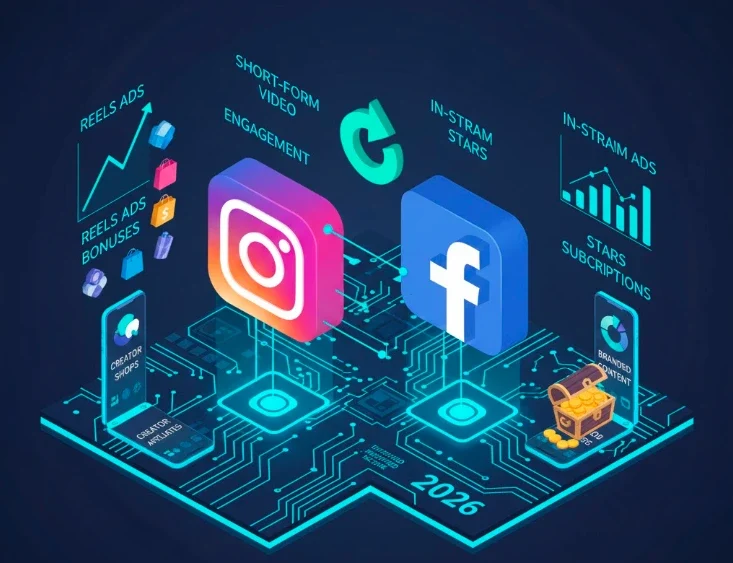
Meta’s ecosystem is massive, with Facebook at 3.07B MAUs reported for Dec 2023.
Reels consumption on an enormous scale is also frequently referenced.
2026 reality: Instagram and Facebook are often best when you’re packaging your audience value for brands, driving affiliates, and building trust through consistent content.
What affects creator income the most (and what people misunderstand)
Engagement beats follower count more often than you think
If your audience trusts you, you convert. That’s what drives sponsorship renewals and affiliate sales. A smaller audience can outperform a larger one if the niche is tighter and trust is higher.
Your niche determines the ceiling
A creator in high-value niches (B2B software, finance, professional education) can command higher sponsorship rates and sell higher-priced products. A creator in broad entertainment may need enormous scale to match that.
Platform changes are a real business risk
Algorithms shift, monetization programs change, and eligibility rules evolve. This is why many experts advise creators to diversify revenue and build “owned” channels (email lists, products, communities). Deloitte has also discussed the creator economy’s growth alongside challenges creators face around sustainability and monetization.
Also Read: How to Make Money from a Podcast and Turn It into a Profitable Venture
Is being a digital creator a reliable career in 2026?
It can be, but reliability usually comes from structure, not luck.
If your income is mostly:
- One platform’s payout program, or
- One viral content format,
Then your earnings can swing hard.
If your income is built around:
- A clear niche,
- Repeatable content systems,
- At least one owned product/service,
- Plus a secondary channel (affiliate or brand deals),
Then your income tends to be more predictable.
The most stable creator income model in 2026
If you want stability, the pattern you see most often is:
Discovery (short-form) → Trust (long-form or email) → Conversion (affiliate/products) → Retention (membership/subscription)
You don’t need every step. But the more of these steps you control, the less you rely on algorithms.
Common myths about creator income
Myth 1: “Viral = rich.”
Viral reach can build awareness, but it doesn’t automatically build income.
Myth 2: “More followers = more money.”
Follower count helps, but niche value + trust often matter more.
Myth 3: “Platform payouts are enough.”
For most creators, payouts alone are too volatile to be the foundation.
Also Read: Revolutionizing Digital Creation: How AI is Transforming the Way We Edit Images and Videos
Final takeaway: what making money as a digital creator looks like in 2026
In 2026, making money as a digital creator is less about being “famous” and more about running a small media business. You can earn through platform programs, sponsorships, affiliates, products, and subscriptions, but stability usually comes from diversification and owned income. If you treat your niche, audience trust, and monetization structure like a system, the numbers start to make more sense.
FAQs
1) How long does it take to start making money as a digital creator?
Many creators take months to find a niche, publish consistently, and learn what converts. You usually earn sooner with affiliates or services than with platform payouts.
2) Can small creators make money in 2026?
Yes. If you have a clear niche and strong trust, a small audience can still generate affiliate sales or service income. Brands also sponsor micro-creators when the audience is specific.
3) Which platform pays creators the most?
There isn’t one universal answer because payouts depend on content type, region, and program rules. Many creators earn the most from sponsorships and owned offers rather than platform payments.
4) Do you need millions of followers to earn a full-time income?
No. Many creators reach full-time income through a combination of products, services, and affiliates with far fewer followers. The key is conversion, not just reach.
5) Is creator income stable year-round?
It can be seasonal. Ads and sponsorship budgets often fluctuate, so diversifying into recurring revenue (subscriptions/memberships) helps smooth income over time.