





The first day on a big campus can feel overwhelming. New students step into wide halls, crowded courtyards, and buildings that seem to repeat themselves. Everything feels unfamiliar. Some try to follow the flow of other students. Others rely on memory from a quick tour months earlier.
Most still end up pausing at a corner, unsure which direction holds their next class. Schools that understand this feeling build systems long before students arrive, systems designed to turn confusion into quiet confidence.
A good campus layout doesn’t work by accident. Every sign, map, and visual cue shapes how students move. When these pieces work together, students settle in faster and avoid the stress that often comes with navigating a new environment.
Have questions about this story?Ask Tundra for more details, context, or updates.
Clear Landmarks Become Anchors for the Entire Campus
Large schools often create strong visual anchors. A sculpture. A central lawn. A tall clock tower. These landmarks act like mental pivots. Research on spatial navigation shows that people rely on visible landmarks to build mental maps and orient themselves more easily in unfamiliar environments. Once students notice them, they use them to orient themselves without thinking too hard. Movement becomes easier because each landmark tells the brain, “You’ve been here before.”
Schools that design these spaces intentionally place seating, shade, or key walkways nearby. Students spend more time around them, which helps the landmarks imprint faster. On the first day, these familiar points reduce hesitation and keep movement from feeling chaotic.
Signs That Speak Plainly Make a Bigger Difference Than People Expect
A sign only works if someone can understand it in two seconds. Simple arrows. Clear building names. Consistent colors. Schools that invest in strong visual systems prevent students from reading too much or guessing too often. Good signs appear at the moment the student wonders where to go, not three steps after.
Teams that specialize in wayfinding for college campuses study how students naturally walk. They watch where crowds slow down, where people hesitate, and which turns feel confusing. Then they place signs that answer questions before the confusion begins. This quiet guidance reshapes the entire experience for new arrivals.
Color and Symbol Systems Keep Information Easy to Remember
Campuses that serve thousands of students rely on color-coded paths or icons. A science wing might use deep green. The arts building may carry orange accents. Residence halls could share a soft blue. These colors appear on signs, hallway markers, and even floor stripes. Students don’t need to memorize building codes. They simply remember that “green leads to labs” or “orange means studios.”
Symbols help, too. A simple illustration can bridge language gaps, support international students, and help students who struggle with reading long texts. The best systems pair color and symbol in a way that feels natural, not cluttered.
Digital Tools Complement Physical Direction
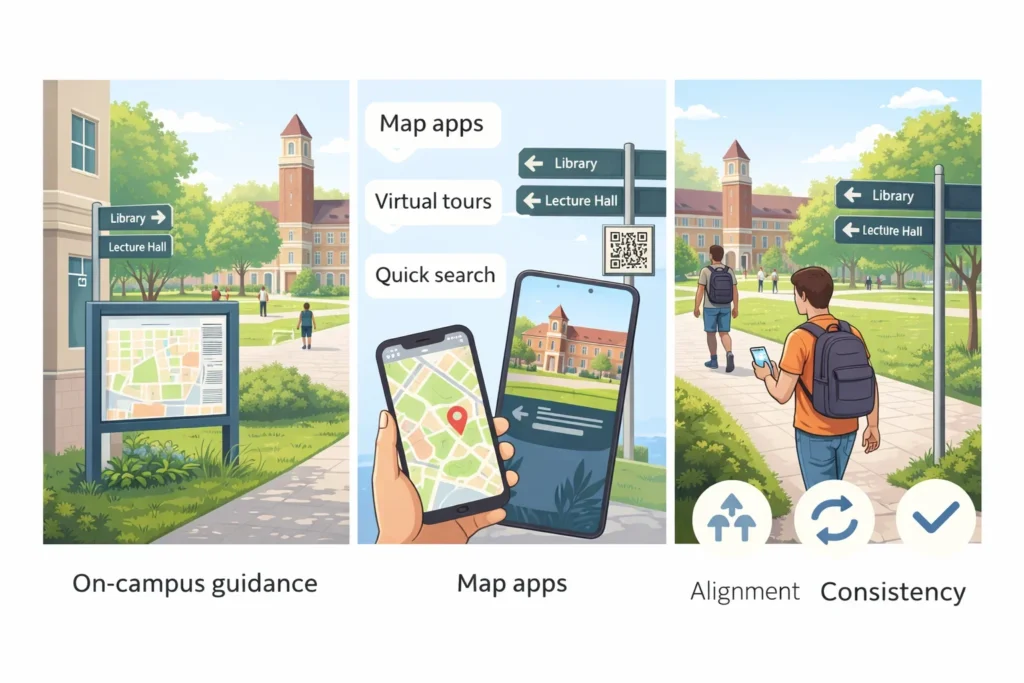
Many schools develop map apps, virtual tours, or quick-search tools that show the paths between buildings. Students might check these tools on the bus ride to campus or while crossing a courtyard. Academic research has shown that campus map guide apps help students, visitors, and parents locate destinations more easily by using mobile navigation tools, especially in large or unfamiliar environments. The key is to make the digital guidance match the physical signs so students don’t feel torn between two systems.
Also Read: Study Smarter While Studying Abroad: Tools Every International Student Needs
Some schools place QR codes near major intersections. A quick scan gives students a route without forcing them to type long building names into a search bar. This kind of support works well during the first few days, when uncertainty peaks and the campus still feels oversized.
Below are simple additions schools often rely on:
- Small maps near busy entrances
- Quick-view schedules outside classroom clusters
- Clear building numbers are visible from multiple angles
- Wide paths marked with consistent symbols
These elements create a sense of order before a student even understands the full layout.
Staff Presence Quietly Shapes Student Confidence
Physical systems matter, but the presence of people matters just as much. Schools often station volunteers, faculty, or student leaders near heavy intersections during the first week. A friendly greeting, a quick pointer toward the right hallway, or reassurance that the student isn’t late helps them feel grounded.
That short interaction can shift the tone of the entire day. Students walk into class calmer and more prepared to absorb what’s ahead.
Good Design Reduces Anxiety Before Anyone Notices
When a school plans its layout with care, new students feel supported even if they don’t recognize the work behind the scenes. They don’t freeze at every corner. They don’t arrive at class exhausted from wandering. Instead, they learn their routes gradually and gain confidence as the campus becomes familiar.
The best campuses feel big without feeling disorienting. They guide students through gentle cues and quiet structure. What seems like simple signage or a helpful map is actually part of a larger design that respects how people learn, move, and settle into new spaces. By paying attention to these details, schools turn that intimidating first day into something manageable, even welcoming.