


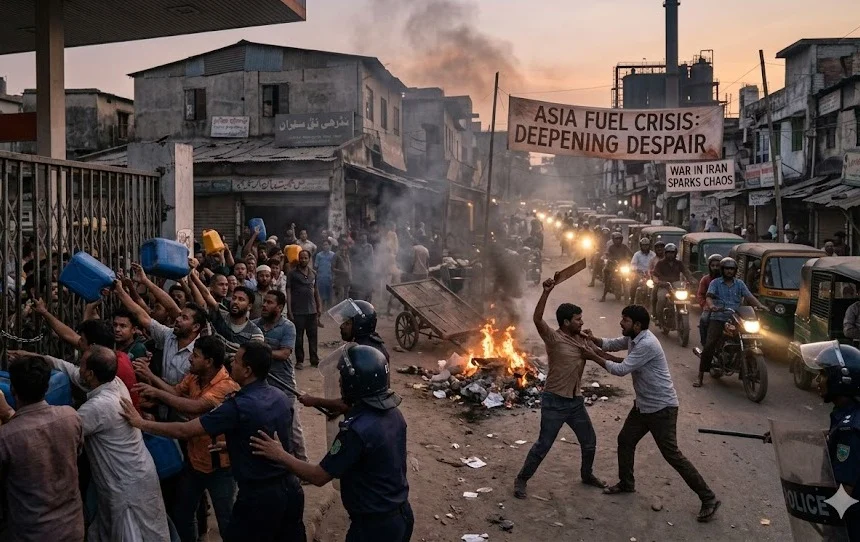
The ongoing war involving Iran has triggered severe fuel shortages across parts of Asia, leading to rising violence, economic disruption, and growing instability in several countries.
Have questions about this story?
Ask Tundra for more details, context, or updates.
Details
The conflict has disrupted global oil supplies, particularly through the Strait of Hormuz, a critical route for energy shipments.
As a result, countries including Bangladesh, Pakistan, India, and the Philippines are facing acute fuel shortages. These shortages have led to panic buying, black-market activity, and violent incidents at fuel stations.
Reports indicate that in some areas, attacks on fuel workers and clashes over limited supplies have already resulted in deaths and widespread unrest.
Significance
Fuel shortages are not just an energy issue, they quickly escalate into broader economic and social crises.
Disruptions in oil supply have caused:
- Rising transportation and food costs
- Inflation in already fragile economies
- Pressure on governments to maintain subsidies
Experts warn that prolonged disruption could lead to chronic instability, especially in low-income countries heavily dependent on imported fuel.
The crisis also reflects a wider global impact, where nations far from the conflict are experiencing severe consequences.
Who Is Affected
The crisis is affecting:
- Populations in energy-dependent Asian countries
- Governments struggling to manage subsidies and supply chains
- Workers and businesses reliant on fuel for daily operations
Lower-income communities are among the hardest hit, as rising costs limit access to essential goods and services.
Facebook Reviews
What Happens Next
Governments across affected countries are taking emergency measures, including:
- Deploying security forces to protect fuel supplies
- Cracking down on hoarding and black-market sales
- Adjusting fuel pricing and subsidy systems
However, these measures may be difficult to sustain if global oil prices remain high and supply disruptions continue.
Analysis
This crisis highlights how modern conflicts extend far beyond the battlefield.
While the war is centered in the Middle East, its impact is being felt most severely in countries with limited economic resilience.
The fuel shortages show that global energy systems are deeply interconnected—when supply is disrupted in one region, the consequences can trigger instability worldwide.