


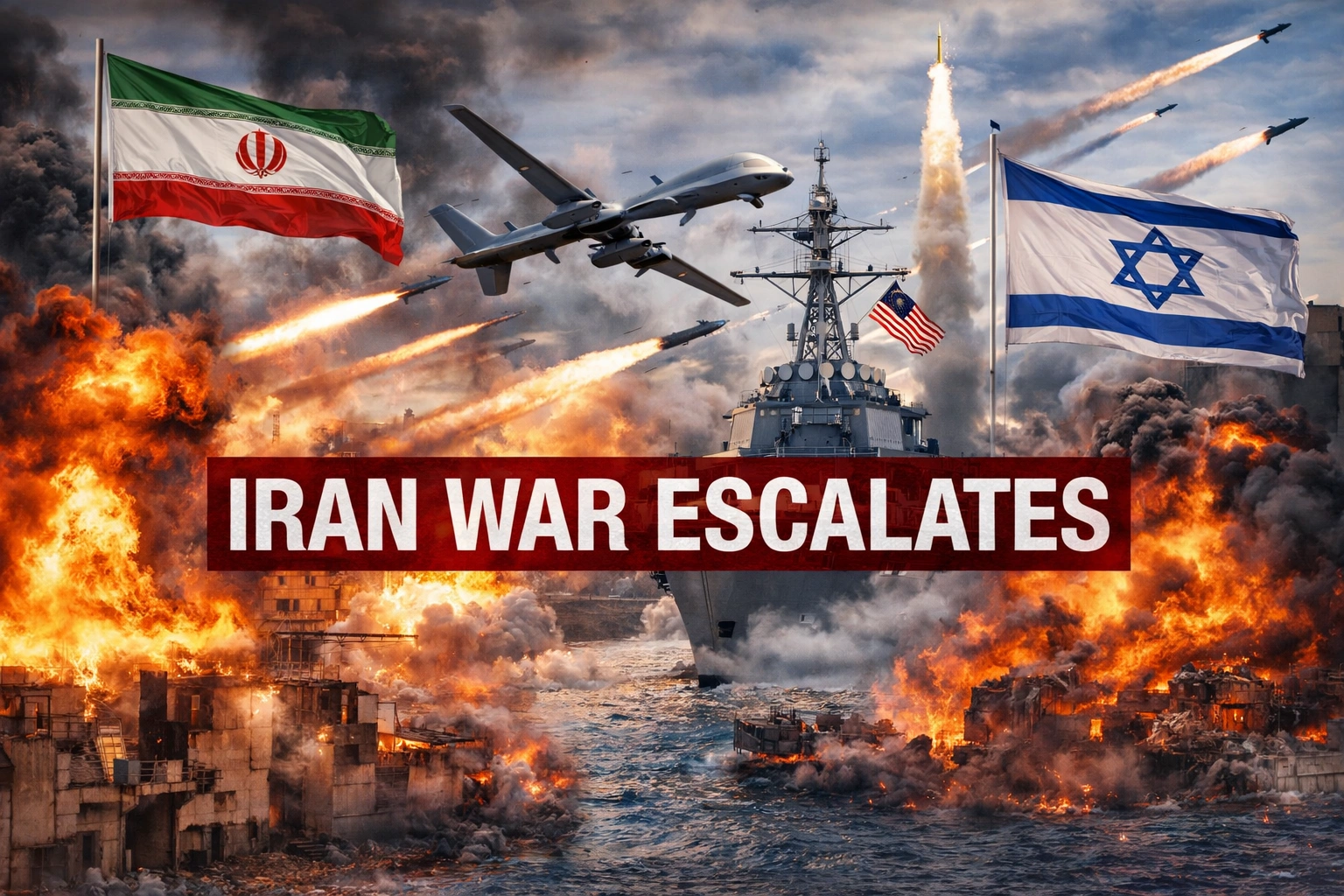
The conflict between the United States, Israel and Iran continues to escalate as the war enters its sixth day, with new missile and drone strikes hitting Israel and U.S. military bases and allied forces stepping up offensive operations across the region.
Iran has launched a new wave of attacks targeting Israeli territory and American military installations in the Gulf, according to multiple reports, in retaliation for the ongoing U.S.-Israeli military campaign against Iranian military infrastructure. Iran’s leadership warned the U.S. it would “bitterly regret” sinking one of its warships, a move that has further inflamed tensions.
Israel’s military has responded with continued airstrikes, including operations against Iran-backed Hezbollah positions in Lebanon, where at least eight people were killed in recent bombardment. Residents in border areas have been urged to evacuate as fighting intensifies.
The war’s human toll continues to mount. Iranian officials reported more than 1,230 deaths from U.S. and Israeli strikes, while Lebanese authorities said dozens have been killed and injured in strikes on civilian areas. The violence has displaced tens of thousands of people and disrupted daily life in multiple countries.
The conflict’s impact is also being felt beyond the battlefield, with commercial air travel disruptions, evacuations of foreign nationals from affected areas and concern among global leaders about widening instability in the Middle East.
Also Read: U.S.–Israel–Iran Conflict Escalates With Airstrikes, Retaliation, and Regional Tension
Efforts to de-escalate the situation have so far failed, and the regional scope of the fighting, including strikes in Iraq, neighboring Gulf states and Lebanon, suggests the crisis could persist without immediate diplomatic intervention.