



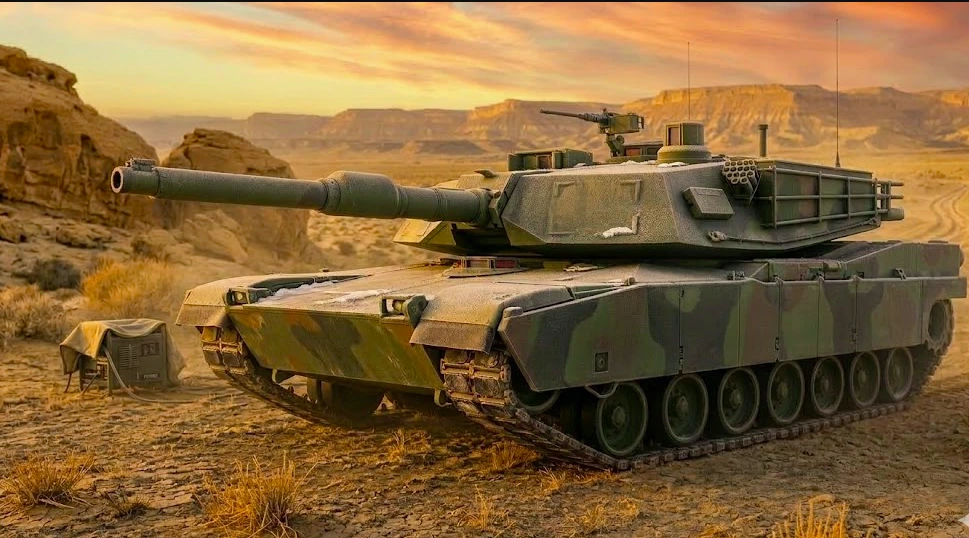
When aerial surveillance images from modern war zones are examined, military analysts often notice formations of tanks, artillery pieces, and armored vehicles positioned across fields or near defensive lines. From the perspective of reconnaissance drones or satellites, these vehicles appear to be part of active combat formations.
However, in several recent conflicts, analysts have discovered that some of those vehicles are not real. Instead, they are inflatable tank decoys designed to mimic armored vehicles closely enough to deceive surveillance systems.
The idea of using fake equipment in warfare is not new. Yet the rapid spread of drone surveillance, satellite imaging, and precision-guided weapons has revived interest in this tactic. In modern battlefields where nearly every movement can be observed from above, militaries are increasingly using inflatable military decoy tanks and other forms of deception to manipulate enemy intelligence.
What appears to be a simple trick is actually part of a broader strategic concept: battlefield deception designed to mislead enemy targeting systems.
Have questions about this story?
Ask Tundra for more details, context, or updates.
The Surveillance Revolution in Warfare
How Drones and Satellites Changed the Battlefield
The nature of war has shifted dramatically over the past two decades due to advances in surveillance technology.
Modern militaries rely heavily on:
- Reconnaissance drones
- Satellite imagery
- Thermal imaging sensors
- Radar detection systems
- Electronic intelligence networks
These technologies allow commanders to monitor battlefields almost continuously.
The war between Russia and Ukraine illustrates this transformation clearly. Analysts frequently describe the conflict as one of the most drone-intensive wars in history. Thousands of drones are used daily for reconnaissance, artillery targeting, and even direct attacks.
According to research from the Center for Strategic and International Studies (CSIS), drones have become central to battlefield intelligence gathering. Real-time video feeds allow military units to identify targets and coordinate strikes within minutes.
But this reliance on surveillance also introduces a vulnerability: if the data being collected is misleading, then targeting decisions can also be wrong.
This is where inflatable military vehicles and decoys become strategically useful.
What Inflatable Tank Decoys Are
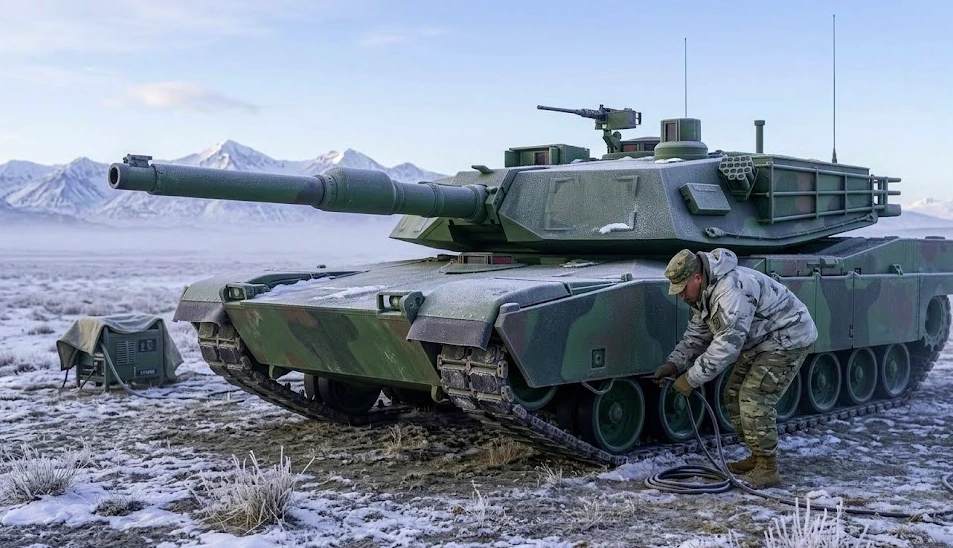
An inflatable tank decoy is a lightweight replica designed to resemble a real armored vehicle when viewed from a distance or from aerial surveillance.
These decoys are typically made from reinforced synthetic fabrics such as nylon or polyurethane-coated materials. When deflated, they can be packed into small containers and transported easily by truck.
Once deployed, portable air compressors inflate the structure into a life-sized replica of a tank.
Key Features of Inflatable Military Decoys
Modern decoys are designed to imitate several characteristics that surveillance systems rely on.
| Feature | Purpose |
| Visual silhouette | Replicates tank shape visible from drones |
| Radar reflection | Mimics metallic armor surfaces |
| Thermal signature | Simulates engine heat for infrared cameras |
| Realistic shadows | Makes vehicles appear authentic in aerial images |
Some advanced decoys include heating elements to replicate the thermal signature of an engine block, making them more convincing to drones equipped with infrared sensors.
The goal is not to fool close inspection but to create credible signals during rapid reconnaissance scans.
How the Inflatable Tank Trick Works
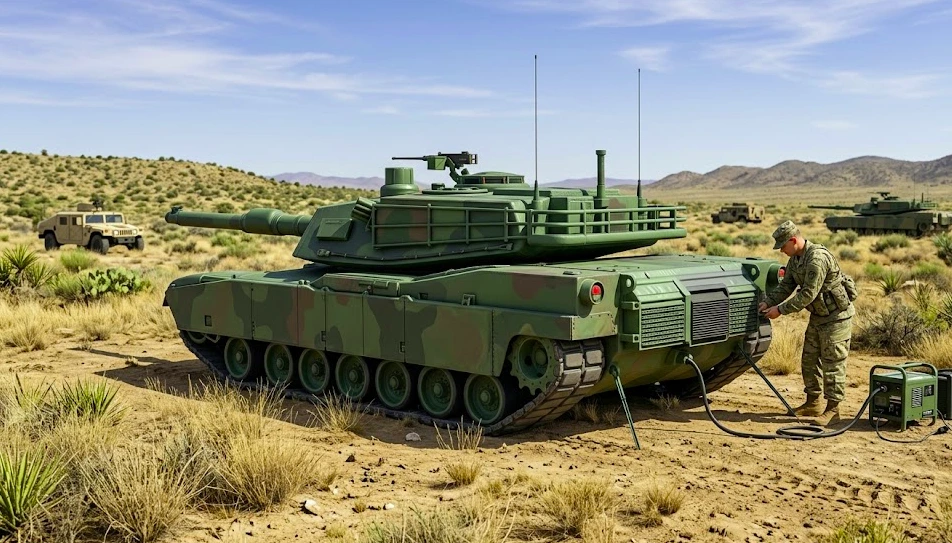
Battlefield Deployment
Military units deploy decoys in locations where enemy reconnaissance is likely to observe them.
Common deployment locations include:
- Open fields near defensive lines
- Abandoned industrial areas
- Tree lines and roadsides
- Near artillery positions
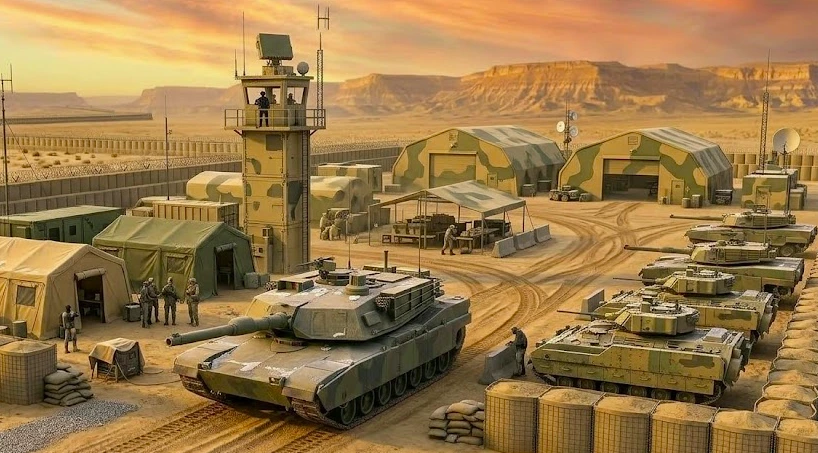
By placing multiple decoys across terrain, commanders create the illusion of a larger armored force.
Tactical Effects
This tactic produces several strategic advantages:
- Confuses enemy surveillance
- Forces adversaries to verify targets
- Diverts missile strikes away from real equipment
- Wastes expensive ammunition
In modern conflicts where drones constantly monitor the battlefield, even small delays in enemy decision-making can influence operations.
Evidence From the War in Ukraine
The Russia-Ukraine war has provided some of the clearest examples of decoy tanks in modern warfare.
Defense reports and investigative journalism indicate that both Ukrainian and Russian forces have deployed fake equipment to mislead enemy drones.
Examples documented by analysts include:
- Inflatable tanks positioned near defensive lines
- Wooden artillery replicas
- Dummy rocket launchers
- Fake radar systems
In some cases, replicas of Western-supplied systems such as HIMARS rocket launchers have reportedly been used to attract missile strikes.
If enemy missiles destroy the decoys instead of real weapons systems, the defending side preserves valuable equipment while forcing the attacker to spend expensive munitions.
Manufacturers of inflatable military decoys in Europe have reported increased demand since the start of the war, suggesting that deception tactics are becoming an important component of modern military planning.
The Economics of Fake Tanks
One of the most important reasons militaries use fake armored vehicles is cost.
Modern military hardware is extremely expensive, while inflatable decoys cost very little.
| Equipment | Estimated Cost |
| Main battle tank | $6M – $10M |
| Anti-tank missile | $100k – $200k |
| Reconnaissance drone | $50k – $2M |
| Inflatable tank decoy | $2k – $5k |
This difference creates what military strategists call a cost-exchange advantage.
If a missile costing $150,000 destroys a decoy worth $3,000, the defending side gains a financial advantage.
In prolonged wars where weapons production and logistics are critical, such economic asymmetries can have significant strategic consequences.
Also Read: Most Strategic Military Bases Globally 2026: Overseas, Secret, and Powerful Sites
Deception Warfare in Historical Context
Operation Fortitude and the Ghost Army
The use of decoys in warfare dates back decades.
During World War II, Allied forces created entire fake armies using inflatable tanks, wooden aircraft, and dummy artillery.
This deception operation was part of Operation Fortitude, a campaign designed to convince German intelligence that the D-Day invasion would occur at Pas-de-Calais rather than Normandy.
A specialized American unit known as the Ghost Army used inflatable vehicles, sound recordings, and fake radio transmissions to simulate large military formations.
German commanders believed the deception and delayed reinforcements during the Normandy invasion.
Historians consider Operation Fortitude one of the most successful deception operations in military history.
Deception in the Middle East: Iran, Israel, and Palestinian Groups
The strategic importance of decoys extends beyond Eastern Europe.
Across the Middle East, tensions involving Iran, Israel, and Palestinian militant groups highlight the central role of surveillance technology in modern warfare.
Israel operates advanced drone fleets and intelligence networks capable of monitoring activity across large areas. Iran has developed a large arsenal of drones and missiles and has supplied similar technologies to allied groups in the region.
In conflicts involving these actors, precision strikes guided by surveillance data are likely to play a major role.
Under such conditions, decoys could be used to protect critical assets such as:
- Missile launchers
- Air defense systems
- Armored formations
- Logistics centers
By creating multiple false targets, commanders can complicate enemy targeting decisions and increase the survivability of real military equipment.
The Future of Military Decoys
The Emerging “Decoy Arms Race”
As surveillance technology improves, decoy systems are evolving as well.
Defense manufacturers are developing inflatable replicas capable of mimicking additional characteristics of real military equipment.
Experimental features include:
- Radar-reflective coatings
- Programmable heat emitters
- Electronic signal generators
- Autonomous movement systems
These innovations may make decoys even more difficult to distinguish from real vehicles.
Global Drone Warfare Statistics
The growth of drone warfare explains why decoys are becoming more important.
| Statistic | Estimated Value |
| Drones used monthly in Ukraine conflict | tens of thousands |
| Global military drone market value | ~$30 billion |
| Countries operating military drones | 100+ |
| Reconnaissance drones used in modern conflicts | thousands |
As drone technology spreads, deception tactics such as inflatable decoys are likely to become more common.
Also Read: Why Superpowers Interfere in Smaller Countries’ Politics: A Strategic Analysis in 2026
Conclusion: The Power of Perception in War
Modern warfare is often associated with advanced technologies such as artificial intelligence, satellite networks, and precision weapons.
Yet the resurgence of inflatable tank decoys shows that simple ideas can still shape complex battlefields.
By manipulating what enemy surveillance systems detect, military units can influence targeting decisions, waste expensive weapons, and protect real assets.
In a world where wars are increasingly fought with data and sensors, perception itself has become a battlefield.
And sometimes the most effective weapon is not a missile or a tank.
Sometimes it is simply a convincing illusion.
FAQs
1. What are inflatable tank decoys, and how do they work?
Inflatable tank decoys are lightweight replicas of armored vehicles made from reinforced synthetic fabrics. They are inflated within minutes to replicate the size, silhouette, radar reflection, and sometimes thermal signature of real tanks. From drone or satellite surveillance, these decoys appear similar to actual armored vehicles, allowing militaries to mislead reconnaissance systems and create false targets on the battlefield.
2. Why do armies use fake tanks in war?
Armies use fake tanks to mislead enemy intelligence and protect real military assets. Inflatable decoys create the illusion of larger armored formations, forcing opponents to waste time verifying targets or launching strikes against fake equipment. This deception tactic helps commanders manipulate battlefield perception and reduce the risk to real vehicles and troops.
3. Are inflatable tanks effective against drones and satellites?
Yes, inflatable tank decoys can still be effective against drones and satellites. Modern reconnaissance often relies on visual identification, radar signals, and infrared imaging. Advanced decoys replicate these features closely enough to appear convincing during rapid aerial surveillance, especially when multiple decoys are deployed across terrain.
4. Which countries use inflatable tank decoys today?
Inflatable military decoys have been reported in several modern conflicts, particularly in the Russia–Ukraine war, where both sides have used fake artillery systems and armored vehicles to mislead enemy drones and missile targeting. Defense analysts note that the demand for inflatable military decoys increased significantly after the war began.
5. Were inflatable tanks used in World War II?
Yes. Inflatable tanks were famously used during World War II by the U.S. “Ghost Army”, a deception unit that deployed inflatable vehicles, fake artillery, and sound recordings to simulate large military formations. These tactics were part of Operation Fortitude, which helped mislead German forces about the location of the D-Day invasion in 1944.