




Modern wars no longer depend only on tanks, jets, or human-led operations. By 2025, the use of drones in modern warfare will have become so widespread that nearly every major military conflict will include UAV operations as a primary component. This shift is so significant that defense analysts now describe drones as “the most disruptive military technology since the guided missile.”
Below is a comprehensive, expert analysis of how drones are changing warfare today, backed by updated 2025 data from credible global defense sources.
Have questions about this story?
Ask Tundra for more details, context, or updates.
Drones Have Turned Information into the Most Powerful Weapon
Before modern intelligent drone systems, gathering real-time intelligence required satellites, spy planes, or troops on the ground. In 2025, intelligence is instant.
According to the reports (2025),
➡ Drones in Ukraine “caused more casualties than any other weapon” because they provided constant reconnaissance that guided artillery and strikes.
This is the first time in modern conflict where intelligence, not firepower, directly caused the highest casualty numbers.
What changed:
- Armies now fight based on live drone feeds, heat signatures, and aerial targeting.
- Commanders can watch enemy movement second by second.
- Static positions are nearly impossible to hide.
- Surprise attacks are nearly impossible to launch undetected.
Warfare has become data-driven, and drones are the engine.
Also Read: The Arm Race 2025: Who is Spending the Most on Weapons

Cheap Drones Have Broken the Traditional Balance of Power
Warfare used to belong to countries with the biggest budgets. That is no longer true.
2025 defense data shows:
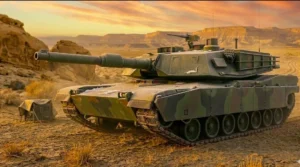
➡ A $400–$1,000 FPV drone can destroy a tank worth $10–$14 million.
(Sources: RAND analysis, AP News battlefield data, 2025 Ukraine MOD statistics)
This cost asymmetry has rewritten global doctrine:
- Small countries can now challenge larger militaries.
- Non-state groups can conduct air attacks that once required fighter jets.
- Expensive hardware (tanks, radars, artillery) is more vulnerable than ever.
For the first time in history, airpower is affordable, and that changes everything.
Drone Swarms Are Overwhelming Advanced Defense Systems
In 2025, swarm warfare became a defining trend.
In July 2025, AP News confirmed:
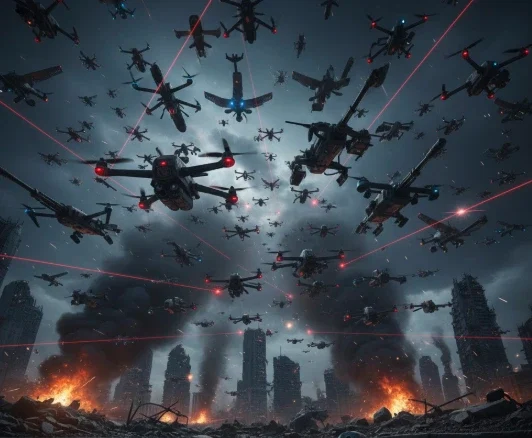
➡ Russia launched over 700 drones in a single night, overwhelming Ukrainian defenses and knocking out infrastructure.
Swarm attacks matter because:
- Defense systems like Patriot, Iron Dome, and NASAMS are designed for dozens of threats, not hundreds.
- Even expensive anti-air systems cannot shoot down unlimited drones.
- Militaries are now redesigning air defense around volume, not power.
This is one of the biggest shifts in warfare since radar.

AI Has Turned Drones Into Autonomous Battlefield Systems
Warfare is shifting from human-piloted decisions to AI-powered actions.
2025 Pentagon and EU defense reports reveal:
➡ AI-enabled drones can now navigate, identify targets, avoid jamming, and coordinate in small groups with minimal human input.
This doesn’t mean “killer robots.” It means:
- AI sorts targets automatically
- AI optimizes flight paths to avoid detection
- AI distributes swarm units so each drone has a purpose
- AI analyzes footage faster than human intel officers
The result:
Battles are being won or lost based on algorithmic speed, not human reaction time.
Drone Advancements Are Leading to New War Technology Trends
The latest trends in drone warfare involve:
- AI-coordinated swarms
- Stealth micro-drones
- Long-endurance solar UAVs
- Underwater drones for maritime missions
- Hyper-accurate kamikaze drones
- Electronic warfare-resistant systems
These drone advancements are redefining what modern militaries consider possible. Battles are becoming more automated, more precise, and more heavily dependent on real-time airborne data.
Drone Warfare Has Made Traditional Battlefields Obsolete
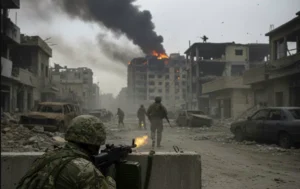
Tanks, trenches, armored columns, and fortified positions are all far less effective in 2025.
Why?
➡ Drone surveillance makes hiding impossible.
➡ Loitering munitions make static positions suicidal.
➡ FPV drones can fly inside bunkers, trenches, or vehicles.
This forces militaries to abandon old doctrines like:
- Massed troop movement
- Armored breakthroughs
- Fixed artillery batteries
- Long-term fortifications
Modern warfare is now about constant mobility, because anything stationary becomes a target in minutes.
Drone Supply Lines Have Replaced War Logistics
Militaries are traditionally limited by fuel, food, ammunition, and medevac challenges.
By 2025:
➡ Drones deliver ammunition, blood units, medical supplies, and even evacuate wounded soldiers from frontline zones.
Key changes in modern warfare due to drones:
- Eliminating risky ground convoys
- Speeding up supply replenishment
- Enabling operations in remote terrain
- Reducing casualties from ambushes or IEDs
In modern conflict, logistics is no longer the weak point because drones bypass the battlefield entirely.
Drone Warfare Has Redefined What “Air Superiority” Means
Owning jets used to mean owning the skies. Not anymore.
2025 defense models show:
➡ You can control the air without a single manned aircraft if you control drones.
Example:
A fighter jet costs $80–$120 million.
A fleet of 2,000 tactical drones costs less than a single aircraft.
Modern airpower now depends on:
- ISR drones
- Combat drones
- FPV strike drones
- Electronic warfare drones
- Swarm units
The country with the best drones and electronic warfare, not the best fighter jets, is winning battles.
Electronic Warfare Has Become the New Frontline
As drone use rises, so do drone countermeasures.
2025 battlefield data shows:
➡ Up to 70% of drones in some regions are lost to jamming, spoofing, and signal disruption, not gunfire.
This means:
- Modern warfare is now as digital as it is physical.
- Countries with strong cybersecurity can neutralize enemy drones without firing a shot.
- Electromagnetic dominance is as important as air dominance.
Warfare has moved into the invisible spectrum of GPS, radio frequencies, and data links.
Drones Have Made War Faster, Shorter, and More Ruthless
Because drones give instant intel and instant strike capability:
- Decisions are made in seconds
- Targets are found immediately
- Strikes follow instantly
- Troops can’t hide or regroup
- Command centers are constantly exposed
This accelerates warfare to a speed never seen before.
Defense analysts now call this:
➡ “Compressed-time warfare.”
Battles that used to take days now happen in minutes.
The Pros and Cons of Drones in Warfare
Like any technology, drones offer both advantages and disadvantages.
Pros:
- Lower cost compared to jets or tanks
- Reduced risk for soldiers
- Faster deployment
- Higher precision
- Better surveillance coverage
- Effective in remote or hostile zones
Cons:
- Vulnerable to electronic warfare
- Potential misuse by non-state groups
- Raises legal and ethical concerns
- Can escalate conflicts quickly
- Air defenses must constantly adapt
The Future: Drones Will Replace 40–60% of Frontline Soldiers
According to 2025 NATO simulations and U.S. Army robotics forecasts:
➡ By 2035, autonomous and semi-autonomous drones may replace nearly half of frontline roles, including:
- Recon
- Bomb disposal
- Urban clearing
- Logistics
- Long-range strikes
- Perimeter defense
Warfare will shift from “soldiers vs soldiers” to drones vs drones.
Also Read: Nuclear Weapons: Which Countries Have Them and Why? (2025 Overview)
Conclusion
Drones have not just added a new layer to warfare; they have rebuilt the entire structure.
In 2025, modern conflict is defined by:
- Constant surveillance
- Low-cost precision strikes
- Drone swarms
- AI-driven targeting
- Electronic warfare
- Reduced human presence at the front
This transformation is permanent.
Future wars will be shaped not by the strongest armies, but by the smartest algorithms and the most adaptable drone fleets.
FAQs
1. Why are drones so important in modern warfare?
They provide real-time intelligence, precise strikes, and low-cost operations without risking pilots.
2. How have drones changed battlefield strategy?
Armies must stay mobile and hidden because drones expose positions within minutes.
3. Can cheap drones defeat expensive military hardware?
Yes. A $500–$1,000 drone can destroy a tank worth over $10 million.
4. What makes drone swarms dangerous?
Hundreds of drones overwhelm air defenses designed for limited threats.
5. How does AI improve drone warfare?
AI helps drones identify targets, avoid jamming, and coordinate autonomously.
6. How have drones affected warfare?
They have made battles faster, more precise, and intelligence-driven, reducing the need for large troop deployments.
7. How do drones contribute to the transformation of contemporary warfare?
Drones have reshaped strategy by enabling remote strikes, constant surveillance, and cost-effective operations.
8. How do drones help in warfare?
They support reconnaissance, precision attacks, logistics, and border monitoring without risking soldier lives.
9. What are the latest trends in drone warfare?
AI-driven autonomous drones, swarms, stealth UAVs, and long-range kamikaze systems.
10. Why is drone warfare bad?
It can lead to misuse, escalate conflicts quickly, cause unintended casualties, and raise legal or ethical concerns.