




Disclaimer: This content is for informational purposes only and does not constitute legal advice. Laws and regulations may vary by location, and readers are encouraged to consult a qualified legal or real estate professional for guidance specific to their situation.
As a landlord, you are responsible for managing an asset and the lives of those who live there. To effectively support your tenants and protect your investment, you must develop a well-structured plan in advance to address challenging situations. As tenant expectations continue to evolve, with 93% of tenants now preferring to pay rent online via digital platforms or card-based methods, adopting modern, efficient systems has become a key part of responsible property management.
Read this guide for everything you need to develop a plan that serves your tenants while ensuring your property remains an effective, resilient investment.
Have questions about this story?
Ask Tundra for more details, context, or updates.
Caring for Your Property and Remaining Tenants During Difficult Times
Unexpected life events, such as unemployment or illness, can affect your tenant and may affect you financially. Your job in this situation is to be strategic and develop a solution that is compassionate and effective for both sides.
Start with Open Communication
First and foremost, the initial step should be communication. Contact your tenants compassionately, let them know you are aware of their struggles, and ask whether there is anything you can do to assist them.
In many instances, you can collaborate on a short-term arrangement (a temporary arrangement) that includes a possible flexible payment plan. The key is to address the situation early enough so it doesn’t escalate into a larger issue, such as eviction.
Support Your Other Tenants
Consider your other residents in this situation at this time. You can communicate with them if the problem is already disrupting their lives. However, do so while considering your tenants’ privacy.
Tell them that you are aware of the problem and what you are doing to resolve it. For example, “I’ve been made aware of the recent disturbance, and I am working to resolve the matter directly.”
This will show all of your residents that you are a responsible and fair property manager.
Protect Your Property
While being empathetic, you must also be realistic in your role. Keep an eye on how well you are maintaining the property’s condition. During difficult times, it is not uncommon for some homeowners to put off maintenance or allow the home to fall into disrepair.
Schedule regular visits as permitted by your lease and applicable state & local law to confirm that the property is being maintained properly. This demonstrates your real leadership while creating a positive, consistent environment for everyone living there.
Note that you don’t have to do these yourself because you can partner with a reliable property manager. Atlanta property managers don’t just manage properties; they build lasting relationships between owners and tenants.
What Should a Landlord Do When a Tenant Dies: Practical Steps to Handle the Situation Respectfully

It’s unfortunate news hearing that a tenant has passed away, but as a landlord, what is your obligation in this situation? Understanding what a landlord should do when a tenant dies can help prevent confusion and protect the property.
Here’s a straightforward step-by-step approach you can follow:
Verify the Situation and Express Condolences
Firstly, you will need to verify that the person is deceased. If a family member or someone who knew the tenant informs you, request formal verification using documentation such as a death certificate. If you suspect the tenant has passed away because you cannot reach them, contact local authorities to perform a welfare check. Once the tenant’s death has been confirmed, reach out to the emergency contact or next of kin listed on the lease.
Given that about 45.5 million housing units in the U.S., more than one-third of the national housing stock, are renter-occupied, landlords manage a substantial number of tenants, making accurate records, emergency contacts, and verification procedures essential for responsibly handling situations like this.
*Note: When you make your initial contact, keep it short and heartfelt; be sure to offer your sincerest condolences.
Secure the Property and Personal Belongings
Once that is done, make sure the rental unit is secured. Change the locks to give yourself some peace of mind. Again, you are not here to dispose of anything belonging to the tenant; you are just keeping the tenant’s belongings safe until the Executor of the Estate or family members can have them removed.
Take an exact, complete inventory of everything in the unit to serve as proof of what was left behind and to show respect for the deceased’s belongings.
Address the Lease and Financial Matters
It’s now time to handle the administrative aspects of terminating the tenancy, including the financial and legal responsibilities. The lease terminates upon the tenant’s death; however, it is recommended that you review the security deposit and/or any prepaid rent with the executor of the tenant’s estate.
Be prepared to submit an itemized list of any deductions for cleaning or damage when processing a standard move-out.
Also Read: Do You Need a Business Bank Account for Your Rental Property?
Prepare the Unit for Re-rental
After the family has collected their personal items, the landlord can prepare the rental unit for another renter, which requires a thorough cleaning and all necessary repairs to make it attractive to potential tenants.
It is beneficial for landlords to understand the actions typically required when a tenant passes away, as this can reduce confusion and protect your property.
Tips for Maintaining a Smooth Rental Process After Unexpected Events
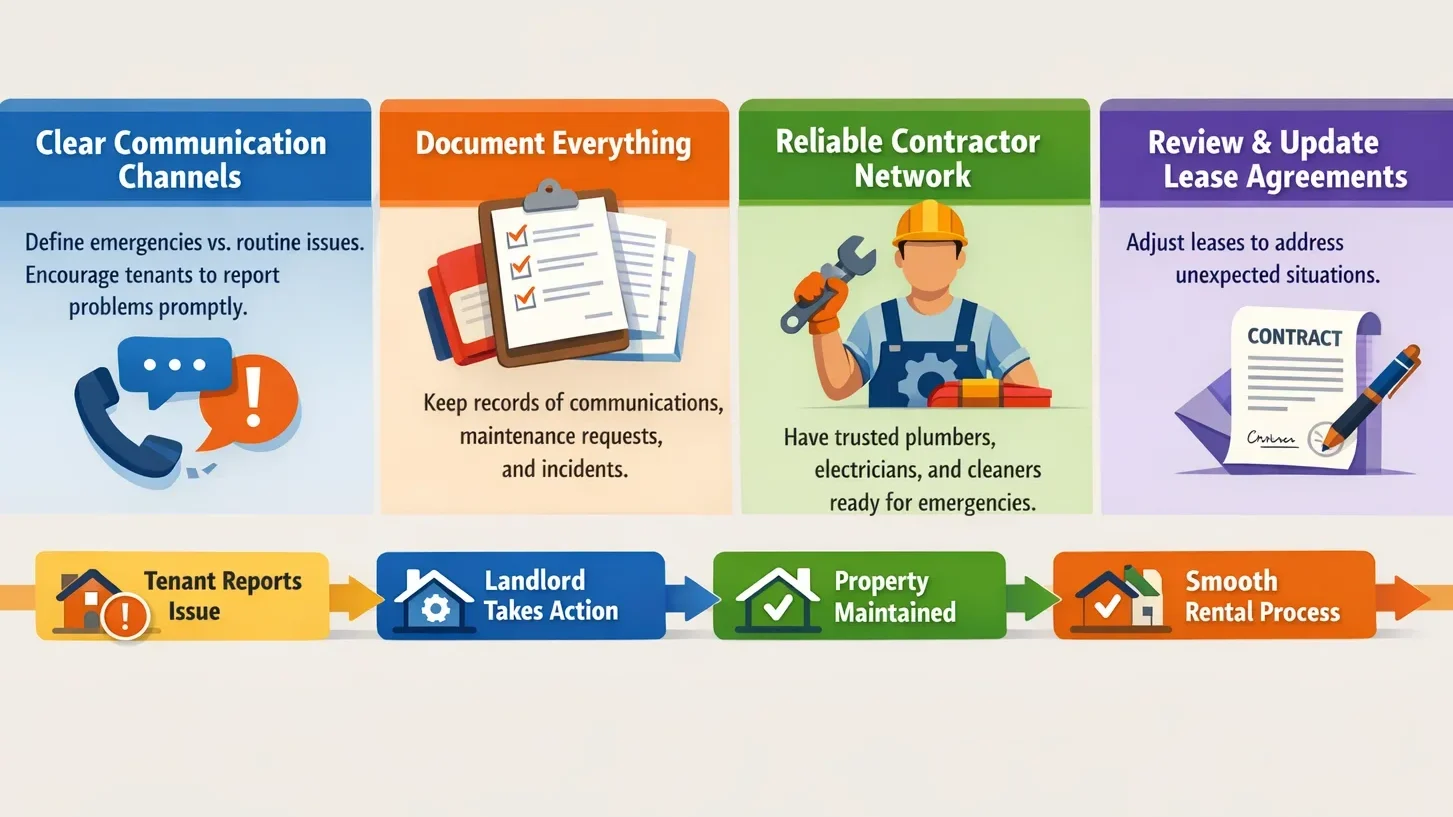
Your rental property is a business, and like any establishment, unexpected issues can cause operations to come to a halt. However, there are ways to minimize the damage and speed up recovery.
First, Create Clear Communication Channels
Assure that your tenants are aware of the distinction between an emergency and a routine maintenance issue. This line of communication should also be used to report maintenance issues, such as plumbing problems, very dirty fences, roofing issues, and more.
This allows for more minor issues to be addressed before they become major ones and demonstrates your organization’s responsiveness.
Document Everything Consistently
Maintain documented records of each communication, maintenance request, or incident. This creates a historical record, with a paper trail, that can protect you as a landlord in case of future disputes with your tenant and help you identify trends.
Additionally, Build a Network of Reliable Contractors
Establish working relationships with reliable plumbing companies, electrical contractors, and other cleaning services that can respond promptly to emergencies. Developing these working relationships will enable you to respond immediately to emergencies without compromising the quality of service.
Review and Update Your Lease Agreement
After an unplanned event, review your lease agreement to see whether it could have been written to provide detailed so you’ll know how to handle such a situation. This includes regularly updating your lease to reduce the opportunity for disputes.
Also Read: Making Home Renovation More Accessible: How Lamina Can Assist You
Conclusion
Renting a home has its ups and downs; therefore, it is essential to be prepared for those difficult times. When you use compassion and have an organized plan to address problems in your rental property, you protect your investment and support your renters.
The benefits of having a plan go beyond resolving a specific problem, as it will help you build trust and a stable, long-term relationship. Therefore, the best way to manage a rental property is to provide a safe and respectable environment for all parties involved.