



Cloud use keeps growing, and most enterprise teams now depend on it every day. If you work in IT, you probably feel how fast things change. New tools show up all the time, and workloads are increasingly spread across different environments. This shift is already well underway across enterprises. Over half of organizations now operate hybrid and public cloud environments, with 64% running up to half of their workloads in the public cloud and 53% actively using hybrid cloud approaches, a clear sign that multi-cloud adoption has become mainstream rather than experimental. Because of this evolution, many companies are now moving toward multi-cloud strategies instead of relying on a single provider.
The idea is simple. You pick the best cloud service for each need. You also avoid getting stuck with one vendor. It gives your team more freedom. This article takes a close look at the future of multi-cloud strategies. You will see why more companies adopt this approach, what problems they face, and how the next few years may shape the cloud world.
Why Enterprises Are Moving Toward More Flexible Cloud Models
Many companies want more control over their cloud setup. They want choices that help them stay productive and avoid limits. One cloud provider may offer great data tools. Another provider may offer better pricing. Another may offer stronger security features. A multi-cloud strategy lets you mix these strengths.
It also helps to understand what is a data cloud, since more companies now use connected data platforms across different providers. A data cloud helps teams bring data from many sources into one simple structure. This makes it easier to manage information when working with more than one cloud. It also highlights why flexible cloud setups matter so much today.
Teams often shift to multi-cloud because each provider shines in different areas. They want better performance, more freedom to move workloads, and more control over their choices. Budgets play a big role, too. Multi-cloud setups give companies greater buying power, helping them compare pricing and choose what works best.
The Shift From Hybrid Cloud to True Multi Cloud
Hybrid cloud was an early step. Many companies kept some systems on their own servers and moved others to the cloud. It worked for a while. The problem is that hybrid cloud setups often rely on fixed rules. They also do not offer the same flexibility that enterprise IT teams want today.
Multi-cloud is different. It lets you run everything across multiple cloud providers without being tied down. You can pick any tool you like. You can move data between platforms with more freedom. You can also plan workloads to best fit your needs.
The cloud market continues to evolve, so multi-cloud strategies are becoming more popular. When companies outgrow hybrid cloud, they often move toward multi-cloud models that scale better and offer more agility.
Managing Security in Multi-Cloud Environments
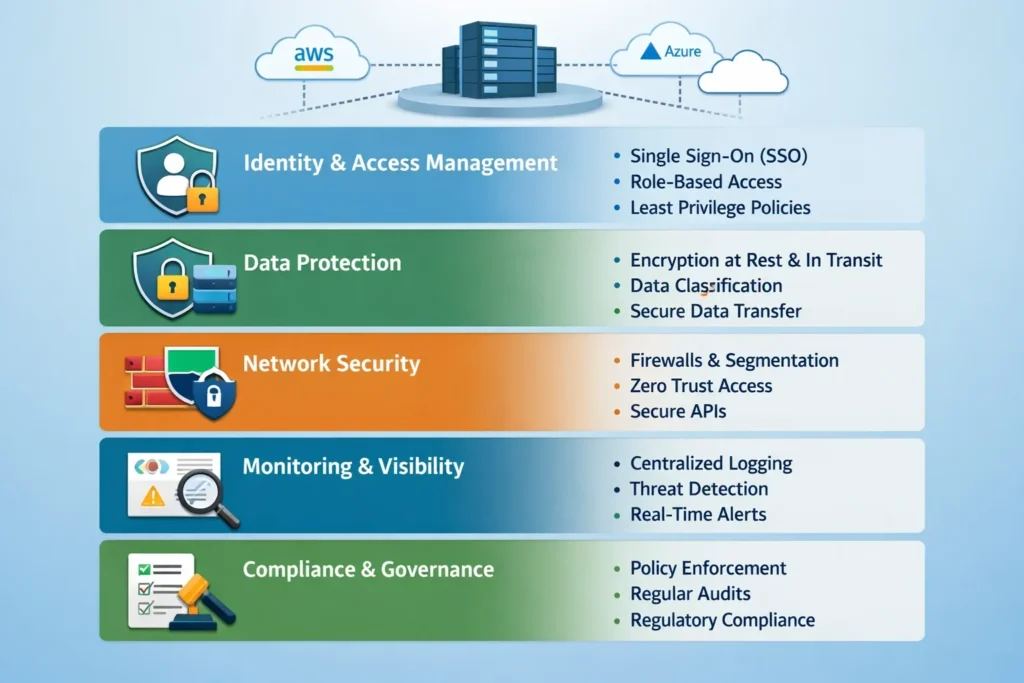
Security becomes more complex when a company uses several cloud providers. Each provider has different rules, features, and tools. This means IT teams need a strong security plan. They cannot rely on guesswork. They also cannot expect each provider to follow the same controls.
Teams need clear security rules that apply across every cloud platform they use. Identity tools help a lot. They allow users to log in with the same method across platforms. This lowers confusion and avoids mistakes. It also gives IT teams a clean way to track who has access.
Data handling rules are another key part. Teams need guidelines for storing, sharing, and moving data. Regular audits help teams stay compliant. They show where risks appear and how to fix them before problems grow.
The Role of AI and Automation in Multi-Cloud Strategies
AI and automation play a big role in modern cloud setups. Many tasks take too much time when done by hand. Automation tools help teams handle these tasks more quickly and cleanly. AI tools can study usage patterns and help predict future needs. This helps companies lower costs and plan ahead.
Automation also improves scaling. When workloads increase, automation can shift traffic or add resources. This keeps systems stable. It reduces delays and avoids errors. Teams also depend on automation to manage updates across different clouds. This keeps everything consistent and avoids manual mistakes.
Also Read: Understanding AI Automation: Everything You Need to Know
The Growing Importance of Cloud Portability
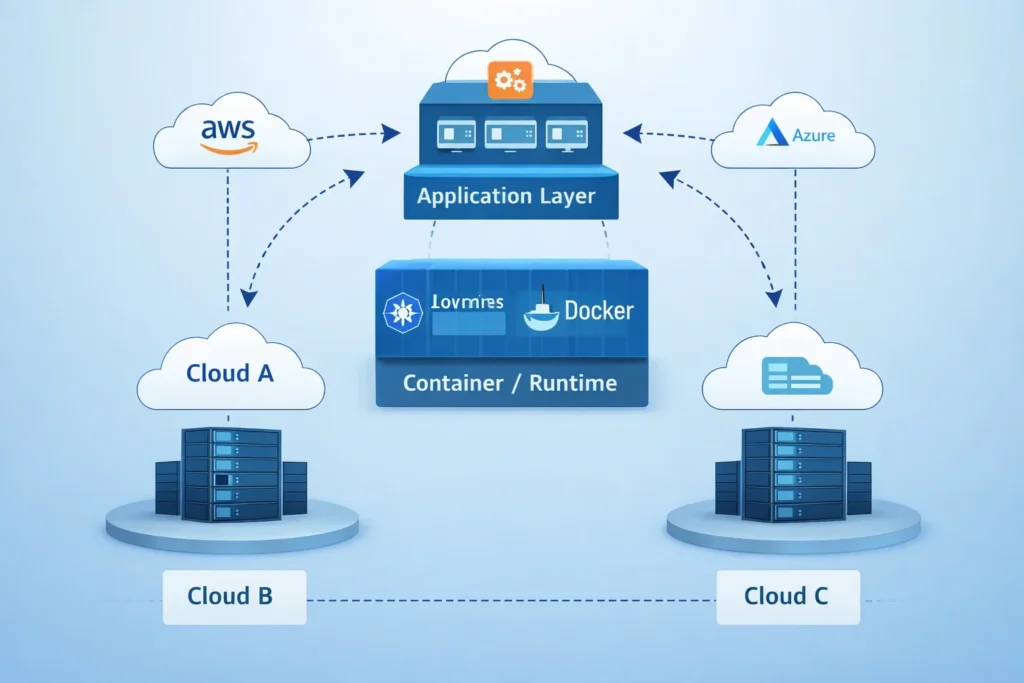
Cloud portability matters more each year. Companies want to move apps and data across different cloud providers without trouble. They do not want to rebuild apps every time they switch providers.
Tools like containers make this easier. Containers let teams package apps in a simple, portable format. Open standards help, too. They help avoid lock-in and give teams a fair way to manage their systems. With better portability, companies gain more power. They can negotiate pricing, move resources, and redesign systems with less friction.
Also Read: Choosing the Right Capacity Planning Software for Teams
Cost Optimization Across Multiple Providers
Many teams love the idea of multi-cloud. But they also worry about cost control. Costs can grow fast when using several cloud platforms. To avoid this, companies need full visibility into their spending. They need tools that track usage across all providers.
Cost reports and dashboards help teams catch waste. They also help compare pricing models. When teams see where money goes, they can make better decisions. Alerts are useful too. Alerts warn teams when spending rises too fast. This helps prevent large bills at the end of the month.
With the right tools, multi-cloud setups can help save money rather than increase costs.
What the Future Looks Like for Multi-Cloud
The future of multi-cloud looks strong. Providers will add more open tools to attract enterprise customers. They know that companies want flexible options. This will lead to more shared data layers that work across clouds. It will also enable simpler management of multi-cloud systems from a single dashboard.
Edge computing will also play a bigger role. More devices create more data at the edge. Multi-cloud setups will connect this data to central systems. This will help companies get real-time insights while still keeping control.
In the next few years, multi-cloud strategies will shift from a trend to a normal part of enterprise IT. Companies will adopt it as their default model for building modern systems.
Many companies feel pressure to innovate. Multi-cloud will help them do that without limits.
Companies have many choices today, and the cloud market continues to grow. Multi-cloud strategies will help them stay ready for whatever comes next. With strong planning and the right tools, any enterprise can build a reliable and flexible multi-cloud setup.