





Virtual teams have grown into the quiet backbone of many businesses. People scattered across different places handle tasks that once required a shared office. Even without sitting in the same room, they build routines that support the workday. This shift is no longer temporary. Forbes reports that about 16% of companies already operate fully remote, with millions of workers expected to remain in remote roles beyond 2025, showing how virtual work has become a lasting structure rather than a passing trend. Delegating the right workload becomes essential because virtual teams depend on clear rhythms to function well.
Morning hours reveal how well-balanced a virtual team is. Messages come in at different times, tasks shift across digital tools, and people settle into their pace for the day. Some workers handle detailed tasks best when the day is quiet. Others move faster when the momentum picks up. Delegation works best when these patterns are understood. It keeps the team from feeling overwhelmed and supports the kind of work that builds naturally through the day.
Have questions about this story?
Ask Tundra for more details, context, or updates.
Noticing How Each Person Works
Every team member carries their own rhythm. Some prefer focusing on one project for long stretches, while others work better in shorter bursts. Managers who pay attention to these habits assign tasks in ways that match them. This kind of understanding helps prevent burnout and maintain steady quality. Virtual work becomes easier when everyone is doing tasks that feel natural rather than forced.
Matching Tasks to Skill Depth
Not every task requires the same level of experience. Some need careful hands and a deeper understanding of the work. Others require consistent follow-through. Delegating becomes smoother if you assign to those who feel comfortable handling them. It also allows the team to grow, giving newer members space to learn without risking delays.
Managers who work with restaurant365 virtual assistants see this balance clearly. These assistants handle structured tasks that require accuracy and calm repetition. It frees the rest of the team to focus on broader responsibilities.
Also Read: How Can a Virtual Assistant Simplify Local News Marketing?
Communicating Expectations Without Overloading
Virtual teams rely heavily on clear communication. Short messages with concise task descriptions and a calm tone help everyone understand what needs to be done. Overexplaining can overwhelm people. In contrast, vague instructions create uncertainty. Thus, the manager must find that sweet spot to delegate effectively.
Regular check-ins help as a quiet rhythm that keeps everyone aligned. They prevent misunderstandings from escalating and allow small adjustments before they become larger issues.
Leaving Room for Flexibility
Workloads shift as projects grow. Tasks that felt manageable in the first week may feel heavy in the next. Managers who recognize this would build flexibility into the workflow. They let team members trade tasks or ask for support without feeling judged. This openness keeps the team from slipping into stress and encourages a steady exchange of effort.
Trust helps people work better. Offering choices in how to approach certain tasks creates a sense of ownership. It also allows the manager to understand what each member finds comfortable. All of it makes future delegation easier.
Using Tools That Support Quiet Coordination
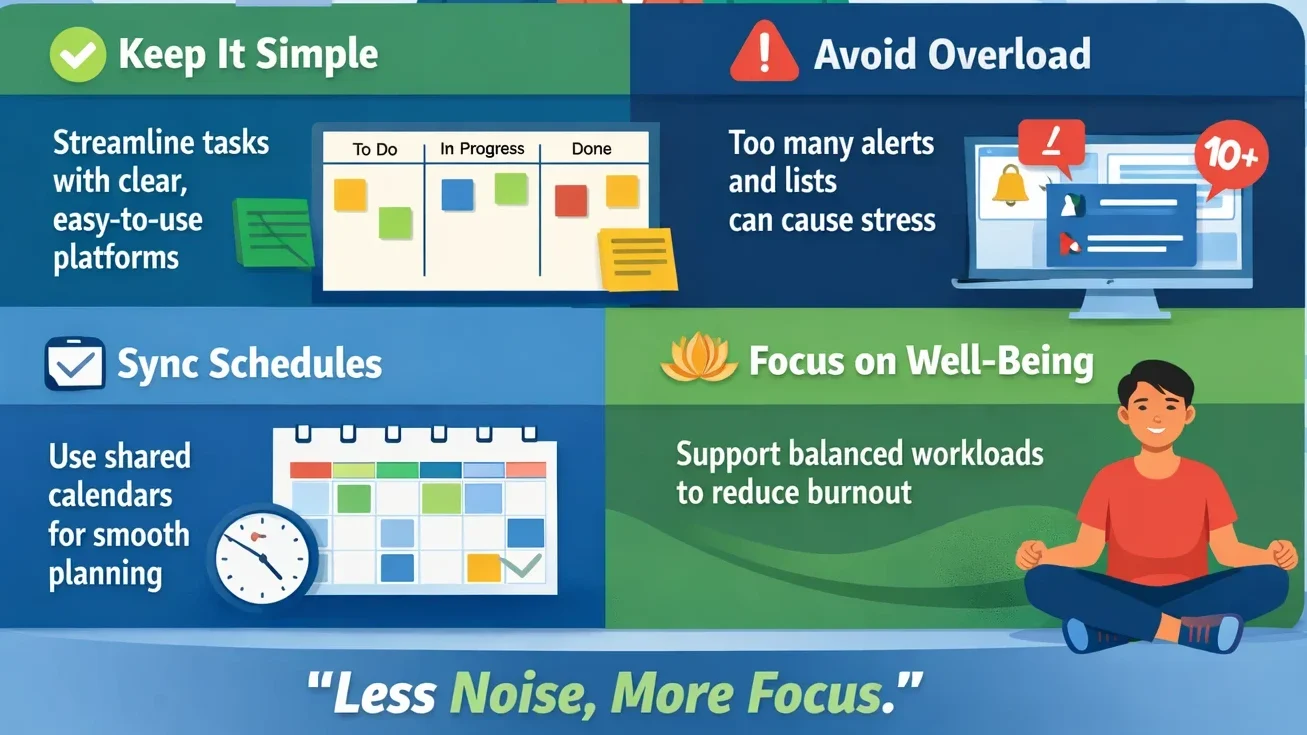
Digital tools guide the structure of virtual teams. Calendars and shared documents give everyone a sense of direction. In fact, Forbes cites a Gartner study showing that roughly 80% of workers now use digital collaboration tools, up from about 40% before remote work became widespread, underscoring how central these platforms are for staying aligned across locations. However, these tools work best when used gently, so they won’t overwhelm the team. A board with too many lists or updates can cause confusion. A simple layout keeps the day from becoming chaotic and helps maintain the focus that virtual teams depend on.
These tools also create space for asynchronous work. Team members in different time zones can still connect without needing to be online at the same time. This kind of independence supports smoother delegation.
Keeping Workloads Realistic
Teams notice if someone’s plate becomes too full. It slows down the pace. More importantly, the output quality suffers. Managers prevent this scenario by regularly reviewing workloads. They look for signs of strain and adjust tasks. They do this before the pressure builds.
Also Read: How to Influence Without Authority: A Corporate Manager’s Guide to Leadership
Creating a Space for Honest Feedback
Feedback keeps virtual teams healthy. It shows where tasks feel heavy and where support is needed. It also reveals where the workflow feels smooth so that teams can keep it up. Managers encourage this by asking for input without pressing for long explanations. A simple note from a team member can shift the balance and help delegation improve over time.