





Critical thinking exercises for students are one of the most powerful tools any teacher can bring into a classroom. Ask any teacher what skill they wish students came in with, and most will give some version of the same answer — not more facts, not a sharper memory, but the ability to slow down, think something through, and explain why they believe what they believe.
Critical thinking matters beyond passing exams. It matters for figuring out who to trust online, how to handle disagreement, how to make a call when there’s no obvious right answer. School rarely teaches it directly, even though it comes up constantly. The good news: it can be practiced deliberately, in any classroom, without special equipment. Just the right kinds of questions.
Have questions about this story?Ask Tundra for more details, context, or updates.
What Makes a Critical Thinking Exercise Actually Effective
Not every activity labeled “critical thinking” actually qualifies. A worksheet with a correct answer at the back is asking students to remember, not to think — and that distinction matters more than it might seem.
A genuine exercise requires students to explain their reasoning, not just select an answer. Getting something right means little if the student can’t say why. Good exercises also carry some real uncertainty — situations where two reasonable people might land differently — and they work best when they’re grounded in something students actually recognize. Familiar scenarios produce far more engaged thinking than abstract ones.
Types of Critical Thinking Exercises Worth Using in a Learning Environment
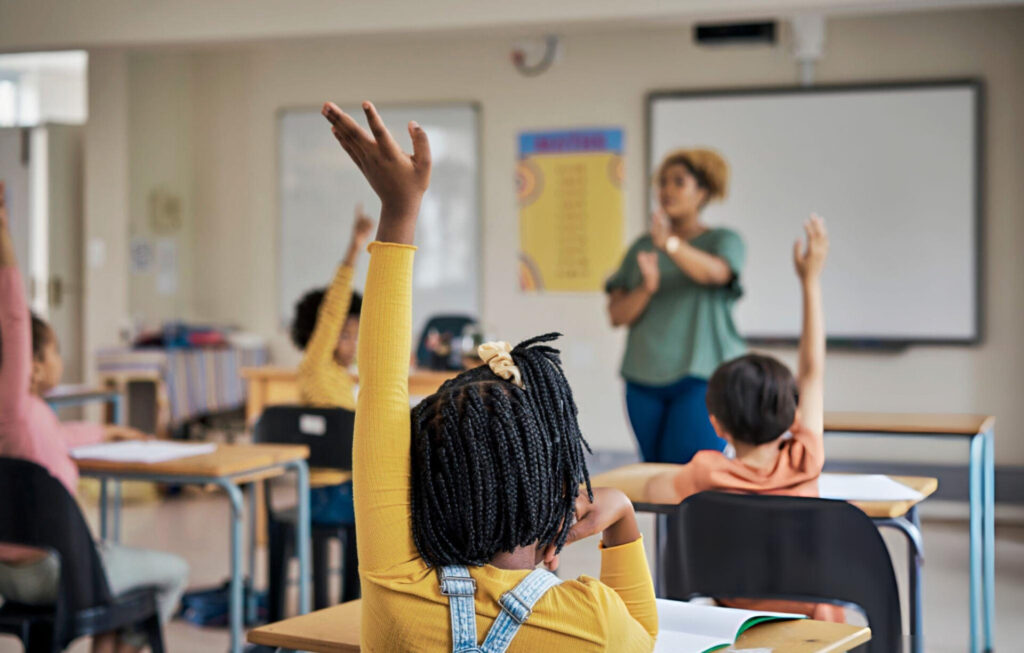
Scenario-based questions put students in a situation — a conflict, a dilemma, a problem without a clean solution — and ask what should happen and why. The answer matters less than the reasoning trail the student builds getting there.
Cause-and-effect analysis fits into almost every subject — history, science, current events. The underlying question is always some version of: what led to this, and what came after? Students who practice it start seeing information as connected rather than isolated.
Comparing multiple viewpoints may be the most underused format in school. Asking students to argue the side they personally disagree with — rather than the one they already believe — forces a kind of engagement with opposing reasoning that builds real intellectual flexibility.
Logical reasoning problems — puzzles, “what’s wrong with this argument” exercises, simple sequence challenges — train students to move through a problem step by step rather than jumping straight to a conclusion. The difficulty matters less than the discipline of working through it.
Reflection-based writing prompts ask students to look inward — write about a time you changed your mind, or a decision that didn’t go as expected. Hard to answer on autopilot, which is exactly what makes them useful.
Simple Exercises Teachers Can Try Right Away
No materials, no prep, no grading rubric:
- The Reluctant Defender: Give a student a position they disagree with and two minutes to argue for it.
- Find the Assumption: Read a short piece of text aloud — a headline, an ad, a textbook intro — and ask students to name one thing the writer assumed without saying so.
- What Do We Still Need to Know?: Present an incomplete scenario and ask what information would be needed before forming a reasonable opinion.
- The Room Divide: Make a statement; students move to one side if they agree, the other if they don’t, then each side listens to one point from the other before responding.
The goal isn’t a correct answer. It’s the conversation that happens on the way to one.
What Students Actually Gain from Regular Practice
Students who build strong reasoning habits tend to perform better over time — not because they study longer, but because they understand more deeply — a finding backed by research published on PMC by the National Library of Medicine, which confirmed that critical thinking and academic performance are significantly associated with one another.. Comprehension improves when a student reads actively rather than passively. Independent thinking, stronger communication, the ability to hold a position without getting rattled — these come through practice rather than memorization.
How Teachers and Parents Can Encourage It Every Day
The most effective change costs nothing: replace ‘what’ questions with ‘why’ and ‘how’ — a strategy supported by Teachers College, Columbia University, which highlights how motivational approaches directly shape student engagement and reasoning. Asking what happened tests memory. Asking why a character made a choice — and what the student would have done differently — activates reasoning.
At home, ordinary conversations work better than formal exercises — talking through a news story at dinner, asking a teenager to explain their reasoning, debating a small everyday decision. None of it feels like homework, and that’s part of what makes it stick. In classrooms and at home alike, the environment where it’s safe to be wrong is where the skill actually grows.
The Challenges Students Face
Fear of being wrong is the most common obstacle — research published on PMC confirms that fear of negative evaluation significantly increases students’ cognitive load and hinders their ability to think and perform. In systems built around grades and right answers, being wrong in front of classmates carries a social cost — so students stop reasoning out loud and end up avoiding the very process that builds the skill. Rote learning habits compound the problem; students accustomed to memorize-and-repeat environments often don’t know how to approach a question with no clear answer — a challenge well documented by ERIC, the U.S. Department of Education’s research database — and that discomfort takes time to work through.
Building the Habit Early Pays Off Later
For more context on the foundational concepts, a broader guide on critical thinking exercises covers the full picture in more depth and is worth reading alongside this.
Students who get regular practice questioning, reasoning, and reflecting become sharper thinkers over time. Not fast. Not without friction. But through repetition, in small doses, over time. Start somewhere. The exercises are the easy part.