




Disclaimer: This article is for informational purposes only and does not constitute financial, investment, or legal advice. Readers should consult a qualified financial professional before making any credit or financial decisions.
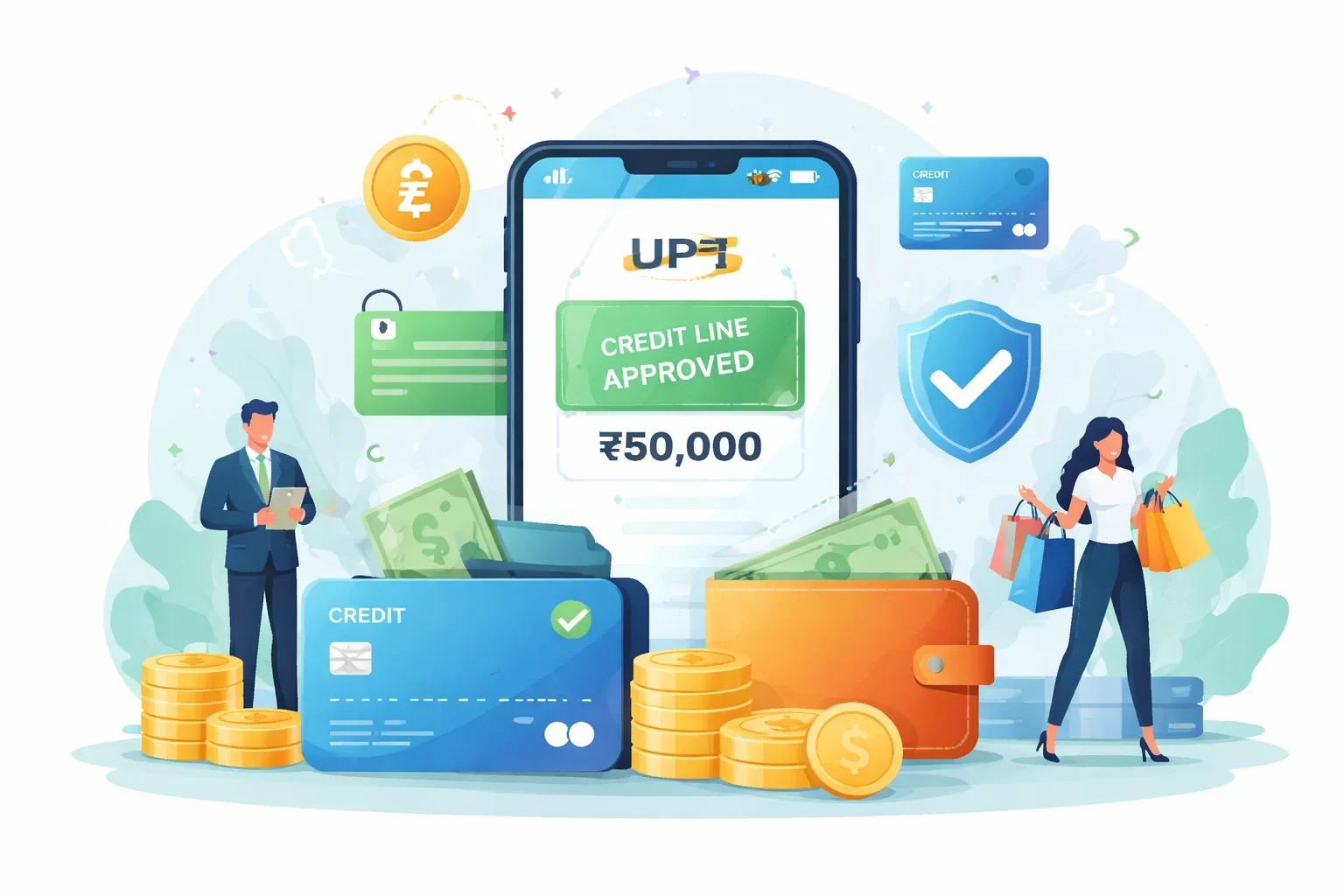
Retail finance is undergoing a major transition as customers expect credit that is fast, simple, and available through everyday payment channels. The rise of digital payments has already changed how people manage money, and the introduction of a credit line on UPI is shaping the next chapter. This model allows banks and financial institutions to offer customers credit in real time through a familiar interface.
A credit line on UPI reduces reliance on cards and provides access through a channel millions already use. The approach brings clarity to businesses seeking better customer engagement and to users seeking transparent spending control. It also aligns with the wider movement towards financial inclusion across markets.
Have questions about this story?
Ask Tundra for more details, context, or updates.
How the credit line on UPI works in practice
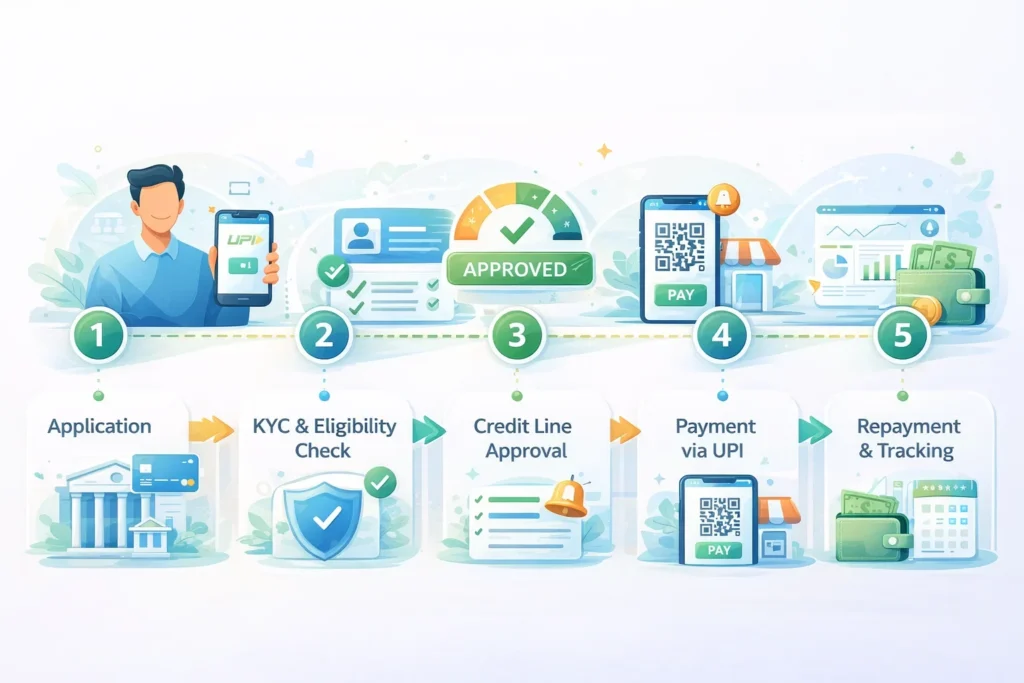
Credit line on UPI links a pre-approved line of credit directly to a user’s UPI ID. Customers apply through a bank or financial partner, complete their KYC checks, and receive instant approval once eligibility is confirmed. The approved amount reflects in their account and becomes available for immediate use at any merchant that accepts UPI. By 2025, UPI supported hundreds of millions of users, processing nearly 19.47 billion transactions worth roughly ₹25 trillion in a single month, averaging thousands of transactions per second. This scale highlights why extending credit through an existing UPI interface can deliver instant reach without changing user behaviour.
The experience mirrors a regular UPI payment, but the funds come from a credit account rather than a bank balance. This clarity helps customers track spending with ease and helps banks monitor utilisation in real time.
What makes the credit line on UPI relevant for banks
Banks benefit from a system that opens new lending opportunities without friction. A credit line on UPI improves customer engagement by presenting credit as a day-to-day utility rather than a separate product. It supports new-to-credit and new-to-bank customers and reduces drop-offs caused by long onboarding journeys.
Real-time visibility of transactions, spending patterns, and customer behaviour strengthens risk management. It also provides a reliable channel for banks looking to expand their digital portfolios without major infrastructure changes.
Also Read: 10 Simple Risk Management Plans for Every Business Owner
How a credit line on UPI improves customer experience
Customers gain instant access to funds for routine purchases. They do not need to wait for physical cards or long approval cycles. Credit line on UPI lets them make purchases at local shops, online platforms, or any merchant that accepts UPI. The setup is simple because most users already understand the UPI payment flow.
Clear tracking of transactions, transparent repayment schedules and real-time notifications encourage responsible borrowing. This experience suits young consumers entering formal credit for the first time and busy users who prefer minimal steps.
The role of flexibility in the credit line on UPI
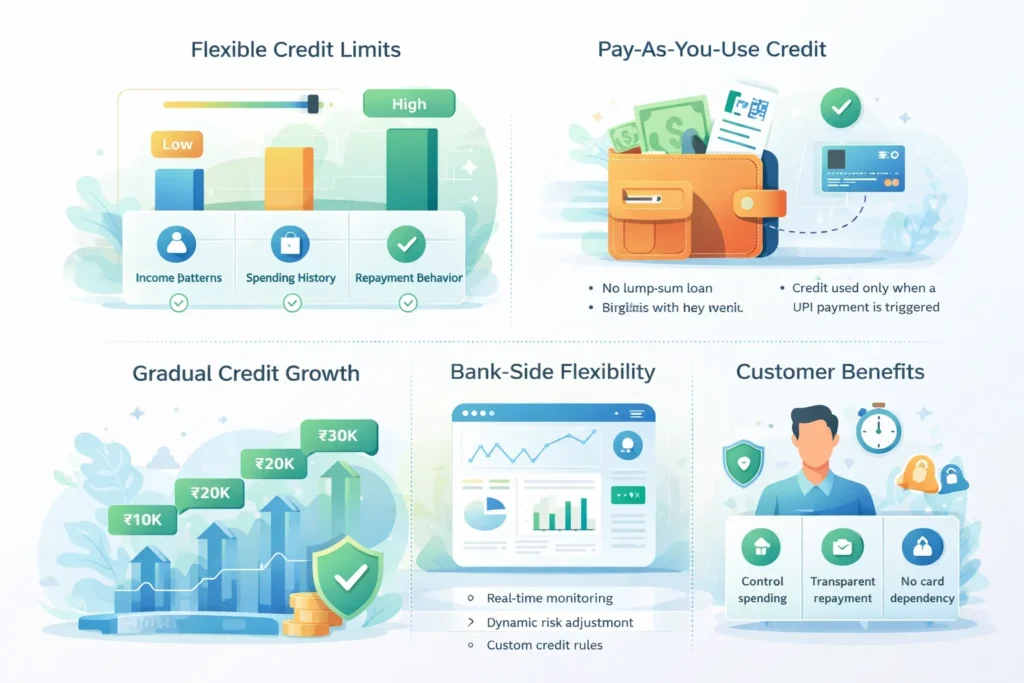
Flexibility is one of the UPI credit line’s biggest strengths. Banks can set credit limits based on each customer’s profile, income patterns, and spending behaviour. This promotes better risk control and a personalised approach to lending. Customers can start with smaller limits and grow them over time as their repayment history builds.
Such customisation supports financial inclusion and helps people move into formal credit without pressure. It also gives institutions a clearer understanding of how their credit portfolio performs across customer groups.
The importance of real-time decisioning
Real-time approvals drive the appeal of a credit line on UPI. Instant verification, data checks, and risk scoring shorten the time between application and activation. This makes the process seamless for customers who prefer quick solutions.
Banks benefit from automated checks that reduce manual work. The combination of speed and reliability positions the credit line on UPI as a modern lending model that suits both high-volume and high-value segments. This structure ensures a consistent user experience, even during peak transaction hours.
How seamless integration strengthens adoption
One reason credit line on UPI is gaining momentum is the ease of integrating it with existing banking systems. API-driven structures allow banks to connect the service to their existing workflows without lengthy upgrades. This supports faster deployment and stable performance. UPI’s widespread acceptance ensures instant merchant access for customers.
For banks, the ability to track usage in real time increases operational transparency. This alignment between technology and customer behaviour encourages adoption across regions.
The road ahead for seamless credit access
Retail finance is moving towards a structure where customers expect clarity, speed, and low-friction credit. Credit line on UPI supports this shift by combining familiar payment behaviour with responsible lending.
It enhances access for new-to-credit customers, offers flexibility that suits individual spending patterns, and gives banks real-time visibility across their portfolios. Plus, it encourages safe transactions through strong security protocols and supports fast deployment through seamless integration.
As more institutions adopt this model, credit lines on UPI will become a key driver of financial inclusion and digital growth. To explore solutions that support this transition, you can connect with brands like Pine Labs.