


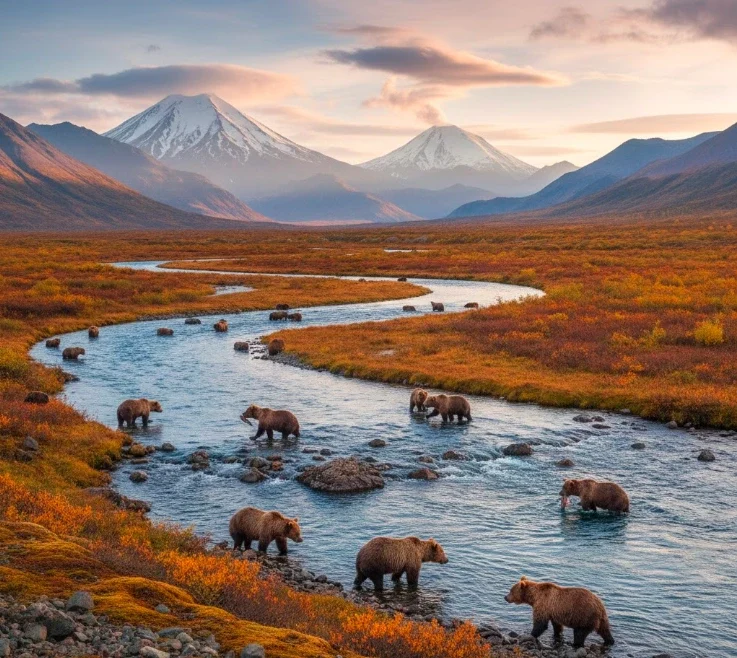
The best time to visit Katmai National Park is from late June to September, when salmon runs attract large numbers of brown bears to Brooks Falls. July offers the highest bear activity, while late August and early September are quieter but still excellent for viewing bears preparing for winter. Visiting outside this window limits access, wildlife sightings, and services.
Katmai is one of the most remote national parks in the United States. There are no roads, no restaurants, and no nearby towns. Every visit requires careful timing, flights, and planning. This guide explains exactly when to go, what you will see, how much it costs, and where you can stay, based on how the park actually operates.
Have questions about this story?
Ask Tundra for more details, context, or updates.
When Should You Plan a Trip to Katmai National Park?
Katmai National Park and Preserve is open year-round, but practical visitor access is limited to summer. Most facilities, flights, and bear-viewing platforms operate only from June through September. Outside these months, weather conditions, lack of services, and restricted access make travel extremely difficult.
The park’s main visitor hub, Brooks Camp, is the center of bear viewing and the only area with developed infrastructure.
Best Time to Visit Katmai National Park for Bear Viewing
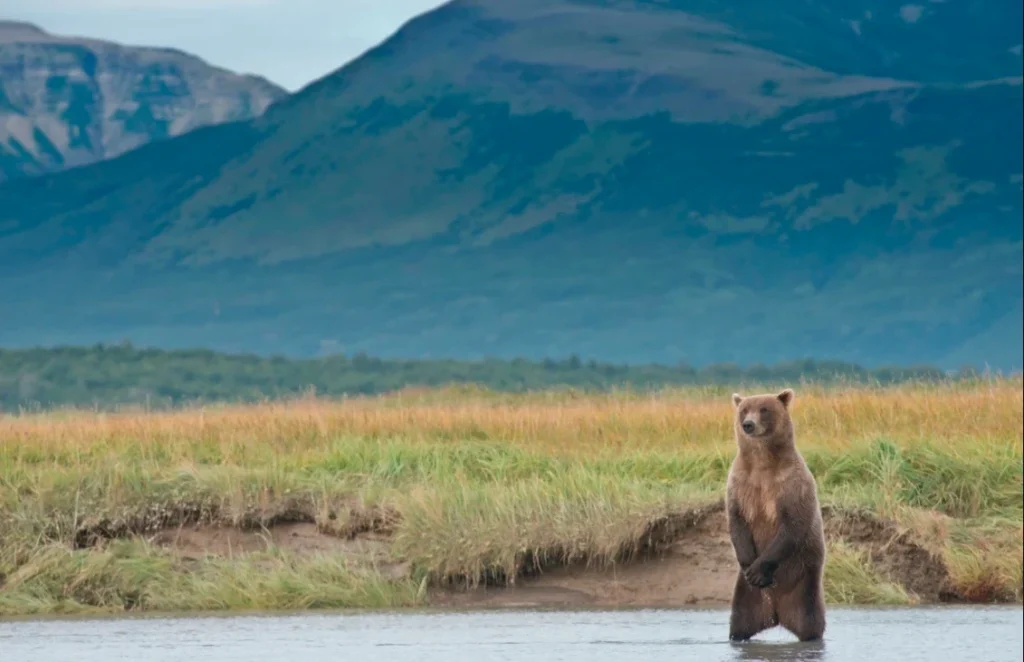
Bear viewing in Katmai depends almost entirely on salmon migration cycles. Brown bears gather at Brooks River to feed before hibernation, creating one of the most concentrated bear-watching locations in the world.
Also Read: Best Kenai Bear Tours: Exact Viewing Locations, Prices, and Peak Bear Season Explained
Peak Bear Viewing Season at Katmai
Late June to Late July
- Salmon begin moving upstream
- Bears actively fish, compete, and move frequently
- Best time for action photography
- Highest visitor numbers
Late August to Early September
- Fewer salmon, but bears return for final feeding
- Bears rest more and are easier to observe
- Fewer crowds and calmer conditions
- Excellent for photographers seeking longer viewing times
According to the National Park Service, July consistently records the highest bear counts at Brooks Falls, often with 20–40 bears observed per day, depending on salmon activity.
Visiting Katmai Outside Peak Season: Is It Worth It?
Visiting Katmai before mid-June or after September is not recommended for most travelers.
- Limited or no flights
- Brooks Camp services closed
- Unpredictable weather
- Little to no bear activity
For visitors unable to secure July permits, mid-to-late August remains the best alternative, offering strong wildlife viewing with fewer logistical challenges.
Cheapest Way to Get to Katmai National Park
Katmai National Park is not accessible by road.
Standard Travel Route
- Fly from Anchorage to King Salmon
- Take a floatplane from King Salmon to Brooks Camp
Approximate Transportation Costs
- Anchorage → King Salmon (commercial flight): $450–$600
- King Salmon → Katmai (floatplane): $500–$700
Estimated Total Round-Trip Cost: $1,000–$1,300
Prices vary by season, availability, and airline.
Most travelers use Alaska Airlines for the Anchorage–King Salmon route, followed by licensed local air taxis authorized by the National Park Service.
Where to Stay During Katmai National Park Travel
Katmai offers very limited lodging, and reservations often fill months in advance.
Brooks Lodge
- Private cabins near Brooks Camp
- Includes meals and guided bear viewing
- Sleeps up to four per cabin
- Most expensive option, but most comfortable
Brooks Campground
- Budget-friendly option
- Requires an advance permit through Recreation.gov
- Capacity limited to approximately 60 campers
- Open seasonally, typically June–September
Backcountry Camping
- Allowed outside restricted zones
- No facilities or services
- Requires bear-safety knowledge and self-sufficiency
- Recommended only for experienced wilderness travelers
Also Read: What is the Best Time to Spot Polar Bears in Alaska?
Outdoor Activities in Katmai National Park
Although bear viewing is the main draw, Katmai offers other wilderness experiences.
Bear Viewing & Photography
Brooks Falls provides raised platforms and regulated viewing areas. Visitors must follow strict safety rules. There is no physical contact with wildlife, and distance regulations are enforced.
Hiking Dumpling Mountain
- 9.2-mile round trip
- Offers views of Brooks River and Naknek Lake
- Requires bear awareness at all times
Valley of Ten Thousand Smokes
- The volcanic landscape formed after the 1912 Novarupta eruption
- Accessible by guided tours or flightseeing
Flightseeing Tours
- Weather-dependent
- Aerial views of volcanoes, lakes, and glaciers
- One of the best ways to appreciate Katmai’s scale
Fishing
- World-class salmon fishing
- Requires an Alaska fishing license and adherence to park regulations
Wild Backcountry Camping Safety in Katmai
Camping in Katmai requires serious preparation.
- Store food in bear-resistant containers
- Carry bear spray at all times
- Never approach or photograph bears at close range
- Pack out all trash, including food waste
- Weather can change rapidly; prepare for rain, cold, and wind
Respect for wildlife and local regulations is essential. Katmai is a protected ecosystem, not a recreational campground.
Also Read: Where Can I View Wildlife in Alaska? Bears, Moose, Eagles, And More
Why Katmai National Park Matters
Katmai represents one of the last truly intact wilderness ecosystems in North America. It is a place where wildlife behavior is not staged, human presence is limited, and nature dictates the experience.
For travelers seeking authentic Alaska, Katmai offers something rare: a chance to observe the natural world without interference, spectacle, or convenience.
FAQs
Can you drive to Katmai National Park?
No. There are no roads connecting Katmai to any city or town. All access is by plane or boat.
How do you get to Katmai National Park from Anchorage?
Fly from Anchorage to King Salmon, then take a floatplane to Brooks Camp.
Where is Katmai National Park located in Alaska?
Katmai is located in southwestern Alaska, covering over 4 million acres of wilderness.
Where can you stay in Katmai National Park?
Options include Brooks Lodge, Brooks Campground, or permitted backcountry camping.