



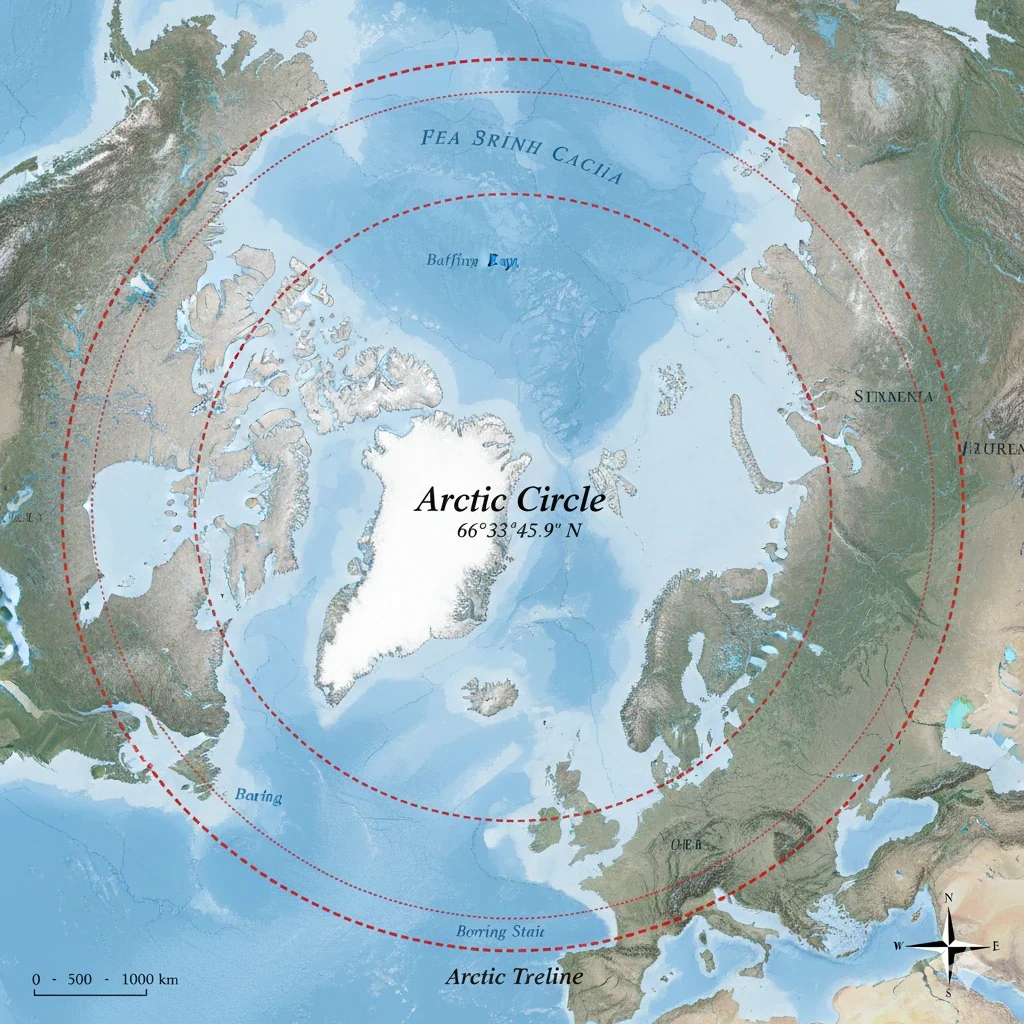
The Arctic Circle is an invisible line that marks one of the most dramatic natural boundaries on Earth. Crossing it means entering a region where the sun can stay visible all day in summer and disappear entirely for days or even months in winter. This is not a myth or exaggeration. It is a predictable result of Earth’s tilt, its orbit around the sun, and your position on the planet.
In Alaska and other northern regions, the Arctic Circle shapes daily life, wildlife behavior, travel seasons, and even how people sleep. Understanding this line explains why summer nights feel endless, why winter daylight becomes rare, and why the Arctic behaves unlike anywhere else on Earth.
Have questions about this story?
Ask Tundra for more details, context, or updates.
What Exactly Is the Arctic Circle?
The Arctic Circle is an imaginary line of latitude located at approximately 66°33′ North. It represents the southernmost latitude where, at least once every year:
- The sun does not set for a full 24 hours (summer)
- The sun does not rise for a full 24 hours (winter)
This line exists because of Earth’s axial tilt, which is about 23.44 degrees. If Earth were perfectly upright, the Arctic Circle would not exist, and daylight would be evenly distributed across the planet.
It is important to note that the Arctic Circle is not fixed forever. Because Earth’s tilt changes slightly over long periods, the exact position of the Arctic Circle slowly shifts southward by a few meters each year.
Why the Sun Doesn’t Set Inside the Arctic Circle
The phenomenon commonly called the midnight sun occurs because Earth rotates on a tilted axis.
During the June summer solstice, the Northern Hemisphere tilts toward the sun. Above the Arctic Circle, the sun’s daily path never dips below the horizon. Instead of rising and setting, the sun circles the sky, remaining visible even at midnight.
A simple way to understand this is to imagine a tilted globe under a lamp. Near the top of the globe, light never fully leaves as the globe spins. That constant exposure is what creates continuous daylight in Arctic regions.
How Long Does the Sun Stay Up in the Arctic Circle?
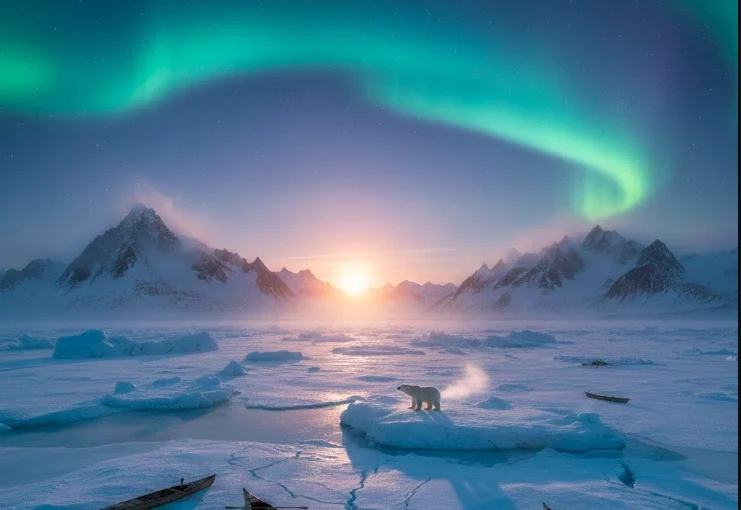
The number of days without sunset increases the farther north you go. This gradient is one of the most misunderstood aspects of the Arctic.
Continuous Daylight by Latitude
| Latitude | Location Example | Length of Continuous Daylight |
| 66.5° N | Arctic Circle line | ~24 hours |
| 68° N | Northern Norway | ~20–30 days |
| 71° N | Utqiaġvik, Alaska | ~82 days |
| 90° N | North Pole | ~6 months |
This explains why places slightly south of the Arctic Circle, such as Fairbanks, Alaska, still experience extremely long summer days, even though the sun technically sets for a short time.
What Happens in Winter? The Polar Night Explained
Winter brings the opposite effect, known as the polar night. During this period, the sun stays below the horizon for at least 24 hours and, in far northern locations, for weeks or months.
However, polar night does not mean total darkness all day. Most Arctic locations experience a few hours of twilight when the sun is just below the horizon. This creates dim blue or pink skies rather than pitch-black conditions.
The duration of polar night also depends on latitude, mirroring the pattern of summer daylight.
Which Countries Lie Inside the Arctic Circle?
The Arctic Circle passes through parts of eight regions:
- United States (Alaska)
- Canada
- Greenland (Denmark)
- Iceland
- Norway
- Sweden
- Finland
- Russia
Among these, Alaska is one of the easiest and most accessible places in the world to experience Arctic Circle conditions, especially via road and domestic flights.
Arctic Circle in Alaska: Why It Stands Out
Alaska’s Arctic Circle is unique because it combines extreme latitude with real accessibility. The Arctic Circle crosses northern Alaska’s tundra, rivers, and mountain ranges, and is famously marked along the Dalton Highway between Fairbanks and Prudhoe Bay.
Unlike many Arctic regions, Alaska supports permanent communities above the Arctic Circle with:
- Airports
- Schools
- Medical facilities
- Year-round residents
While Fairbanks sits just south of the Arctic Circle, it functions as a gateway to the Arctic and experiences long summer daylight and deep winter darkness similar to regions farther north.
Do People Live Inside the Arctic Circle?
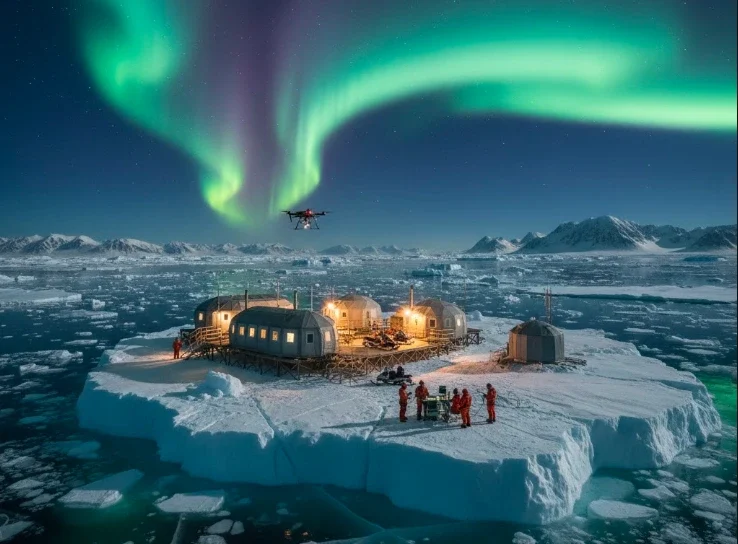
Yes. Tens of thousands of people live above the Arctic Circle year-round. Indigenous Arctic communities have thrived in these regions for thousands of years, adapting to extreme seasonal changes long before modern technology existed.
Modern residents adapt to Arctic light cycles by:
- Using blackout curtains during the summer
- Managing sleep schedules carefully
- Relying on artificial lighting and vitamin D supplementation in winter
- Adjusting work and school routines seasonally
These adaptations are not optional. Long-term exposure to continuous daylight or darkness directly affects circadian rhythms and mental health.
Also Read: Find Out What Makes the Gates of the Arctic So Unique?
How the Arctic Circle Affects Wildlife and Nature
The Arctic Circle does not just influence humans. It controls entire ecosystems.
Extended daylight triggers rapid plant growth during short summers. This fuels insect populations, which in turn support birds, fish, and mammals. Many Arctic animals time their reproduction to peak daylight periods to maximize survival.
For example:
- Migratory birds arrive precisely during long daylight months
- Caribou migrations align with Arctic plant growth cycles
- Marine ecosystems depend on plankton blooms driven by sunlight exposure
This tight link between light and life makes the Arctic one of the most seasonally synchronized ecosystems on Earth.
Arctic Circle vs Antarctic Circle: A Key Difference
The Antarctic Circle, located at about 66°33′ South, experiences the same daylight extremes as the Arctic Circle. The major difference lies in human presence.
The Arctic supports permanent populations and complex ecosystems. Antarctica has no permanent civilian population and is governed by international scientific agreements, with residents limited to temporary research stations.
Common Myths About the Arctic Circle
One widespread myth is that the sun never sets all year round inside the Arctic Circle. In reality, continuous daylight and continuous darkness occur only during specific seasons.
Another misconception is that Arctic regions are frozen year-round. While winters are harsh, summers can be surprisingly mild, with active wildlife, flowing rivers, and blooming tundra landscapes.
Why the Arctic Circle Matters Today
The Arctic Circle is more than a geographical curiosity. It plays a crucial role in:
- Climate research
- Seasonal biology
- Human health and adaptation
- Global weather patterns
For Alaska, the Arctic Circle defines not only geography but identity. It shapes travel seasons, cultural traditions, infrastructure planning, and the rhythm of daily life in ways that few other places on Earth experience.
Also Read: Find All About Gates of the Arctic and Kobuk Valley to Plan Your Trip in 2025 | Complete Guide
Final Authority Note
The Arctic Circle is where astronomy becomes real life. It explains Alaska’s endless summer evenings, its long winter shadows, and the deep connection between sunlight and survival in the far north. Understanding this line means understanding how Earth itself shapes the way humans, animals, and ecosystems live at the edge of the planet.
FAQs
What is the Arctic Circle in simple terms?
It is an imaginary line near the top of the Earth where the sun stays above the horizon all day in summer and disappears for at least one full day in winter.
Why does the sun not set for days in the Arctic Circle?
Because Earth tilts toward the sun during summer, the sun is above the horizon in northern regions.
How many days does the sun not set in the Arctic Circle?
At the Arctic Circle itself, about one day. Farther north, it can last from several weeks to several months.
Can you see the midnight sun in Alaska?
Yes. Northern Alaska experiences the midnight sun every summer, especially above the Arctic Circle.
Is it completely dark all winter in the Arctic Circle?
No. Even during polar night, most places experience some twilight each day.