



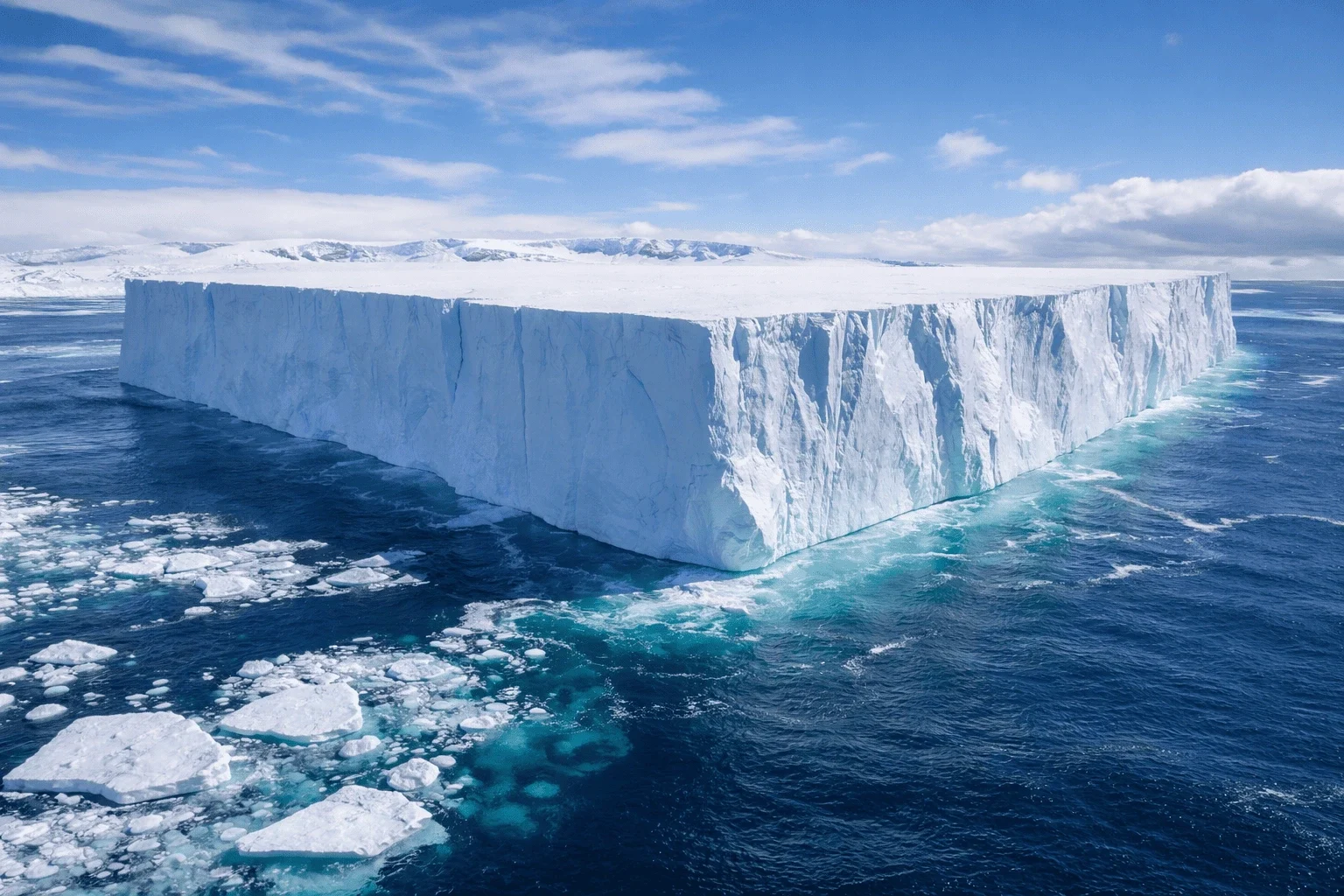
Far from cities, roads, or human noise, one of the most extraordinary natural objects on Earth has been quietly moving through time. Iceberg A-23A, one of the largest icebergs in the world, is not remarkable only because of its size, but because of how long it has survived and how slowly its story has unfolded.
This iceberg began its journey in 1986, when a massive slab of ice broke away from the Filchner Ice Shelf in Antarctica. Measuring approximately 9,000 square kilometers, it was larger than many countries at the moment it was born. Nearly 400 meters thick, it carried ancient snow compressed into ice over thousands of years.
What followed was not movement, but stillness.
Have questions about this story?
Ask Tundra for more details, context, or updates.
What Makes Iceberg A-23A One of the Largest Icebergs on Earth?
The term “largest iceberg in the world” is not used lightly. Iceberg A-23A consistently ranks among the biggest icebergs ever recorded because of a combination of surface area, thickness, and longevity.
A surface area of 9,000 km² means the iceberg is visible from space as a dominant white mass. But what makes it exceptional is what lies beneath the waterline. Roughly 90 percent of an iceberg’s mass sits underwater, and in A-23A’s case, that underwater volume is enormous.
Its thickness allowed it to extend deep enough to interact directly with the ocean floor. This interaction would define its fate for decades.
Why Iceberg A-23A Stayed Stuck for Over 30 Years
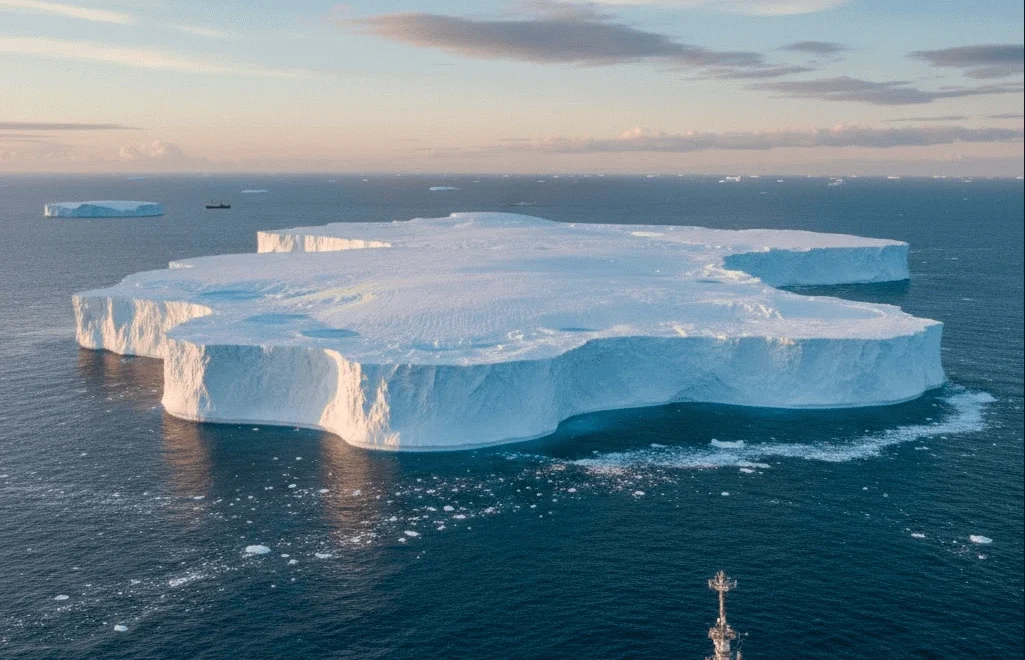
Shortly after calving in 1986, A-23A drifted only a limited distance before becoming grounded on the seafloor. Unlike smaller Antarctic icebergs that float freely, this iceberg’s weight pressed it into shallow seabed features beneath the Southern Ocean.
Once grounded, the ocean currents could no longer move it. Seasonal sea ice formed around it each year, reinforcing its position. For more than 30 years, A-23A remained essentially locked in place, exposed to slow erosion, freezing winds, and shifting ice conditions.
This long grounding period is rare and scientifically valuable. It allowed researchers to observe how a giant Antarctic iceberg behaves when it becomes part of the seafloor environment rather than a drifting object.
What Kind of Ice Does A-23A Contain?
The ice inside A-23A is not ordinary surface ice. It is ancient Antarctic ice, formed from snowfall that accumulated over thousands of years. Each layer holds trapped air bubbles, chemical signatures, and temperature records from Earth’s past climate.
Because of its size, A-23A contains an extraordinary amount of freshwater. Scientists estimate that the total ice volume holds enough fresh water to theoretically supply the entire planet for about a year if it melted evenly, though such melting would never occur all at once.
This makes A-23A not only one of the biggest icebergs on Earth, but also one of the most significant freshwater reservoirs ever observed in a single iceberg.
When and Why Did Iceberg A-23A Start Moving Again?
After decades of stillness, environmental conditions slowly changed. Ocean currents strengthened, surrounding sea ice thinned, and the iceberg’s base eroded enough to reduce friction with the seafloor.
Eventually, A-23A broke free.
Now drifting again through the Southern Ocean, the iceberg has resumed its long-delayed journey. Its movement is slow and deliberate, shaped by currents, winds, and water temperature. Unlike smaller icebergs that fracture quickly, A-23A remains largely intact due to its massive structure.
This renewed motion has brought the iceberg back into scientific focus and public awareness.
Why Scientists Are Closely Monitoring Iceberg A-23A
A-23A serves as a natural laboratory for understanding:
- How giant Antarctic icebergs evolve over decades
- How grounded ice affects ocean circulation and ecosystems
- How ancient ice responds to long-term environmental change
Because it calved before the most rapid warming trends of recent decades, A-23A provides a baseline for comparing older ice shelf behavior with modern ice loss events.
Its movement also helps scientists model how future icebergs from Antarctica may behave, especially as ice shelves continue to weaken.
Is Iceberg A-23A a Climate Warning?
Iceberg calving is a natural process, and A-23A’s formation in 1986 does not directly signal sudden climate collapse. However, its continued survival and renewed movement highlight how long Antarctic ice can persist and how slowly large systems respond to change.
The iceberg’s story reminds researchers and readers alike that climate processes in Antarctica unfold on decadal timescales, not daily headlines.
Also Read: Glacial Surfing in Alaska: Riding Waves on Ice-Crafted Waters
More Than the Largest Iceberg in the World
Labeling A-23A as the largest iceberg in the world captures attention, but its real significance lies in its history. Few icebergs have remained intact for so long, stayed grounded for decades, and then returned to open water with so much of their original mass preserved.
Born in 1986.
Frozen in place for 30+ years.
Now drifting once again.
Iceberg A-23A is not just a block of ice. It is a moving record of Earth’s frozen past.
FAQs
What is Iceberg A-23A?
Iceberg A-23A is one of the largest icebergs ever recorded. It broke off from Antarctica’s Filchner Ice Shelf in 1986 and remained grounded on the seafloor for more than 30 years before drifting again.
How big is Iceberg A-23A?
Iceberg A-23A covers about 9,000 square kilometers, making it larger than some countries. It is nearly 400 meters thick, with most of its mass hidden underwater.
Why did Iceberg A-23A stay stuck for 30 years?
A-23A stayed stuck because its extreme thickness caused it to become grounded on the seafloor. Ocean currents were not strong enough to move it until erosion reduced friction decades later.
Is Iceberg A-23A the largest iceberg in the world?
Iceberg A-23A is consistently ranked among the largest icebergs in the world, though rankings can change as icebergs break apart or melt. It remains one of the biggest and longest-lasting ever observed.
When did Iceberg A-23A break off from Antarctica?
Iceberg A-23A broke away in 1986 from the Filchner Ice Shelf in Antarctica, making it older than many modern Antarctic icebergs still drifting today.
Is Iceberg A-23A dangerous?
Iceberg A-23A does not pose a direct danger to people, but large icebergs can disrupt shipping routes and affect ocean ecosystems as they drift and melt.
How much water is inside Iceberg A-23A?
Iceberg A-23A contains enough frozen freshwater to theoretically supply the entire planet for about one year, though it would never melt all at once.
Why are scientists monitoring Iceberg A-23A?
Scientists study A-23A to understand how massive Antarctic icebergs behave over decades, how grounded ice affects ocean circulation, and how ancient ice responds to long-term climate change.