



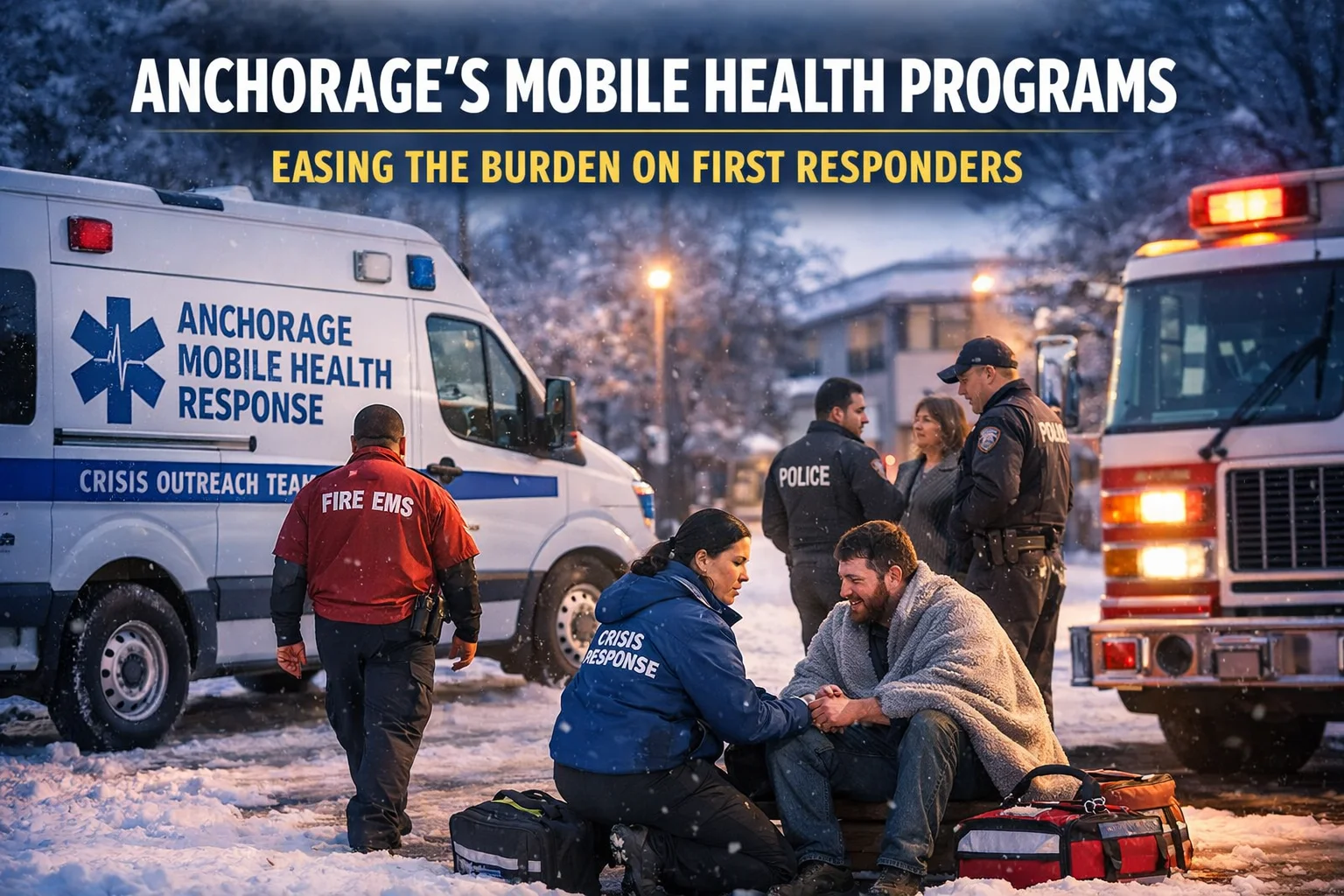
Anchorage’s expanding mobile health initiatives are helping ease the demand on police, firefighters, and emergency medical crews by providing targeted care for non-emergency situations, according to recent local coverage.
The programs, including mobile crisis teams and community outreach units, are designed to meet residents where they are with specialized support for mental health, substance use, and other health-related concerns that don’t require a traditional 911 response. These units pair clinicians and trained professionals with first responders to address issues more effectively and keep emergency crews free for true emergencies.
One such effort being highlighted includes a pilot project by the Anchorage Fire Department, in which specially trained teams respond to calls involving mental health crises and other non-violent incidents. By offering in-field assessment, care coordination, and connection to community resources, the teams aim to reduce repeat 911 calls and divert individuals from emergency rooms or law enforcement interventions when possible.
Supporters say the programs help ensure that individuals in crisis receive appropriate care while preserving critical emergency response capacity. As these mobile health services expand, officials hope to further integrate them into Anchorage’s overall public safety strategy.
Also Read: How Rural Alaskans Access Healthcare: Challenges & Solutions
The growth of mobile health response reflects a broader national trend toward alternative response models that prioritize health-centered solutions in situations that do not require traditional emergency services.