




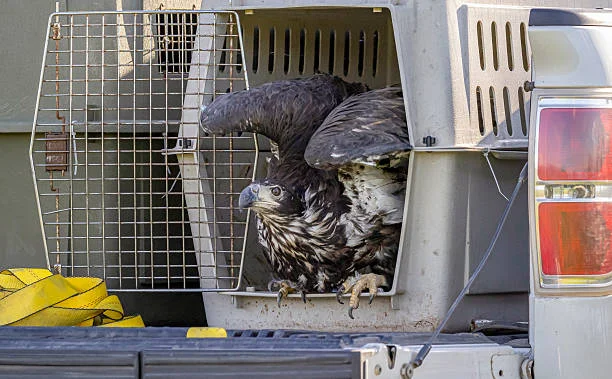
Eleven rehabilitated bald eagles have been released back into the wild in Southeast Alaska, marking a major milestone in wildlife recovery efforts led by the Alaska Raptor Center.
The release took place as part of the center’s annual Spring Eagle Release, where birds that had recovered from serious injuries were returned to their natural habitat. According to officials, the eagles had originally been rescued from the wild with conditions ranging from lead poisoning to gunshot wounds.
Avian Director Jennifer Cedarleaf said handling and releasing the large birds is physically demanding, but the effort is worthwhile. She noted that eagles are big and strong, making the release process both challenging and rewarding.
The rehabilitation effort involves coordination with other Alaska-based wildlife organizations, including the Bird Treatment and Learning Center and facilities in Palmer, which often transfer injured birds to Sitka due to limited flight-training space.
Officials explained that timing the release is critical for survival. The center typically waits until spring herring season, when food is abundant in Sitka’s waters, giving the recovering eagles the best chance to thrive after release.
Despite months of rehabilitation, one of the biggest challenges comes at the final stage—catching the birds for release. Cedarleaf described one eagle, nicknamed “Snow,” as particularly difficult to handle, taking nearly 45 minutes to safely capture before being released.
The Alaska Raptor Center, a nonprofit dedicated to treating injured birds of prey, handles 100 to 200 birds each year, many suffering from trauma caused by human activity or environmental hazards.
For staff and volunteers, the moment of release remains the most meaningful part of their work. Cedarleaf emphasized that watching previously injured birds return to flight is one of the coolest things, especially for those that arrived in critical condition.
The successful release highlights ongoing conservation efforts in Alaska and underscores the importance of rehabilitation programs in protecting the state’s iconic bald eagle population.
Have questions about this story?
Ask Tundra for more details, context, or updates.
Related Posts
What Is the State Bird of Alaska? Meet the Willow Ptarmigan with 2025 Wildlife Stats
Summer Hummingbird Day 2025 in Alaska: Celebrate the Tiny Travelers