




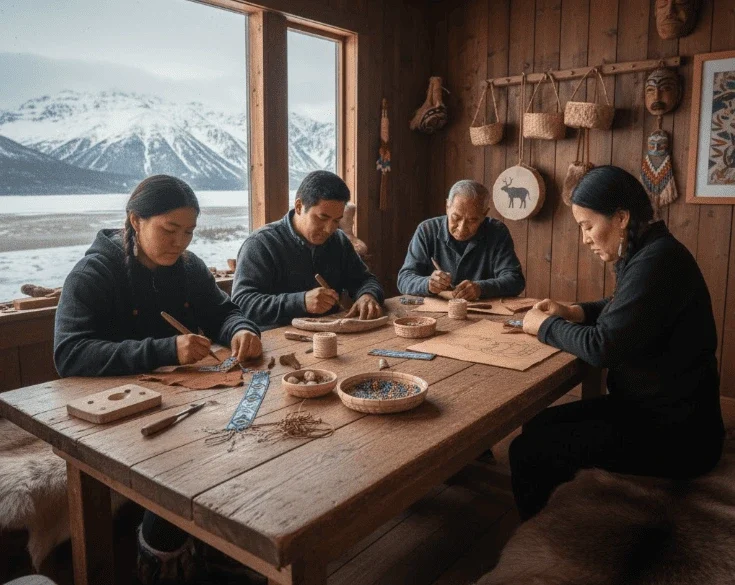
Alaska is home to 229 federally recognized tribes, and each tribe has its own art, stories, and traditions. When you explore Alaska Native crafts, you don’t just look at art; you step into a world shaped by 10,000 years of culture. You see history, identity, and connection to land in every bead, carving, and stitch.
In this guide, I’ll walk you through the major Alaska Native crafts, the materials used, and how you can identify authentic handmade pieces. By the end, you’ll understand why these traditions matter and how you can help keep them alive.
Have questions about this story?Ask Tundra for more details, context, or updates.
The Cultural Roots of Alaska Native Crafts
When you hear “Alaska Native art,” remember this: Alaska is not one culture. It’s a blend of Inupiaq, Yup’ik/Cup’ik, Athabascan, Aleut (Unangax̂), Alutiiq, Tlingit, Haida, Tsimshian, and Eyak traditions. Each group creates art based on the land, the animals, and the stories passed down through families.
The Smithsonian Arctic Studies Center explains that Alaska Native crafts reflect spiritual beliefs, clan identity, and daily life. Art is not separate from culture it is culture.
Types of Alaska Native Crafts
Let’s go through the major craft traditions you’ll see across Alaska.
Beadwork & Traditional Beading
If you love color and detail, you’ll fall in love with Alaska Native beadwork.
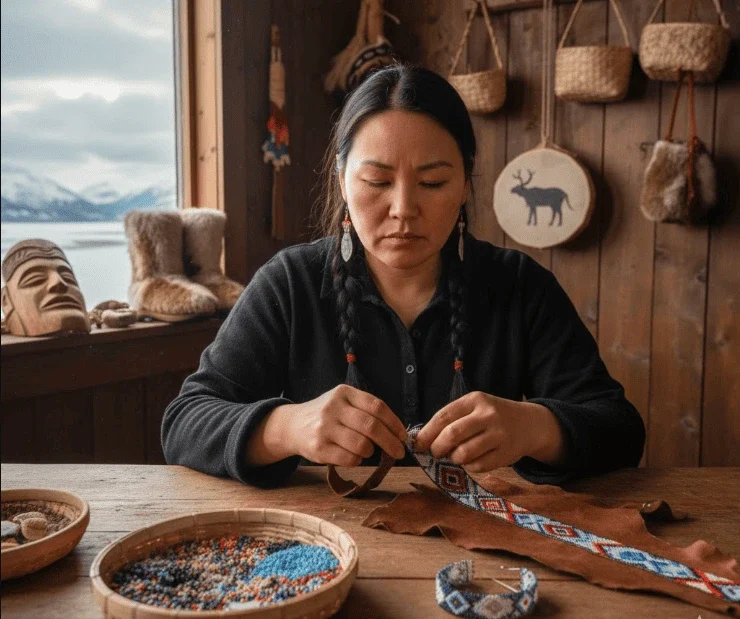
Athabascan beadwork is famous worldwide. Long ago, artists used porcupine quills, shells, and bone. After European contact in the 1700s, glass beads arrived, and a new style was born: the Athabascan Floral Pattern.
When you look at a beaded mitten or moosehide bag, you’re seeing a story of flowers, seasons, or memories of home. Modern Native jewelry still carries these meanings, even when artists experiment with new designs.
Carving Traditions: Ivory, Wood & Bone
Carving is one of the oldest Alaska Native arts. Archaeologists have found Inupiaq ivory carvings that are more than 4,000 years old.
Inupiaq & Yup’ik Ivory Carving
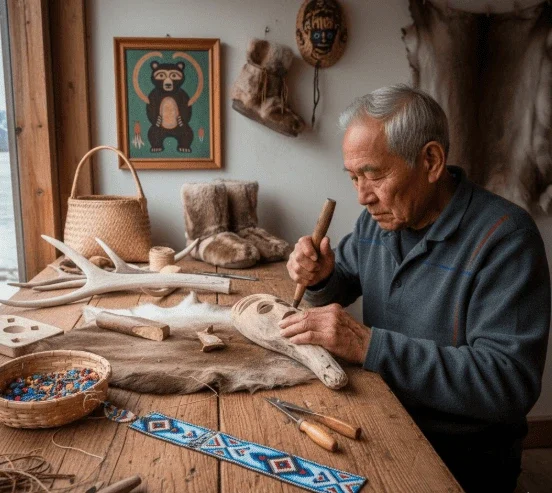
Artists carve walrus ivory, baleen, and whale bone into small figures, tools, and spiritual objects. Only Alaska Natives can legally carve and sell walrus ivory. Each piece is unique because every tusk and bone carries natural patterns.
Tlingit, Haida & Tsimshian Wood Carving
If you travel to Southeast Alaska, you’ll see stunning cedar totem poles, clan crests, and masks. These carvings tell stories of ancestors, animals, migration, and myth. Some poles take up to a year to carve.
Baleen Basketry
Baleen baskets began in Utqiaġvik (Barrow) in the early 1900s. Artists weave thin whale baleen into tight, glossy baskets. These are rare and highly collectible.
When you look closely, you can see how each material connects the artist to the land and the sea.
Basketry & Weaving
Basketry and weaving show another side of Alaska Native creativity.
Spruce Root Baskets
Tlingit and Haida artists dig, clean, and split spruce roots. Preparing the materials alone can take weeks. Weaving a single basket can take months. The result is a beautiful and sturdy container, once used for cooking and gathering.
Chilkat and Ravenstail Weaving
Chilkat weaving is one of the most complex weaving forms in the world. A robe can take 1 to 2 years to complete. Designs show clan animals and spiritual stories.
Ravenstail weaving almost disappeared in the 1800s, but Native weavers brought it back in the 1980s.
Mask-Making & Ceremonial Art
Yup’ik masks are full of emotion, meaning, and movement. They were used in winter ceremonies called Agayuyaraq, where dancers told stories about hunting, community, and the spirit world.
Many masks were burned after ceremonies to “release” their spirit, so original masks are rare today. Modern artists continue the tradition to keep the stories alive.
Also Read: The Bladder Festival: Honoring Animal Spirits in Alaska’s Yup’ik Culture
Materials Used in Alaska Native Crafts
Understanding the materials helps you appreciate the work behind each piece.
Natural Materials
Artists use what the land gives them:
- Driftwood and cedar for carving
- Birch and spruce root for baskets
- Walrus ivory and baleen for carving
- Caribou antler and whale bone for sculpture
- Seal and moose hide for clothing and beadwork
Many artists follow cultural rules about harvesting. They take only what they need and show respect to the land and animals.
Modern Materials
Today, artists also use:
- Glass beads
- Metals for jewelry
- Fabric dyes
- Modern carving tools
- Sustainable wood
Even with new materials, the heart of the craft stays the same.
How You Can Identify Authentic Alaska Native-Made Arts & Crafts
Buying Alaska Native art is a wonderful way to support communities, but only if the piece is genuine.
Signs of Authentic Craftsmanship
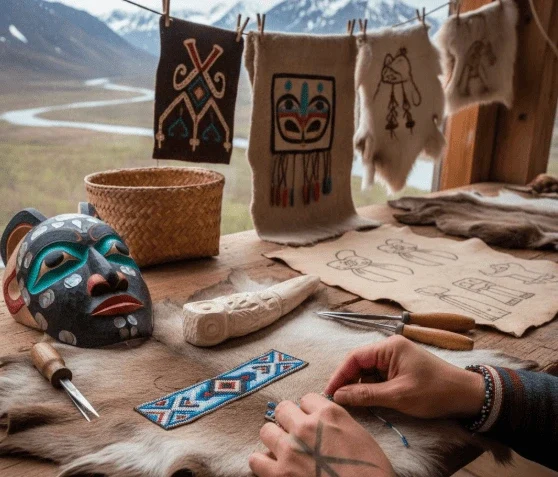
Here’s what you’ll usually see in real Native-made art:
- Hand-stitched details
- Natural marks or variations in materials
- The artist’s name or tribal affiliation
- A clear story or cultural pattern
Under the Indian Arts and Crafts Act (1990), it’s illegal to sell fake Native art.
Legal Protections
- Only Alaska Native artists can carve walrus ivory.
- Ivory or baleen may require documentation if you travel outside the U.S.
- Sellers should be honest about materials and origins.
Where You Can Buy Genuine Alaska Native Art
Look for:
- Alaska Native Heritage Center (Anchorage)
- Sealaska Heritage Store (Juneau)
- Native-owned galleries and co-ops
- Museum gift shops
Buying directly from artists is the best choice.
Customs Guide to Alaska Native Art
If you’re traveling, here’s what you need to know:
- Most beadwork, woven art, and wood carvings can travel freely.
- Ivory, baleen, or marine mammal materials may require paperwork.
- Keep your receipts and certificates with you when you travel.
Ethical buying supports families, culture, and the next generation of artists.
Meet the Artists: A Look at Alaska Native Artisans
Native artists form a strong, growing community. Many showcase their work at the Alaska Federation of Natives (AFN) Convention, one of the largest Indigenous gatherings in North America.
Art programs at Alaska universities have grown by 35% in the past decade, showing a strong cultural revival. Young artists are bringing back endangered crafts such as Ravenstail weaving, while also creating digital art, fashion, and modern jewelry.
The Cultural Importance of Alaska Native Art
Every craft carries a message.
- Beadwork speaks about family, seasons, and the land.
- Carvings tell stories of ancestors and animals.
- Chilkat robes preserve clan history.
- Masks carry spiritual lessons and shared memories.
When you learn about this art, you connect with the people who kept these traditions alive through war, colonization, and cultural change.
Modern Revival: Alaska Native Art in 2025
Museums now work with tribes to respect cultural sovereignty. Native artists have a voice in how their work is displayed, interpreted, and preserved.
Contemporary artists mix tradition with new ideas, digital prints, metals, photography, and modern fashion. This blend makes Alaska Native art powerful, relevant, and alive.
Also Read: How Bethel’s Festivals Celebrate Alaska Native Culture
Conclusion
Alaska Native crafts are not just art, they’re living stories. When you explore beadwork, carvings, baskets, and masks, you step into a long line of memory, pride, and tradition. As you learn about these crafts and support Alaska Native artists, you help keep this heritage strong for future generations.
FAQs
What do Native Alaskans like to be called?
Most prefer their specific cultural identity, Inupiaq, Yup’ik, Athabascan, Tlingit, and others.
What qualifies you as an Alaska Native?
You are an Alaska Native if you descend from the original peoples of Alaska. Tribal enrollment usually confirms it.
What is a popular medium used by Alaska Native artisans?
Beadwork, ivory carving, cedar carving, spruce-root basketry, and woven regalia.
What are some Alaska Native traditions?
Storytelling, potlatches, mask dances, clan gatherings, hunting rituals, and regalia-making.