


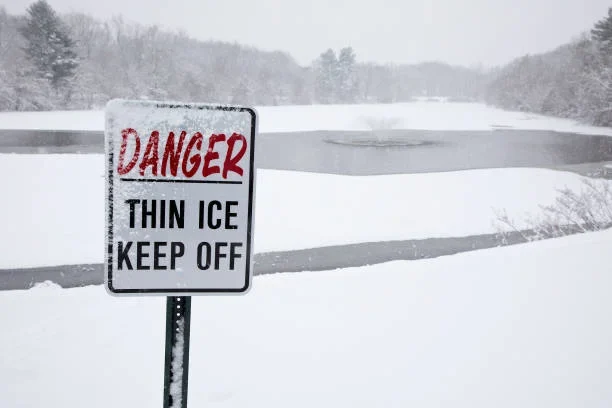
With December approaching and temperatures rising and falling across much of the state, officials are reminding Alaskans that early-season ice can be dangerous and highly unpredictable. The fluctuating weather has created conditions where ice may look solid but is not safe to walk, skate, or travel on.
Safety officials say this is the time of year when accidents are most common, as lakes and rivers freeze unevenly and moving water prevents uniform ice formation.
Residents are urged to follow essential ice-safety guidelines:
Have questions about this story?Ask Tundra for more details, context, or updates.
Avoid weak or unreliable ice
Stay away from areas with slushy ice, ice that has thawed and refrozen, and all ice near moving water, including inlets, outlets, and river channels.
Learn to read the ice
Circumferential cracks, cloudy layers, and “rotten” ice—ice that appears thick but lacks structural strength- are warning signs. Officials emphasize that thick ice is not always safe ice, especially during freeze-thaw cycles.
Use ice probes while traveling
Regularly checking ice thickness with ice probes or a spud bar can help identify weak areas before stepping onto them.
Also Read: Long Drives, Busy Highways: Unspoken Rules for Cross-Country Road Trips
Authorities also recommend avoiding travel alone. Those venturing onto ice should go with partners, carry safety equipment, and let others know where they are going and when they expect to return.
As winter recreation ramps up across Alaska, officials say awareness and preparation are key to avoiding preventable emergencies.