





Disclaimer: This article is intended for informational purposes only and does not constitute financial, legal, investment, or technical advice. The information provided reflects general industry trends and technology strategies relevant to business operations in Alaska. Readers should conduct their own due diligence and consult qualified professionals before making business, financial, compliance, or technology decisions. Any references to specific tools, platforms, or technologies are for illustrative purposes and do not constitute endorsements.
Alaska is heating up. Not the weather. Business. Energy projects are scaling. Tourism is rebounding. Fisheries are modernizing. Construction is accelerating. The growth is real, and it’s happening fast.
But not so in Alaska. The distance is extreme. The weather is brutal. Infrastructure can be limited. Businesses not growing in the right technology will hit walls fast. More people and more heavy equipment isn’t the answer. It’s smarter systems.
Here is the way expanding Alaskans are using technology to grow without losing control.
Have questions about this story?
Ask Tundra for more details, context, or updates.
Cloud Power for Far-Flung Operations
Operating a company across Alaska often requires managing teams hundreds of miles apart. Some of the locations are only accessible by air or water. On-site servers don’t do well in that type of environment.
Cloud infrastructure changes the game. Rather than keeping critical systems in a single brittle place, they host applications in hardened data centers. Teams can gain entry to systems from any point in the world as long as there is an internet connection.
When connections drop — and they will; connectivity is not guaranteed on the internet — edge computing allows operations to continue. Local devices process data on-site. Once the signal comes back, everything syncs to the cloud. No data loss. No chaos.
Security can’t be an afterthought. Remote access expands risk. Companies are deploying:
- Multi-factor authentication
- Zero-trust network policies
- Encrypted data channels
- Endpoint monitoring tools
This layered approach keeps expansion from becoming a security liability.
Financial Control That Scales With You
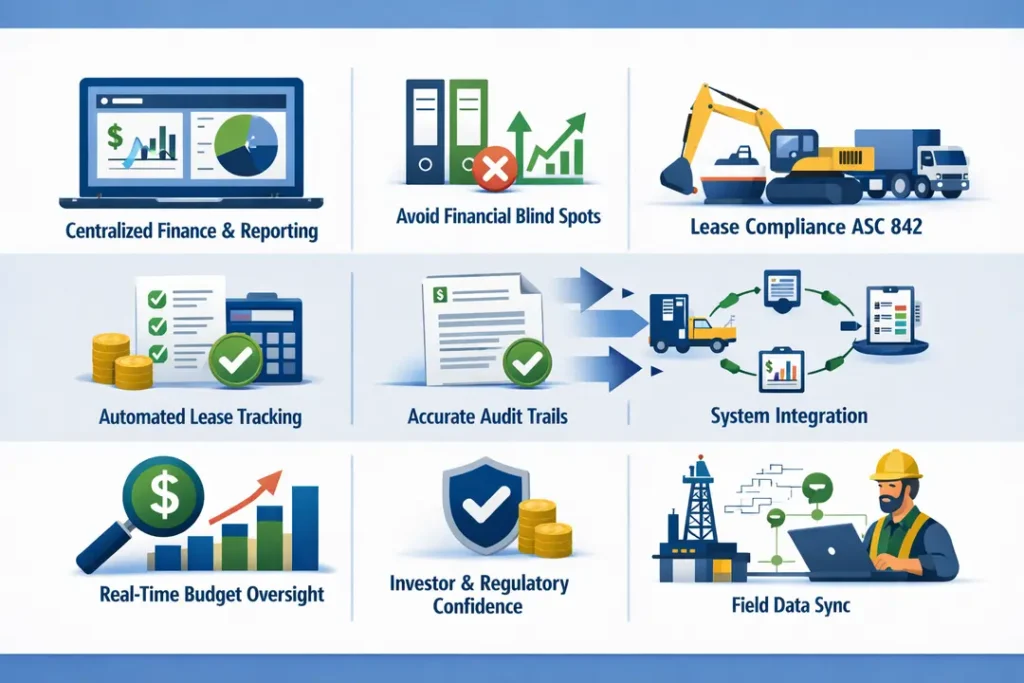
Expansion is fine as far as it goes until the bookkeeping gets messy. Financial blind spots are created by multi-site operations. Separate spreadsheets. Delayed reconciliations. Inconsistent reporting. During expansion, these problems amplify rapidly.
Newer ERP systems consolidate such functions as finance, purchasing, payroll, and inventory. Executives get real-time dashboards. Department heads track budgets instantly. Audit trails become automatic. Leases are particularly problematic in Alaska. Firms rent large equipment, fleet vehicles, warehouse space, and even specialized boats. ASC 842 requires accurate lease reporting.
Tools like leasequery simplify compliance. They calculate right-of-use assets automatically. They generate required disclosures. They reduce audit pressure. That matters when investors and regulators are watching closely.
The key is integration. Your ERP should talk to your project management system. It should connect to field data tools. Silos slow growth. Clean data accelerates it.
Data That Works as Hard as You Do
In Alaska, inefficiency is expensive. Fuel costs fluctuate. The downtime of an equipment can stop the operation at a site. Labor shortages add pressure.
Data analytics brings clarity.
Predictive maintenance software analyses the sensor data from machinery. Vibration changes. Temperature spikes. Pressure shifts. Algorithms predict issues before they happen. Crews repair small stuff and replace biggies.
Fleet tracking improves logistics. Route optimization reduces fuel consumption
Clear metrics drive smarter decisions:
- Asset utilization rates
- Cost per operating hour
- Downtime frequency
- Revenue per asset
Strong data governance is essential. Define consistent data standards. Assign ownership. Validate inputs. Bad data produces bad decisions.
Connectivity in the Last Frontier
Connectivity continues to be a major challenge in Alaska.
Outside of cities, fibre is almost non-existent. Satellite internet is common. It was delay that had long made cloud systems maddening. That’s changing. LEO satellite networks have better speeds and less delay. Today, corporate clouds run applications based in the cloud from remote sites with far fewer outages.
SD-WAN technology adds resilience. It will dynamically juggle traffic over many connections and it does. If one of the links goes down, another kicks in. Critical systems stay online.
Cybersecurity risk increases with connectivity. Ransomware attacks are common against industrial companies. Robust incident response plans are required. Annual penetration testing is smart. Employee phishing training is non-negotiable.
It’s a danger to have technology and no defence.
Automation and Industrial IoT
Workforce shortages are real. Skilled trades are hard to recruit in remote areas. Automation fills the gap. Industrial IoT platforms connect equipment sensors, controllers, and analytics engines. SCADA systems monitor pipelines and processing plants. Cloud dashboards give leadership instant visibility.
Robotics is entering ports and warehouses. Automated guided vehicles move materials efficiently. Drones inspect infrastructure without exposing workers to danger.
Automation isn’t about replacing people. It’s about reducing repetitive tasks and improving safety. Implementation must be deliberate. Map workflows first. Identify bottlenecks. Pilot small systems before large rollouts. Controlled scaling prevents operational disruption.
Smarter Project Management
Construction and capital projects are expanding across the state. Without structure, costs spiral.
Digital project management platforms centralize drawings, change orders, and compliance documentation. Everyone works from the same information set. Miscommunication drops.
Building Information Modeling (BIM) allows teams to visualize projects before breaking ground. Structural conflicts are caught early. Rework decreases.
Mobile reporting apps allow field supervisors to upload updates instantly. Photos, inspection logs, and safety records sync in real time.
Some companies even compile milestone documentation into branded photo books. These visual summaries strengthen investor relations and preserve detailed project records. Documentation becomes both operational and strategic.
Workforce Technology That Retains Talent
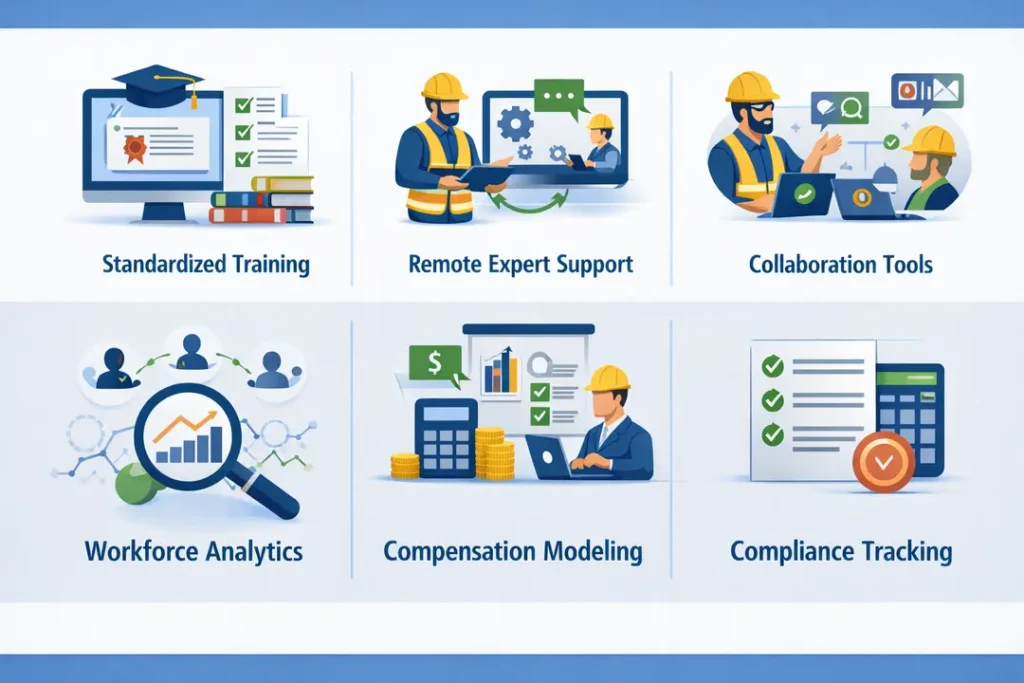
Technology doesn’t just manage assets. It supports people. Learning management systems provide standardized training across locations. Compliance certifications are tracked automatically. New hires ramp up faster.
Collaboration platforms allow remote engineers to support field crews without constant travel. Video diagnostics solve problems quickly.
Also Read: Top 15 Innovations Enhancing Remote Collaboration Platforms
Workforce analytics help leaders understand turnover patterns and productivity trends. Compensation modeling tools manage labor costs during expansion. When employees feel supported, retention improves. Stability supports growth.
Compliance and Risk Without the Headache
Alaska’s industries operate under tight regulatory oversight. Environmental reporting is rigorous. Federal compliance is constant.
Environmental monitoring systems track emissions and discharge levels in real time. Alerts trigger when thresholds approach limits. Reports generate automatically. Document management platforms securely store permits and inspection records. Version control prevents outdated procedures from circulating.
Risk management software models financial exposure. Commodity volatility, supply chain disruption, and insurance risk can be quantified and forecasted. Compliance stops being reactive. It becomes systematic.
Building a Technology Roadmap That Actually Works
Buying random software is not a strategy. Start with a systems audit. Identify gaps. Define measurable goals. Prioritize tools that increase visibility, reduce risk, and improve scalability. Plan for integration from the beginning. Budget for training. Measure performance with defined KPIs.
Review systems quarterly. Adjust as operations evolve. Alaska’s business boom is real. Companies that modernize intelligently will thrive. Those who delay will struggle under operational complexity.
In a state defined by extremes, smart technology isn’t optional. It’s the backbone of sustainable growth.