




Disclaimer: This article is for general informational purposes only and does not constitute medical or professional advice. Individual needs and abilities vary. Always consult a qualified healthcare professional or occupational therapist before making changes to personal care routines or bathroom accessibility.
Taking baths should be a safe and convenient experience for people of any condition. Unfortunately, standard bathroom designs create significant challenges for people living with disabilities. From mobility limitations to the slippery dangers of falls, bathroom accessibility often requires careful planning, appropriate equipment, and thoughtful adjustments. Falls inside the home account for the majority of incidents among people with disabilities and older adults, with studies showing that roughly 75% of wheelchair users report experiencing falls at home, highlighting serious accessibility gaps in everyday living spaces. These risks make it essential to adopt practical measures that improve safety and independence during bathing.
Have questions about this story?
Ask Tundra for more details, context, or updates.
Use Stable and Supportive Equipment
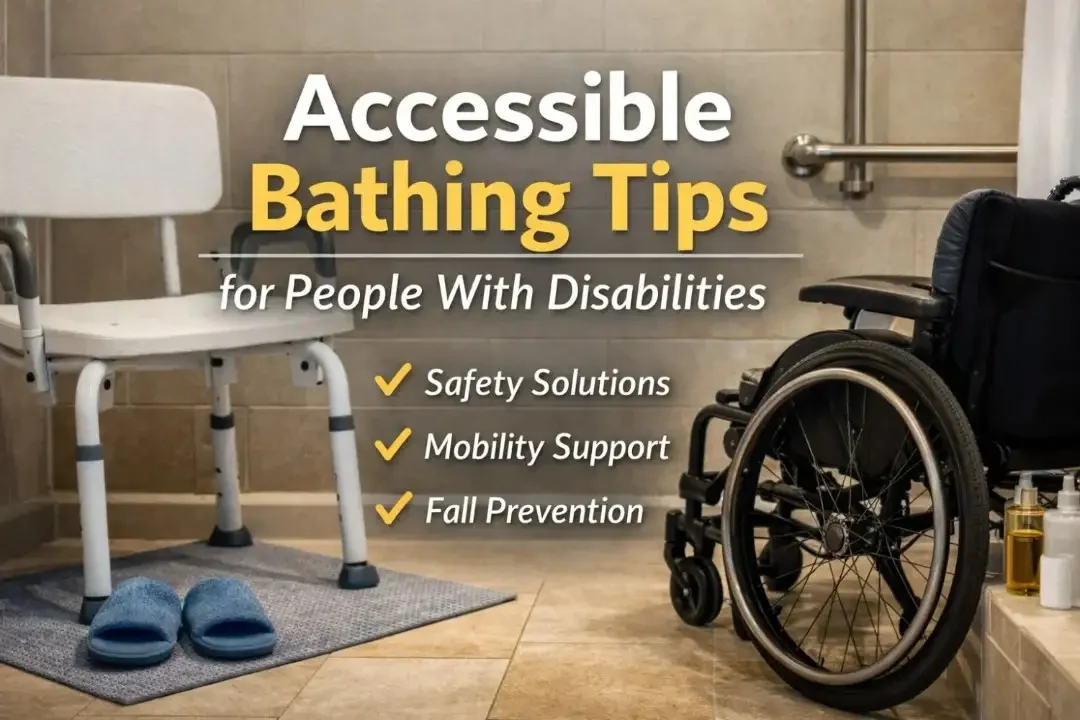
Accessibility in bathing processes can be improved most effectively with equipment that promotes greater stability and ease of handling. A well-designed shower chair for disabled people and mobility support, for instance, is an essential addition for those who are unable to stand for a long while or have poor balance. These types of chairs reduce the risk of falling, provide physical support, and allow users to shower alone or with minimal assistance, depending on their physical condition. Selecting a shower chair with adjustable height, anti-slip bases, and water-resistant materials provides enhanced comfort and product longevity. Some options also include wheels for facilitating transfer into and out of the shower zone.
Install Grab Rails and Accessible Fixtures
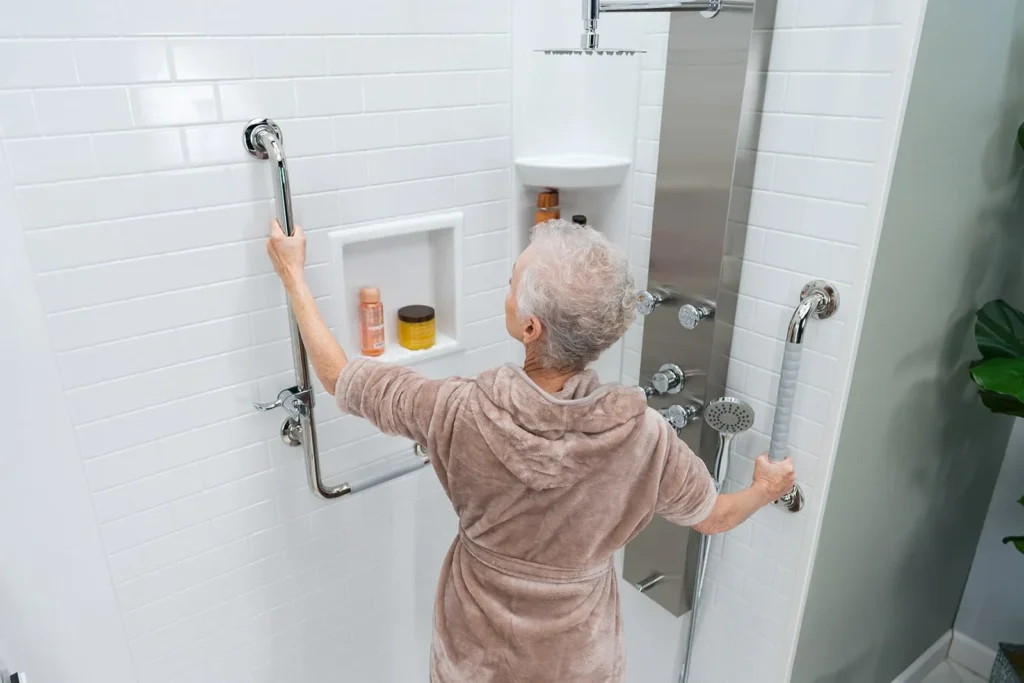
Grab rails are essential for providing steady handholds in slippery or hard-to-manoeuvre areas. Installing them near the shower, bath, and toilet can give users the confidence and stability they need while moving around the bathroom. Grab rails should also be installed firmly to last longer and be rust-resistant. Also, changing how the twist tap is operated, from lever tap control to sensor-controlled tap, provides a much easier way for users with limited strength or dexterity to control the water. Such minor changes make considerable contributions to independence and safety.
Ensure Easy Access With Layout Modifications
Changes to the layout around the bathroom can significantly improve accessibility. Using a shower with level access, without the user having to step into it, is always recommended, as opposed to a bathtub, whose design may pose a barrier. The use of open shower areas is also easier for people using wheelchairs, as they are also more manoeuvrable. Additionally, if the shower area is large enough, it is easier to create a pathway for the use of either walkers or wheelchairs. The placement of necessary items such as soap, towels, and shampoo nearby reduces strain on the user during bathing.
Prioritise Slip Prevention
Slippery floors can be a significant risk in most bathrooms, especially for people with physical disabilities. This can be eliminated by installing non-slip floors or mats. Mats should be securely fitted to avoid bunching or curling at the edges. Secondly, the bathroom can be less risky if it is well-drained and dry between uses. Routine maintenance, checking for leaks or pooling water, can prevent unexpected hazards.
Also Read: Non-Slip vs Slip-Resistant Shoes: Why the Difference Matters
Maintain Comfort and Dignity in Bathing Routines
Accessible bathrooms are not only about adapting changes, but also about maintaining the person’s dignity. A qualitative study of bathing experiences from the perspective of older adults reveals diverse preferences regarding assistance and a strong desire to remain independent where possible. Involving the individual in decision-making, whether it concerns preferred time, water temperature, or privacy, gives them greater control over their life. If carer assistance is required, this should also be done respectfully, with consideration for the individual’s needs. Encouraging them to wash the parts of their body they can manage safely also promotes independence and confidence.
Consult a Specialist When Needed
The needs of individuals will vary, and in all cases, the most advisable course of action is to consult with an occupational therapist or mobility professional for tailored advice. This could range from personal equipment to the bathroom setup or even detailed care plans. It may also include potential safety concerns that have not come to the individual’s or family’s attention, as well as available alternatives to current arrangements.
Supporting Safe, Independent Bathing
Creating a bathing environment that prioritises safety, independence, and comfort is essential for people with disabilities. With appropriate equipment and modifications to suit individuals’ needs, and with proper consideration, you can make the bathroom a safe and accessible environment. Such changes will not only promote health but will also help to retain dignity and confidence.